Teodoro Douglas, Pasche Emilie, Gobeill Julien, Emonet Stéphane, Ruch Patrick, Lovis Christian
University Hospitals of Geneva, Switzerland.
J Med Internet Res. 2012 May 29;14(3):e73. doi: 10.2196/jmir.2043.
Antimicrobial resistance has reached globally alarming levels and is becoming a major public health threat. Lack of efficacious antimicrobial resistance surveillance systems was identified as one of the causes of increasing resistance, due to the lag time between new resistances and alerts to care providers. Several initiatives to track drug resistance evolution have been developed. However, no effective real-time and source-independent antimicrobial resistance monitoring system is available publicly.
To design and implement an architecture that can provide real-time and source-independent antimicrobial resistance monitoring to support transnational resistance surveillance. In particular, we investigated the use of a Semantic Web-based model to foster integration and interoperability of interinstitutional and cross-border microbiology laboratory databases.
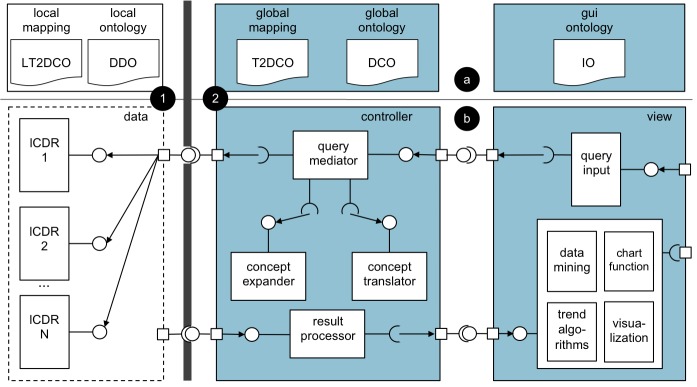
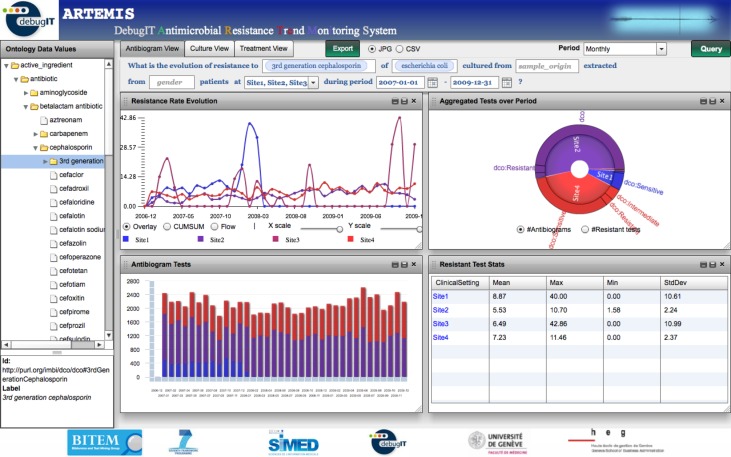
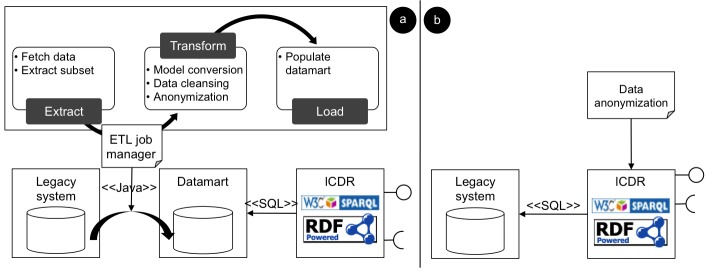
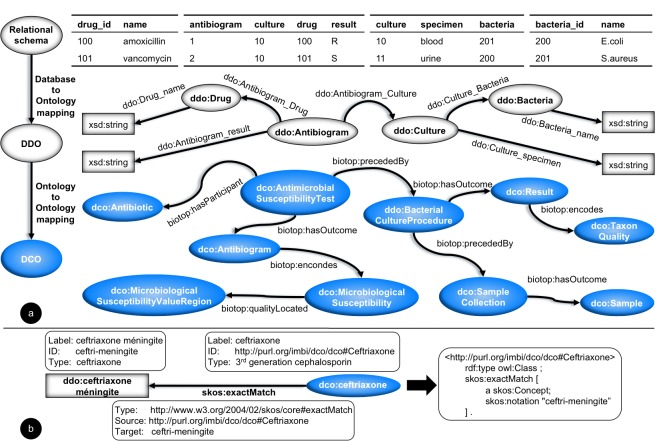
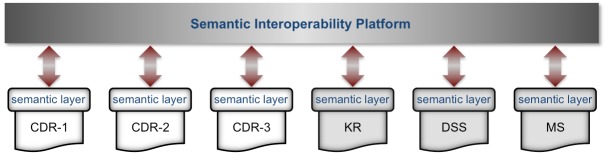
Following the agile software development methodology, we derived the main requirements needed for effective antimicrobial resistance monitoring, from which we proposed a decentralized monitoring architecture based on the Semantic Web stack. The architecture uses an ontology-driven approach to promote the integration of a network of sentinel hospitals or laboratories. Local databases are wrapped into semantic data repositories that automatically expose local computing-formalized laboratory information in the Web. A central source mediator, based on local reasoning, coordinates the access to the semantic end points. On the user side, a user-friendly Web interface provides access and graphical visualization to the integrated views.
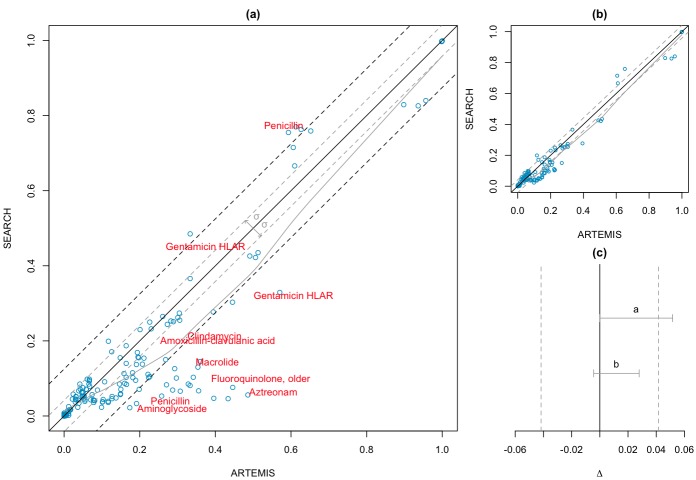
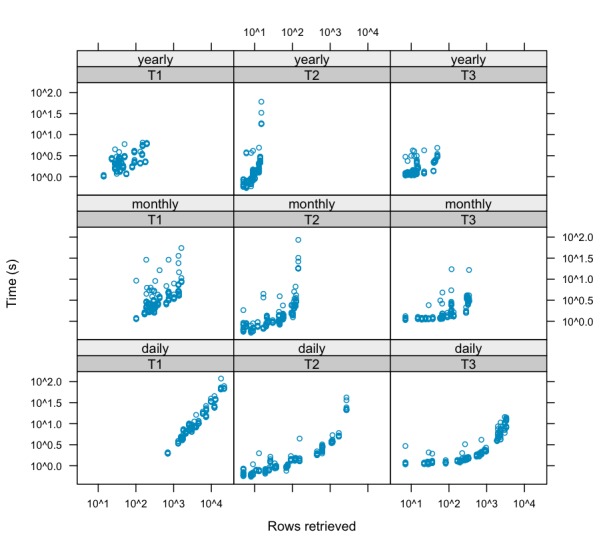
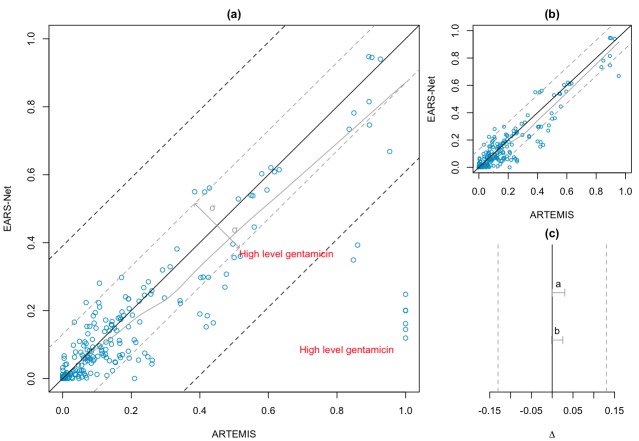
We designed and implemented the online Antimicrobial Resistance Trend Monitoring System (ARTEMIS) in a pilot network of seven European health care institutions sharing 70+ million triples of information about drug resistance and consumption. Evaluation of the computing performance of the mediator demonstrated that, on average, query response time was a few seconds (mean 4.3, SD 0.1 × 10(2) seconds). Clinical pertinence assessment showed that resistance trends automatically calculated by ARTEMIS had a strong positive correlation with the European Antimicrobial Resistance Surveillance Network (EARS-Net) (ρ = .86, P < .001) and the Sentinel Surveillance of Antibiotic Resistance in Switzerland (SEARCH) (ρ = .84, P < .001) systems. Furthermore, mean resistance rates extracted by ARTEMIS were not significantly different from those of either EARS-Net (∆ = ±0.130; 95% confidence interval -0 to 0.030; P < .001) or SEARCH (∆ = ±0.042; 95% confidence interval -0.004 to 0.028; P = .004).
We introduce a distributed monitoring architecture that can be used to build transnational antimicrobial resistance surveillance networks. Results indicated that the Semantic Web-based approach provided an efficient and reliable solution for development of eHealth architectures that enable online antimicrobial resistance monitoring from heterogeneous data sources. In future, we expect that more health care institutions can join the ARTEMIS network so that it can provide a large European and wider biosurveillance network that can be used to detect emerging bacterial resistance in a multinational context and support public health actions.
抗菌药物耐药性已达到全球令人担忧的水平,并正成为一项重大的公共卫生威胁。由于新出现的耐药性与向医疗服务提供者发出警报之间存在时间滞后,缺乏有效的抗菌药物耐药性监测系统被确定为耐药性增加的原因之一。已经开展了多项追踪耐药性演变的举措。然而,目前尚无公开可用的有效的实时且与来源无关的抗菌药物耐药性监测系统。
设计并实施一种架构,该架构能够提供实时且与来源无关的抗菌药物耐药性监测,以支持跨国耐药性监测。特别是,我们研究了基于语义网的模型的使用,以促进机构间和跨境微生物学实验室数据库的整合与互操作性。
遵循敏捷软件开发方法,我们得出了有效进行抗菌药物耐药性监测所需的主要要求,并据此提出了一种基于语义网堆栈的去中心化监测架构。该架构采用本体驱动的方法来促进哨点医院或实验室网络的整合。本地数据库被包装成语义数据存储库,这些存储库会自动在网络中公开本地计算形式化的实验室信息。一个基于本地推理的中央源中介协调对语义端点的访问。在用户端,一个用户友好的网络界面提供对整合视图的访问和图形可视化。
我们在一个由七个欧洲医疗机构组成的试点网络中设计并实施了在线抗菌药物耐药性趋势监测系统(ARTEMIS),该网络共享了7000多万条关于耐药性和药物消费的信息三元组。对中介的计算性能评估表明,平均而言,查询响应时间为几秒(平均值为4.3,标准差为0.1×10²秒)。临床相关性评估表明,ARTEMIS自动计算的耐药性趋势与欧洲抗菌药物耐药性监测网络(EARS-Net)(ρ = 0.86,P < 0.001)以及瑞士抗生素耐药性哨点监测(SEARCH)(ρ = 0.84,P < 0.001)系统具有很强的正相关性。此外,ARTEMIS提取的平均耐药率与EARS-Net(∆ = ±0.130;95%置信区间-0至0.030;P < 0.001)或SEARCH(∆ = ±0.042;95%置信区间-0.004至0.028;P = 0.004)的平均耐药率没有显著差异。
我们引入了一种分布式监测架构,可用于构建跨国抗菌药物耐药性监测网络。结果表明,基于语义网的方法为电子健康架构的开发提供了一种高效且可靠的解决方案,该架构能够从异构数据源进行在线抗菌药物耐药性监测。未来,我们期望更多的医疗机构能够加入ARTEMIS网络,以便它能够提供一个大型的欧洲及更广泛的生物监测网络,可用于在跨国背景下检测新出现的细菌耐药性并支持公共卫生行动。