Mehandru Sushil K, Kaur Supreet, Masud Avais, Rezkalla Kyrillos, Khan Qalb, Singh Prit Paul, Constanzo Eric, Abboud Walid, Vachharajani Tushar, Asif Arif
Department of Medicine, Division of Nephrology and Hypertension, The Mehandru Center for Innovation in Nephrology, Jersey Shore University Medical Center, Hackensack Meridian School of Medicine, Neptune, NJ, USA.
Department of Nephrology and Hypertension, Cleveland Clinic Lerner College of Medicine of Case Western Reserve University, Glickman Urological & Kidney Institute, Cleveland Clinic, Cleveland, OH, USA.
J Med Cases. 2024 Oct;15(10):287-296. doi: 10.14740/jmc4056. Epub 2024 Sep 20.
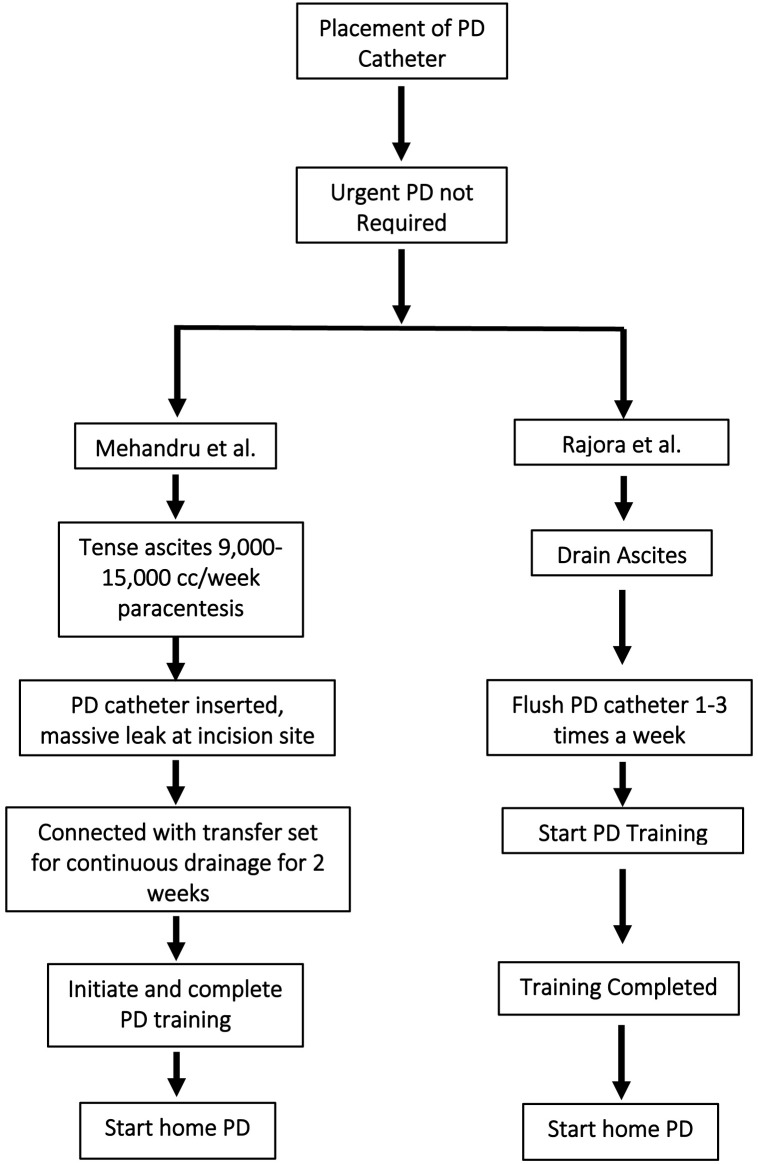
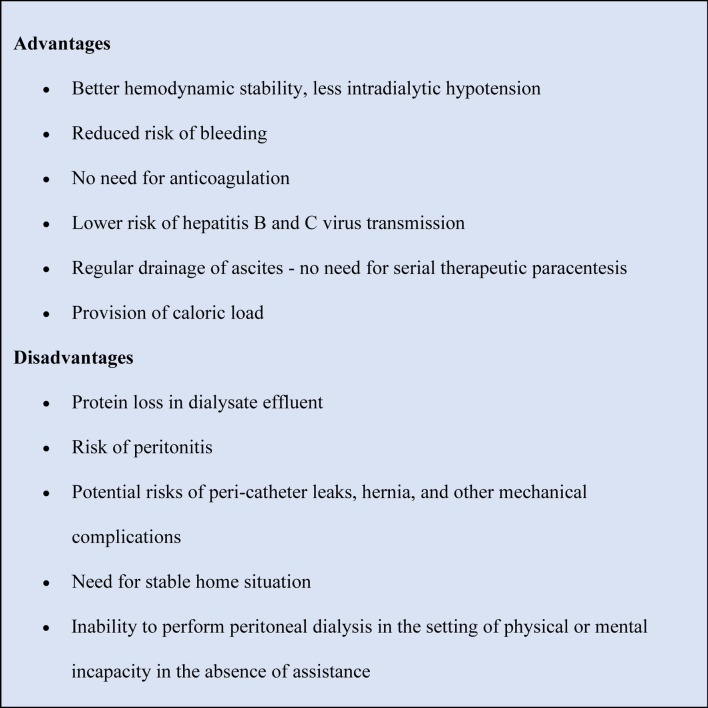
Insertion of a peritoneal dialysis (PD) catheter in end-stage renal disease (ESRD) patients with cirrhosis and tense ascites remains a challenge for nephrologists. Ascitic fluid leak at the surgical site, a common postoperative occurrence, leads to the disqualification of many patients who could be otherwise great candidates for PD. The ascitic fluid leak has been described to occur during or immediately after surgery even after the entire volume of ascitic fluid has been drained. In this study, we report a case study of three patients with ESRD, liver cirrhosis, and tense ascites on hemodialysis. The patients required super large volume paracentesis (SLVP), draining 9,000 - 15,000 cc of ascitic fluid twice weekly in an interventional radiology setup. Besides ascitic fluid drainage, the patients needed in-center hemodialysis (ICHD) 3 days a week, leading to their engagement in procedures 5 days a week. In addition, intradialytic symptomatic hypotension, hypoalbuminemia, and other adverse effects of hemodialysis lead to their poor lifestyle. To improve their lifestyle, all patients desired to switch to PD from ICHD. Upon the PD catheter insertion and drainage of the entire ascitic fluid, leaks developed at the insertion site within a few hours. To overcome these leaks, PD catheters of all three patients were attached via a transfer set to a bag for continuous drainage of ascitic fluid for about 2 weeks. No leak or complication was noted, leading to complete healing of insertion site. We recommend, for the patients with tense ascites requiring SLVP, approximately 2 weeks of healing period continuously be performed till initiation of PD training,.
对于患有肝硬化和大量腹水的终末期肾病(ESRD)患者,插入腹膜透析(PD)导管对肾科医生来说仍然是一项挑战。手术部位的腹水渗漏是一种常见的术后情况,导致许多原本可能是PD极佳候选者的患者失去资格。即使在全部腹水被引流之后,也有报道称腹水渗漏会在手术期间或手术后立即发生。在本研究中,我们报告了3例ESRD、肝硬化和大量腹水且正在进行血液透析患者的病例研究。这些患者需要进行超大容量腹腔穿刺放液(SLVP),在介入放射科设置下每周两次引流9000 - 15000 cc腹水。除了腹水引流外,患者每周还需要进行3天的中心血液透析(ICHD),导致他们每周有5天要接受相关治疗。此外,透析期间的症状性低血压、低白蛋白血症以及血液透析的其他不良反应导致他们生活质量较差。为了改善生活质量,所有患者都希望从ICHD转为PD。在插入PD导管并引流全部腹水后,插入部位在数小时内出现渗漏。为了克服这些渗漏,所有3例患者的PD导管都通过转接装置连接到一个袋子上,用于持续引流腹水约2周。未发现渗漏或并发症,插入部位完全愈合。对于需要进行SLVP的大量腹水患者,我们建议在开始PD培训前持续约2周的愈合期。