Mukomafhedzi Ndivhuwo, Tshitangano Takalani, Tshivhase Shonisani
Department of Public Health, Faculty of Health Sciences, University of Venda, Thohoyandou 0950, South Africa.
Department of Public Health, Faculty of Health Care Sciences, University of Limpopo, Polokwane 0727, South Africa.
Nurs Rep. 2024 Sep 23;14(3):2580-2595. doi: 10.3390/nursrep14030190.
Over the past two decades, intervention strategies to improve the use of the elimination of mother-to-child transmission (EMTCT) services have been implemented for several reasons. The reasons include elimination of HIV infections during pregnancy, delivery, breastfeeding, prevention of HIV, prevention of unintended pregnancies, and safer conception. Poor utilization of EMTCT services has been proven to put the child at risk of acquiring HIV, which could have been avoided.
This study aims to explore and describe interventions to promote the elimination of mother-to-child transmission services among pregnant and nursing mothers in Africa.
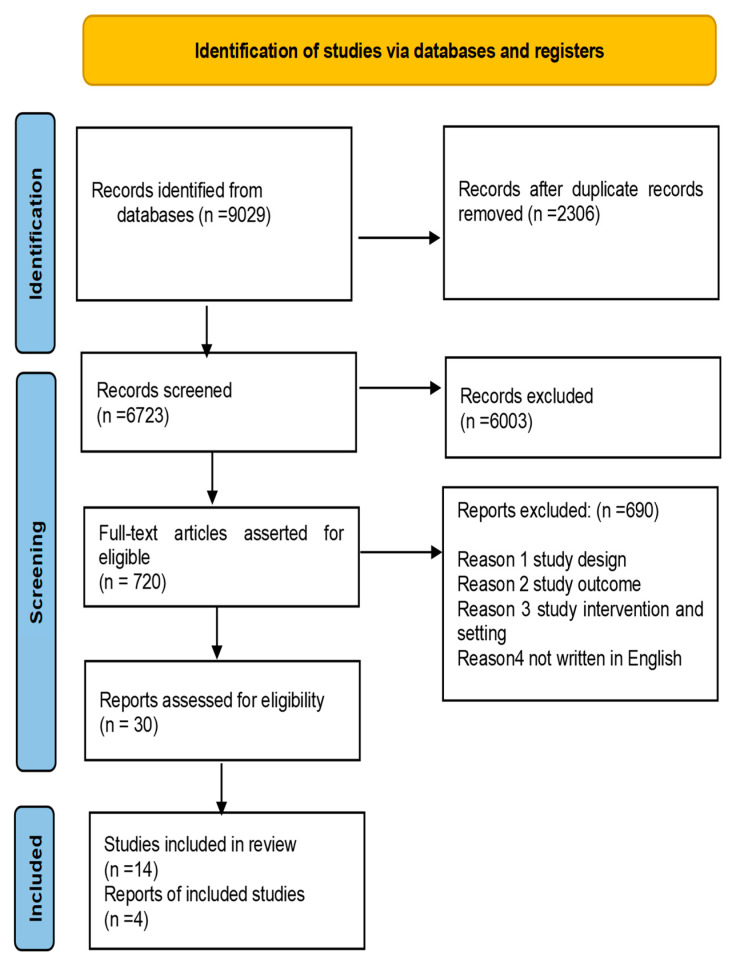
A scoping literature review technique was undertaken on research papers published in English that focused on EMTCT, barriers, interventions, and methods to address challenges to EMTCT utilization. These were screened independently and coded.
The analysis comprised 14 out of approximately 9029 literature sources. Intervention strategies to improve EMTCT service utilization, according to the findings, include accessibility and affordability, healthcare worker training, integrating the elimination of mother-to-child transmission into maternal and child health services, community-based interventions, family-centred approaches, and the use of technology.
Interventions that increase women's use of EMTCT services will contribute to the aim of HIV-free generation by reducing new HIV infections in children and saving lives.
在过去二十年里,出于多种原因实施了旨在改善消除母婴传播(EMTCT)服务利用情况的干预策略。这些原因包括在孕期、分娩和母乳喂养期间消除艾滋病毒感染、预防艾滋病毒、预防意外怀孕以及安全受孕。事实证明,EMTCT服务利用不足会使儿童面临感染艾滋病毒的风险,而这种风险本可避免。
本研究旨在探索和描述促进非洲孕妇和哺乳期母亲消除母婴传播服务的干预措施。
对以英文发表的聚焦于EMTCT、障碍、干预措施以及应对EMTCT利用挑战的方法的研究论文进行了范围界定文献综述。这些论文由独立人员筛选并编码。
分析涵盖了约9029篇文献来源中的14篇。根据研究结果,改善EMTCT服务利用的干预策略包括可及性和可负担性、医护人员培训、将消除母婴传播纳入母婴健康服务、基于社区的干预措施、以家庭为中心的方法以及技术应用。
增加妇女对EMTCT服务利用的干预措施将有助于实现无艾滋病毒一代的目标,减少儿童新发艾滋病毒感染并挽救生命。