Beijing Key Laboratory of Preclinical Research and Evaluation for Cardiovascular Implant Materials, Animal Experimental Centre, National Centre for Cardiovascular Disease; Department of Cardiac Surgery, Fuwai Hospital, Chinese Academy of Medical Sciences and Peking Union Medical College, Beijing, 100037, China.
Mil Med Res. 2024 Sep 27;11(1):68. doi: 10.1186/s40779-024-00570-3.
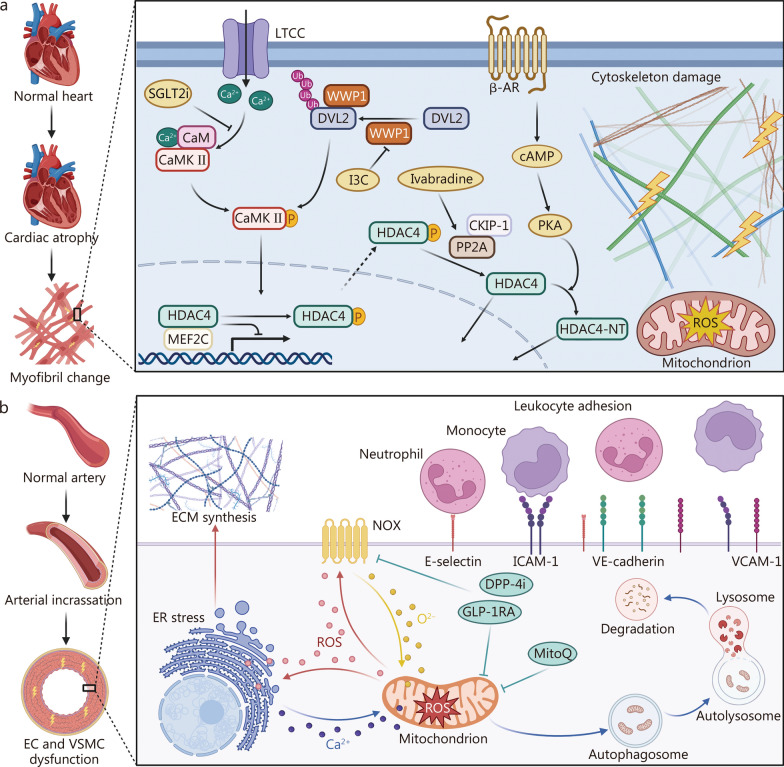
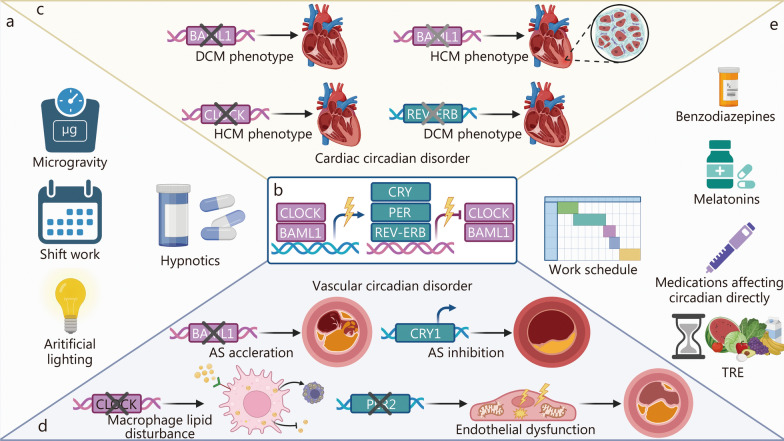
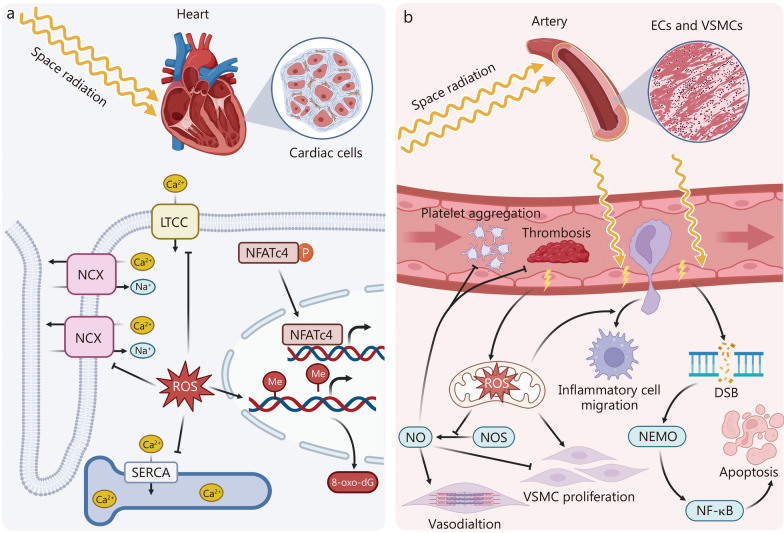
The advancement in extraterrestrial exploration has highlighted the crucial need for studying how the human cardiovascular system adapts to space conditions. Human development occurs under the influence of gravity, shielded from space radiation by Earth's magnetic field, and within an environment characterized by 24-hour day-night cycles resulting from Earth's rotation, thus deviating from these conditions necessitates adaptive responses for survival. With upcoming manned lunar and Martian missions approaching rapidly, it is essential to understand the impact of various stressors induced by outer-space environments on cardiovascular health. This comprehensive review integrates insights from both actual space missions and simulated experiments on Earth, to analyze how microgravity, space radiation, and disrupted circadian affect cardiovascular well-being. Prolonged exposure to microgravity induces myocardial atrophy and endothelial dysfunction, which may be exacerbated by space radiation. Mitochondrial dysfunction and oxidative stress emerge as key underlying mechanisms along with disturbances in ion channel perturbations, cytoskeletal damage, and myofibril changes. Disruptions in circadian rhythms caused by factors such as microgravity, light exposure, and irregular work schedules, could further exacerbate cardiovascular issues. However, current research tends to predominantly focus on disruptions in the core clock gene, overlooking the multifactorial nature of circadian rhythm disturbances in space. Future space missions should prioritize targeted prevention strategies and early detection methods for identifying cardiovascular risks, to preserve astronaut health and ensure mission success.
标题:外太空探索的进步凸显了研究人类心血管系统如何适应太空环境的重要性
摘要:人类的发育是在重力的影响下进行的,地球磁场保护人类免受太空辐射的影响,并且在一个由地球自转产生的 24 小时昼夜循环的环境中,因此,偏离这些条件需要适应生存。随着即将到来的载人登月和火星任务的迅速推进,了解外太空环境引起的各种应激源对心血管健康的影响至关重要。本综述综合了实际太空任务和地球模拟实验的见解,分析了微重力、空间辐射和昼夜节律紊乱如何影响心血管健康。长期暴露于微重力会引起心肌萎缩和内皮功能障碍,而空间辐射可能会使其恶化。线粒体功能障碍和氧化应激是关键的潜在机制,同时还存在离子通道扰动、细胞骨架损伤和肌原纤维变化。微重力、光照和不规则工作时间表等因素引起的昼夜节律紊乱可能会进一步加重心血管问题。然而,目前的研究往往主要集中在核心时钟基因的紊乱上,而忽略了空间中昼夜节律紊乱的多因素性质。未来的太空任务应优先考虑针对心血管风险的靶向预防策略和早期检测方法,以保护宇航员的健康并确保任务的成功。