Quanzhou Women's and Children's Hospital, No. 700 Fengze Street, Quanzhou, Fujian, 362800, China.
The Graduate School of Fujian Medical University, Fuzhou, Fujian, 35000, China.
BMC Med Inform Decis Mak. 2024 Sep 27;24(1):266. doi: 10.1186/s12911-024-02623-y.
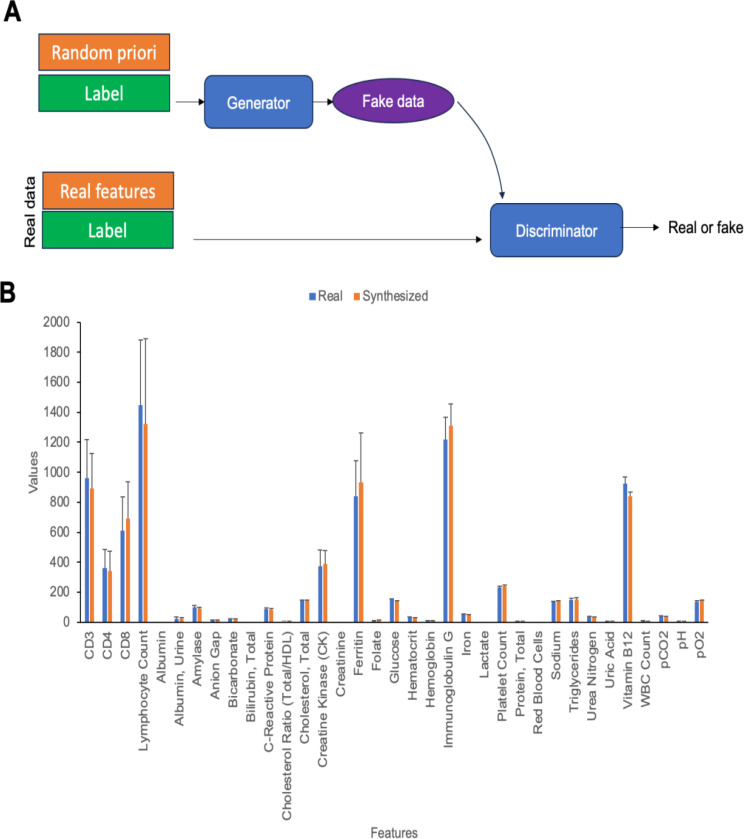
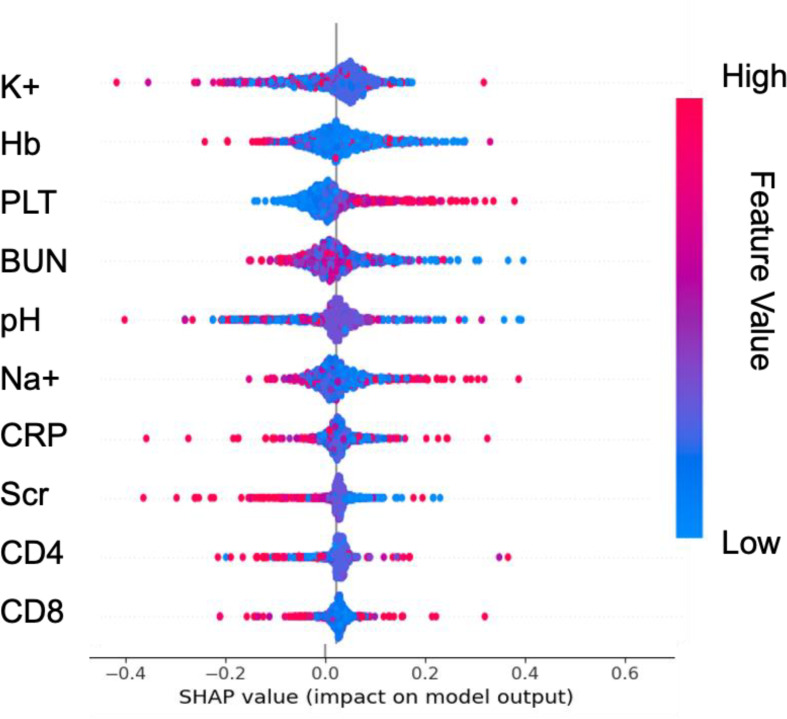
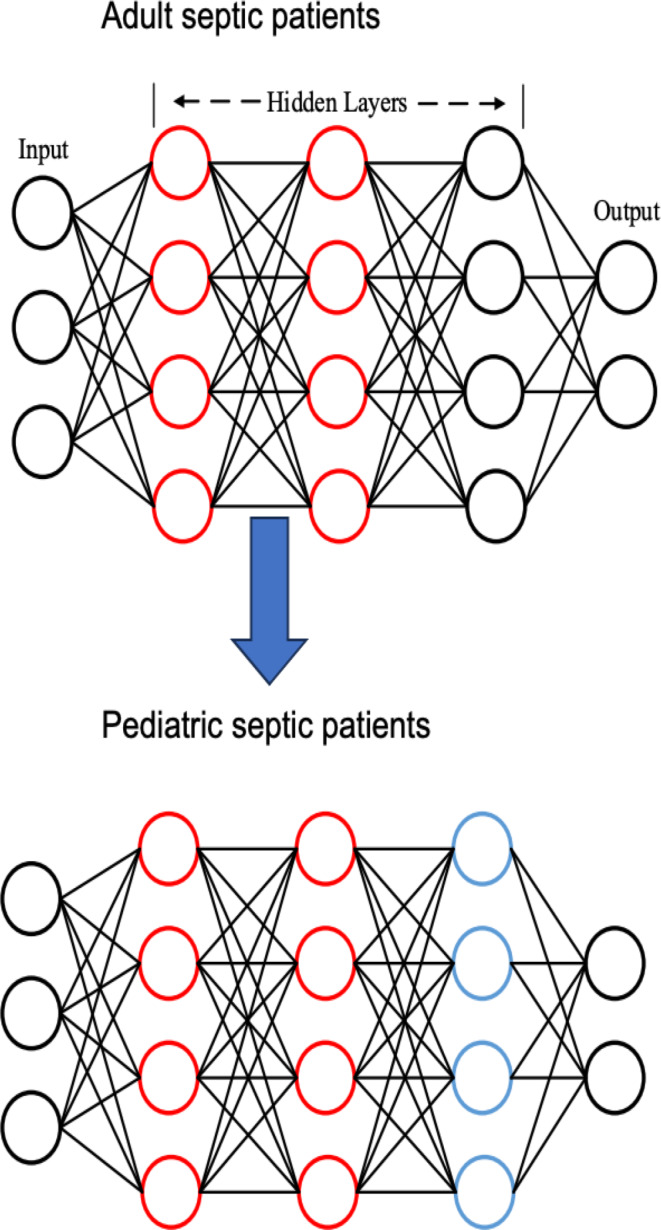
Continuous renal replacement therapy (CRRT) is a life-saving procedure for sepsis but the benefit of CRRT varies and prediction of clinical outcomes is valuable in efficient treatment planning. This study aimed to use machine learning (ML) models trained using MIMIC III data for identifying sepsis patients who would benefit from CRRT. We first selected patients with sepsis and CRRT in the ICU setting and their gender, and an array of routine lab results were included as features to train machine learning models using 30-day mortality as the primary outcome. A total of 4161 patients were included for analysis, among whom there were 1342 deaths within 30 days. Without data augmentation, extreme gradient boosting (XGBoost) showed an accuracy of 64.2% with AUC-ROC of 0.61. Data augmentation using a conditional generative adversarial neural network (c-GAN) resulted in a significantly improved accuracy (82%) and ROC-AUC (0.78%). To enable prediction on pediatric patients, we adopted transfer learning approaches, where the weights of all but the last hidden layer were fixed, followed by fine-tuning of the weights of the last hidden layer using pediatric data of 200 patients as the inputs. A significant improvement was observed using the transfer learning approach (AUCROC = 0.76) compared to direct training on the pediatric cohort (AUCROC = 0.62). Through this transfer-learning-facilitated patient outcome prediction, our study showed that ML can aid in clinical decision-making by predicting patient responses to CRRT for managing pediatric sepsis.
连续肾脏替代治疗(CRRT)是脓毒症患者的救命程序,但 CRRT 的益处因人而异,预测临床结局对于高效的治疗计划具有重要价值。本研究旨在使用 MIMIC III 数据训练的机器学习(ML)模型,来识别可能从 CRRT 中获益的脓毒症患者。我们首先在 ICU 环境中选择患有脓毒症和 CRRT 的患者,并选择他们的性别,以及一系列常规实验室结果作为特征,使用 30 天死亡率作为主要结局来训练机器学习模型。共纳入 4161 例患者进行分析,其中 30 天内死亡 1342 例。未经数据扩充,极端梯度提升(XGBoost)的准确率为 64.2%,ROC-AUC 为 0.61。使用条件生成对抗网络(c-GAN)进行数据扩充可显著提高准确率(82%)和 ROC-AUC(0.78%)。为了能够对儿科患者进行预测,我们采用了迁移学习方法,即固定除最后一个隐藏层之外的所有层的权重,然后使用 200 例儿科患者的数据作为输入,微调最后一个隐藏层的权重。与直接在儿科队列上进行训练相比,使用迁移学习方法观察到显著的改善(AUCROC=0.76)。通过这种基于迁移学习的患者结局预测,我们的研究表明,ML 可以通过预测患者对 CRRT 的反应来辅助临床决策,从而治疗儿科脓毒症。