Department of Molecular Medicine, University of Padua, Padua, 35131, Italy.
Department of Medicine and Technological Innovation, University of Insubria, via O.Rossi 9, Varese, 21100, Italy.
J Transl Med. 2024 Sep 27;22(1):862. doi: 10.1186/s12967-024-05650-5.
Glioblastoma (GBM) is the most frequent and aggressive brain tumor in adults with the lowest survival rates five years post-diagnosis. Oncolytic viruses (OVs) selectively target and damage cancer cells, and for this reason they are being investigated as new therapeutic tools also against GBM.
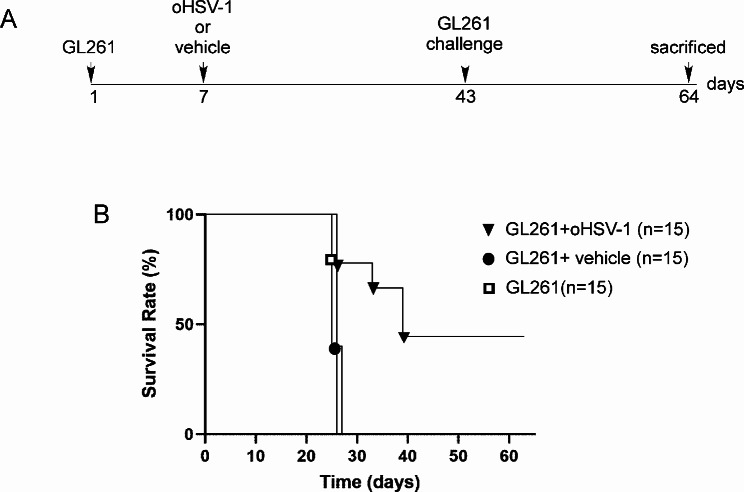
An oncolytic herpes simplex virus type 1 (oHSV-1) with deletions in the γ34.5 neurovirulence gene and the US12 gene, expressing enhanced green fluorescent protein (EGFP-oHSV-1) as reporter gene was generated and tested for its capacity to infect and kill the murine GL261 glioblastoma (GBM) cell line. Syngeneic mice were orthotopically injected with GL261cells. Seven days post-implantation, EGFP-oHSV-1 was administered intratumorally. Twenty-one days after parental tumor challenge in the opposite brain hemisphere, mice were sacrified and their brains were analysed by immunohistochemistry to assess tumor presence and cell infiltrate.
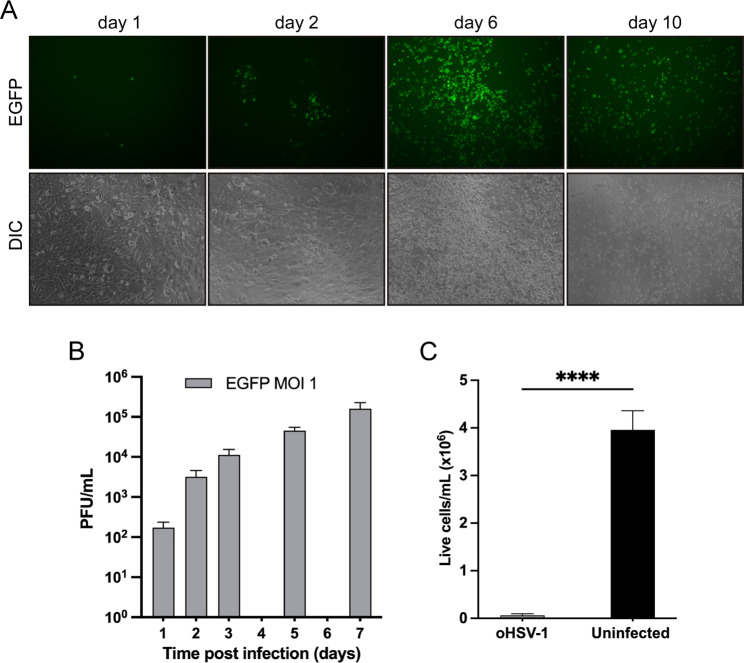
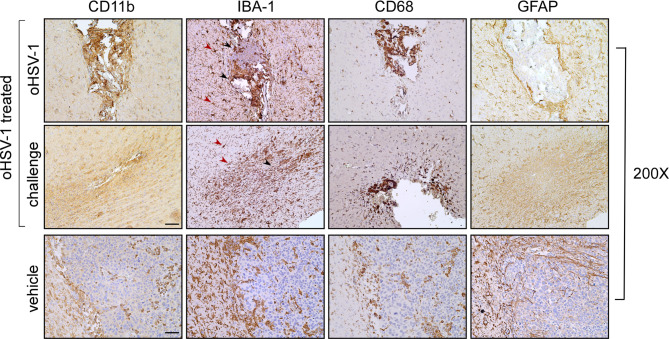
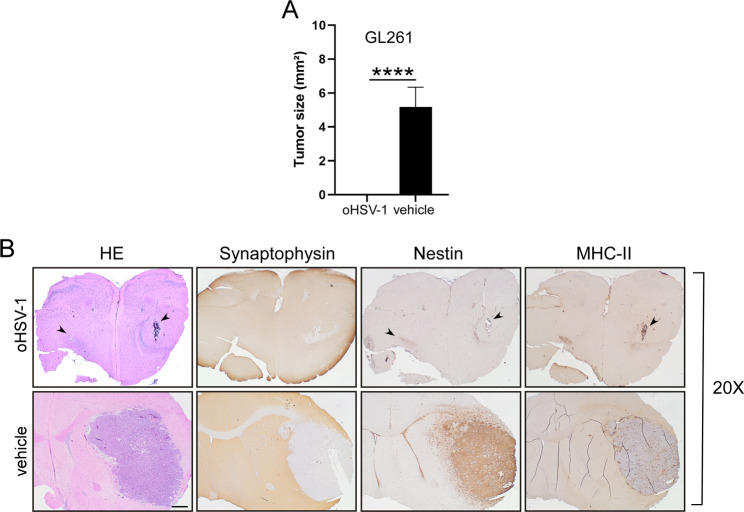
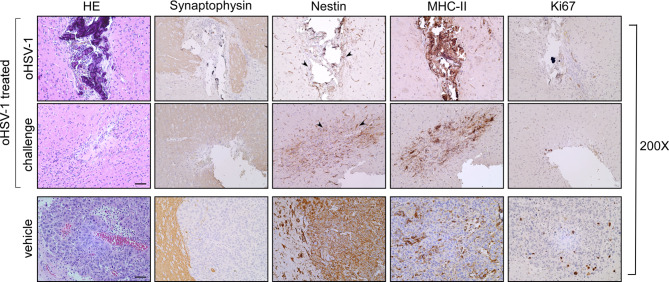
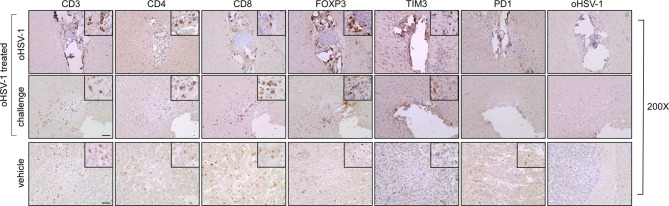
oHSV-1 replicates and induces cell death of GL261 cells in vitro. A single intracranial injection of EGFP-oHSV-1 in established GL261 tumors significantly prolongs survival in all treated mice compared to placebo treatment. Notably, 45% of treated mice became long-term survivors, and rejected GL261 cells upon rechallenge in the contralateral brain hemisphere, indicating an anamnestic antitumoral immune response. Post-mortem analysis revealed a profound modification of the tumor microenvironment with increased infiltration of CD4 + and CD8 + T lymphocytes, intertumoral vascular collapse and activation and redistribution of macrophage, microglia, and astroglia in the tumor area, with the formation of intense fibrotic tissue suggestive of complete rejection in long-term survivor mice.
EGFP-oHSV1 demonstrates potent antitumoral activity in an immunocompetent GBM model as a monotherapy, resulting from direct cell killing combined with the stimulation of a protective adaptive immune response. These results open the way to possible application of our strategy in clinical setting.
胶质母细胞瘤(GBM)是成人中最常见和侵袭性最强的脑肿瘤,诊断后五年的生存率最低。溶瘤病毒(OVs)选择性地靶向和损伤癌细胞,因此它们被作为新的治疗工具进行研究,也用于治疗 GBM。
生成了一种缺失γ34.5神经毒力基因和 US12 基因的单纯疱疹病毒 1 型(oHSV-1),并表达增强型绿色荧光蛋白(EGFP-oHSV-1)作为报告基因,以测试其感染和杀死小鼠 GL261 胶质母细胞瘤(GBM)细胞系的能力。将同源 GL261 细胞原位注射到小鼠中。在植入后 7 天,给予肿瘤内 EGFP-oHSV-1。在对侧大脑半球进行亲本肿瘤挑战 21 天后,处死小鼠并通过免疫组织化学分析其大脑以评估肿瘤的存在和细胞浸润。
oHSV-1 在体外复制并诱导 GL261 细胞死亡。在已建立的 GL261 肿瘤中单次颅内注射 EGFP-oHSV-1 可显著延长所有治疗小鼠的存活时间,与安慰剂治疗相比。值得注意的是,45%的治疗小鼠成为长期幸存者,并在对侧大脑半球再次挑战时排斥 GL261 细胞,表明存在记忆性抗肿瘤免疫反应。尸检分析显示肿瘤微环境发生了深刻的改变,CD4+和 CD8+T 淋巴细胞浸润增加,肿瘤间血管塌陷,肿瘤区域巨噬细胞、小胶质细胞和星形胶质细胞的激活和重新分布,形成强烈的纤维化组织,提示长期幸存者小鼠完全排斥。
EGFP-oHSV1 作为单一疗法在免疫功能正常的 GBM 模型中表现出强大的抗肿瘤活性,这是直接细胞杀伤与刺激保护性适应性免疫反应相结合的结果。这些结果为我们的策略在临床环境中的可能应用开辟了道路。