Neuroscience Center, University of Helsinki, 00014, Helsinki, Finland.
A.I.Virtanen Institute for Molecular Sciences, University of Eastern Finland, 70211, Kuopio, Finland.
Fluids Barriers CNS. 2024 Sep 27;21(1):78. doi: 10.1186/s12987-024-00576-y.
Patients with Alzheimer's disease (AD) frequently present with cerebral amyloid angiopathy (CAA), characterized by the accumulation of beta-amyloid (Aβ) within the cerebral blood vessels, leading to cerebrovascular dysfunction. Pericytes, which wrap around vascular capillaries, are crucial for regulating cerebral blood flow, angiogenesis, and vessel stability. Despite the known impact of vascular dysfunction on the progression of neurodegenerative diseases, the specific role of pericytes in AD pathology remains to be elucidated.
To explore this, we generated pericyte-like cells from human induced pluripotent stem cells (iPSCs) harboring the Swedish mutation in the amyloid precursor protein (APPswe) along with cells from healthy controls. We initially verified the expression of classic pericyte markers in these cells. Subsequent functional assessments, including permeability, tube formation, and contraction assays, were conducted to evaluate the functionality of both the APPswe and control cells. Additionally, bulk RNA sequencing was utilized to compare the transcriptional profiles between the two groups.
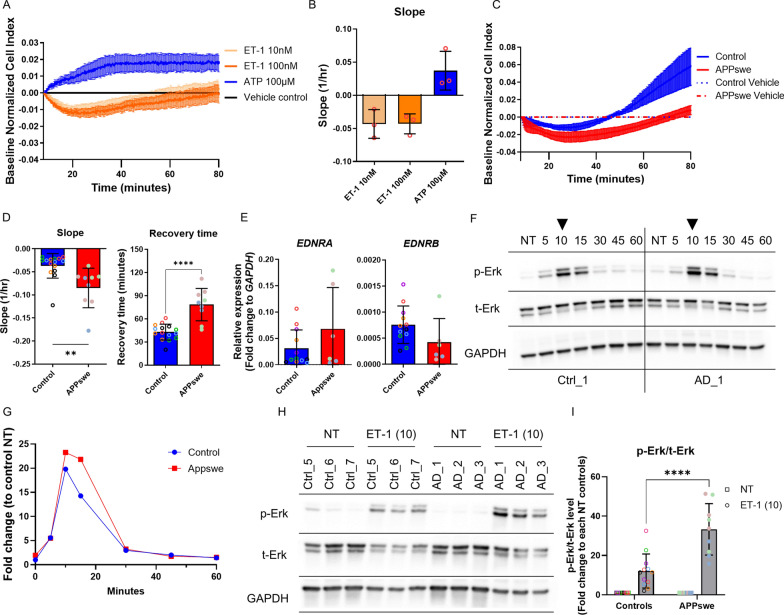
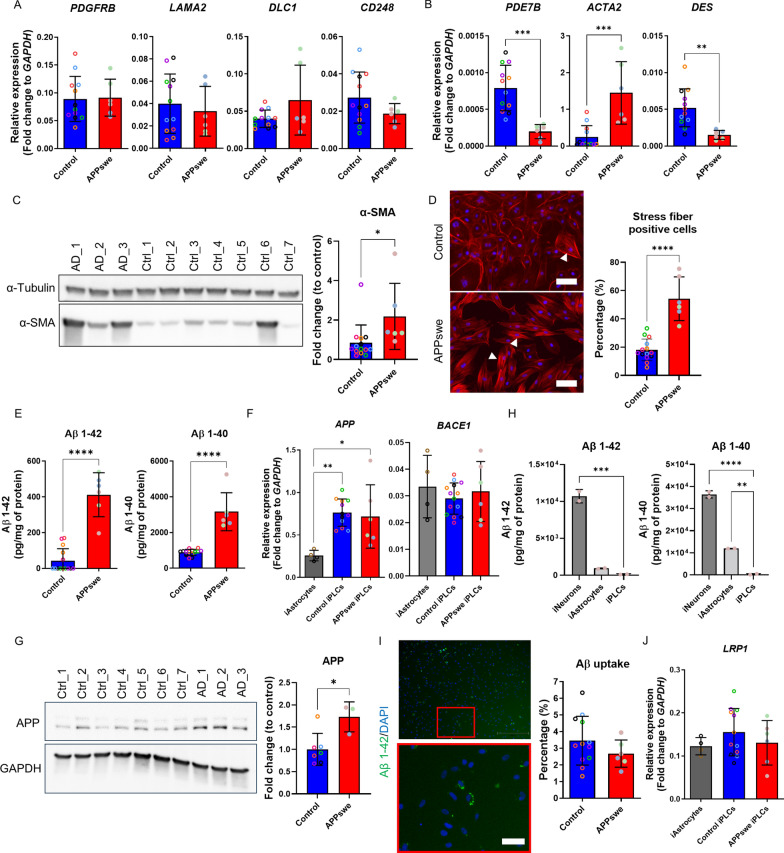
Our study reveals that iPSC-derived pericyte-like cells (iPLCs) can produce Aβ peptides. Notably, cells with the APPswe mutation secreted Aβ1-42 at levels ten-fold higher than those of control cells. The APPswe iPLCs also demonstrated a reduced ability to support angiogenesis and maintain barrier integrity, exhibited a prolonged contractile response, and produced elevated levels of pro-inflammatory cytokines following inflammatory stimulation. These functional changes in APPswe iPLCs correspond with transcriptional upregulation in genes related to actin cytoskeleton and extracellular matrix organization.
Our findings indicate that the APPswe mutation in iPLCs mimics several aspects of CAA pathology in vitro, suggesting that our iPSC-based vascular cell model could serve as an effective platform for drug discovery aimed to ameliorate vascular dysfunction in AD.
阿尔茨海默病(AD)患者常伴有脑淀粉样血管病(CAA),其特征是β-淀粉样蛋白(Aβ)在脑内血管中堆积,导致脑血管功能障碍。周细胞环绕着血管毛细血管,对于调节脑血流、血管生成和血管稳定性至关重要。尽管已知血管功能障碍对神经退行性疾病的进展有影响,但周细胞在 AD 病理学中的具体作用仍有待阐明。
为了探索这一点,我们从携带淀粉样前体蛋白(APP)瑞典突变的人诱导多能干细胞(iPSC)和健康对照细胞中生成了类周细胞。我们首先验证了这些细胞中经典周细胞标志物的表达。随后进行了包括通透性、管形成和收缩测定在内的功能评估,以评估 APPswe 和对照细胞的功能。此外,还利用批量 RNA 测序比较了两组的转录谱。
我们的研究表明,iPSC 衍生的类周细胞(iPLC)可以产生 Aβ肽。值得注意的是,携带 APPswe 突变的细胞分泌的 Aβ1-42 水平比对照细胞高十倍。APPswe iPLC 还表现出支持血管生成和维持屏障完整性的能力降低,收缩反应延长,以及在炎症刺激下产生更高水平的促炎细胞因子。APPswe iPLC 中的这些功能变化与与肌动蛋白细胞骨架和细胞外基质组织相关的基因转录上调相对应。
我们的研究结果表明,iPLC 中的 APPswe 突变在体外模拟了 CAA 病理学的几个方面,表明我们基于 iPSC 的血管细胞模型可能成为一种有效的药物发现平台,旨在改善 AD 中的血管功能障碍。