Department of Nephrology, Medical University of Lublin, 20-093 Lublin, Poland.
Department of Experimental and Clinical Pharmacology, Medical University of Lublin, 20-093 Lublin, Poland.
Int J Mol Sci. 2024 Sep 14;25(18):9940. doi: 10.3390/ijms25189940.
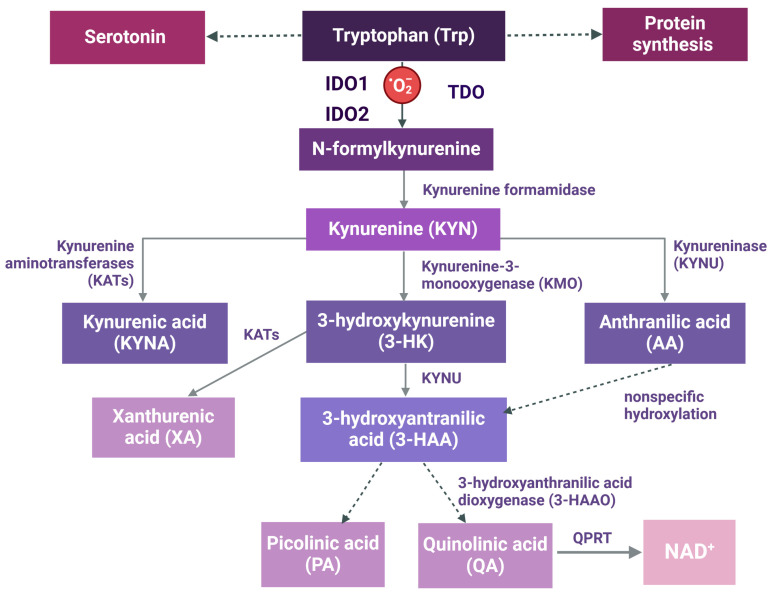
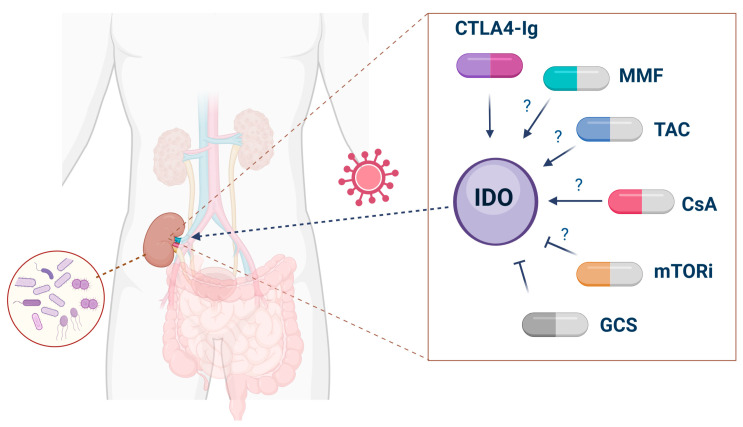
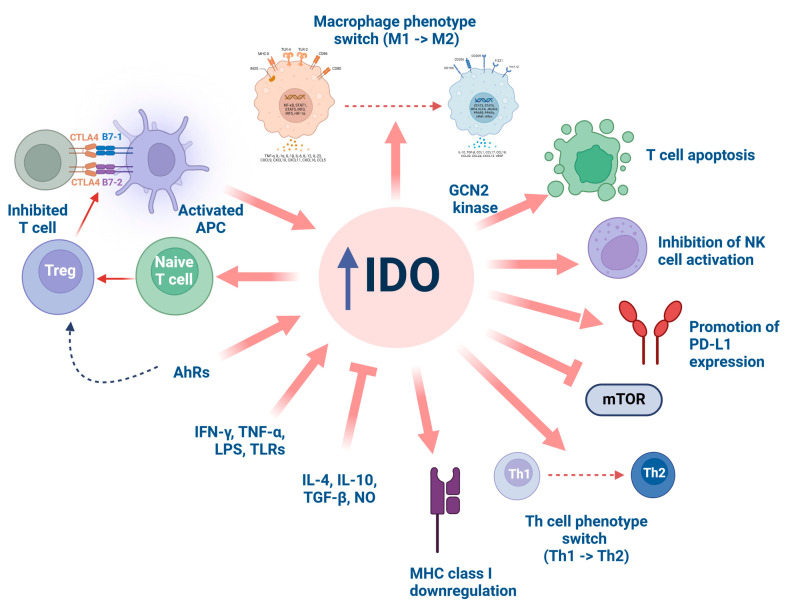
Kidney transplantation significantly improves the survival of patients with end-stage kidney disease (ESKD) compared to other forms of kidney replacement therapy. However, kidney transplant recipients' outcomes are not fully satisfactory due to increased risk of cardiovascular diseases, infections, and malignancies. Immune-related complications remain the biggest challenge in the management of kidney graft recipients. Despite the broad spectrum of immunosuppressive agents available and more detailed methods used to monitor their effectiveness, chronic allograft nephropathy remains the most common cause of kidney graft rejection. The kynurenine (KYN) pathway is the main route of tryptophan (Trp) degradation, resulting in the production of a plethora of substances with ambiguous properties. Conversion of Trp to KYN by the enzyme indoleamine 2,3-dioxygenase (IDO) is the rate-limiting step determining the formation of the next agents from the KYN pathway. IDO activity, as well as the production of subsequent metabolites of the pathway, is highly dependent on the balance between pro- and anti-inflammatory conditions. Moreover, KYN pathway products themselves possess immunomodulating properties, e.g., modify the activity of IDO and control other immune-related processes. KYN metabolites were widely studied in neurological disorders but recently gained the attention of researchers in the context of immune-mediated diseases. Evidence that this route of Trp degradation may represent a peripheral tolerogenic pathway with significant implications for transplantation further fueled this interest. Our review aimed to present recent knowledge about the role of the KYN pathway in the pathogenesis, diagnosis, monitoring, and treatment of kidney transplant recipients' complications.
与其他形式的肾脏替代疗法相比,肾移植显著提高了终末期肾病(ESKD)患者的生存率。然而,由于心血管疾病、感染和恶性肿瘤风险增加,肾移植受者的结局并不完全令人满意。免疫相关并发症仍然是肾移植受者管理中最大的挑战。尽管有广泛的免疫抑制剂可供选择,并采用更详细的方法来监测其效果,但慢性同种异体肾移植排斥仍然是肾移植排斥的最常见原因。犬尿氨酸(KYN)途径是色氨酸(Trp)降解的主要途径,导致产生大量性质不明的物质。色氨酸到犬尿氨酸的转化由酶吲哚胺 2,3-双加氧酶(IDO)完成,这是决定 KYN 途径下一个产物形成的限速步骤。IDO 活性以及途径中随后代谢物的产生高度依赖于促炎和抗炎条件之间的平衡。此外,KYN 途径产物本身具有免疫调节特性,例如,调节 IDO 的活性并控制其他与免疫相关的过程。KYN 代谢物在神经疾病中得到了广泛研究,但最近在免疫介导性疾病的背景下引起了研究人员的关注。证据表明,这种色氨酸降解途径可能代表一种外周耐受途径,对移植具有重要意义,进一步激发了人们的兴趣。我们的综述旨在介绍有关 KYN 途径在肾移植受者并发症的发病机制、诊断、监测和治疗中的作用的最新知识。