Osuala Uchenna, Goh Megan H, Mansur Arian, Smirniotopoulos John B, Scott Arielle, Vassell Christine, Yousefi Bardia, Jain Neil K, Sag Alan A, Lax Allison, Park Kevin W, Kheradi Alexander, Sapoval Marc, Golzarian Jafar, Habibollahi Peiman, Ahmed Osman, Young Shamar, Nezami Nariman
Georgetown University School of Medicine, Washington, DC 20007, USA.
Harvard Medical School, Cambridge, MA 02115, USA.
J Pers Med. 2024 Sep 13;14(9):970. doi: 10.3390/jpm14090970.
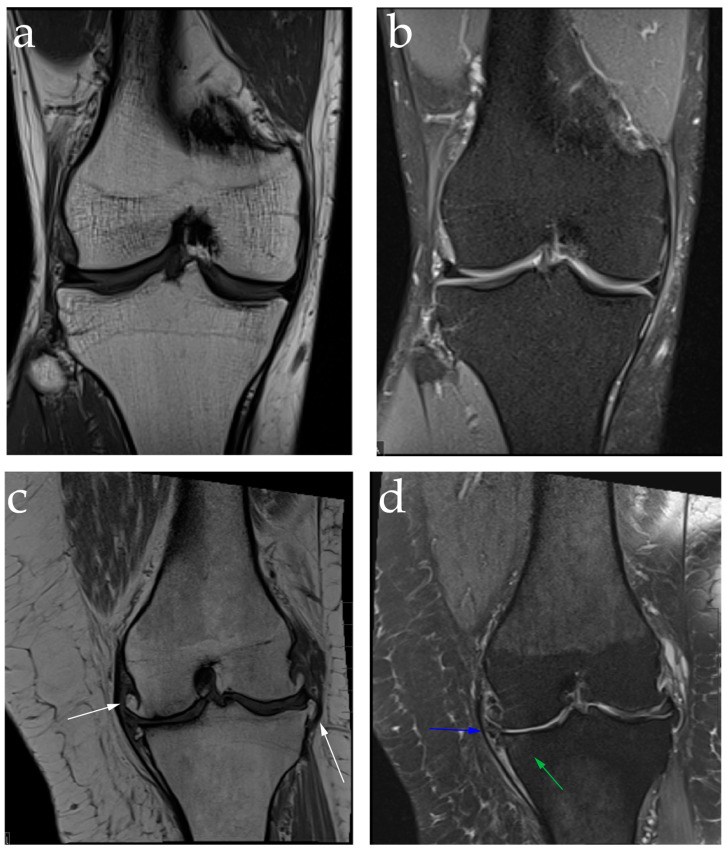
Knee osteoarthritis (KOA) is a musculoskeletal disorder characterized by articular cartilage degeneration and chronic inflammation, affecting one in five people over 40 years old. The purpose of this study was to provide an overview of traditional and novel minimally invasive treatment options and role of artificial intelligence (AI) to streamline the diagnostic process of KOA. This literature review provides insights into the mechanisms of action, efficacy, complications, technical approaches, and recommendations to intra-articular injections (corticosteroids, hyaluronic acid, and plate rich plasma), genicular artery embolization (GAE), and genicular nerve ablation (GNA). Overall, there is mixed evidence to support the efficacy of the intra-articular injections that were covered in this study with varying degrees of supported recommendations through formal medical societies. While GAE and GNA are more novel therapeutic options, preliminary evidence supports their efficacy as a potential minimally invasive therapy for patients with moderate to severe KOA. Furthermore, there is evidentiary support for the use of AI to assist clinicians in the diagnosis and potential selection of treatment options for patients with KOA. In conclusion, there are many exciting advancements within the diagnostic and treatment space of KOA.
膝关节骨关节炎(KOA)是一种肌肉骨骼疾病,其特征为关节软骨退变和慢性炎症,影响着五分之一的40岁以上人群。本研究的目的是概述传统和新型微创治疗方案以及人工智能(AI)在简化KOA诊断过程中的作用。这篇文献综述深入探讨了关节内注射(皮质类固醇、透明质酸和富血小板血浆)、膝动脉栓塞术(GAE)和膝神经消融术(GNA)的作用机制、疗效、并发症、技术方法及建议。总体而言,有混合证据支持本研究中所涵盖的关节内注射的疗效,通过正规医学协会有不同程度的支持性建议。虽然GAE和GNA是更新颖的治疗选择,但初步证据支持它们作为中重度KOA患者潜在的微创治疗方法的疗效。此外,有证据支持使用AI协助临床医生对KOA患者进行诊断和潜在治疗方案的选择。总之,在KOA的诊断和治疗领域有许多令人兴奋的进展。