College of Electronic and Information Engineering, Beihua University, Jilin 132021, China.
College of Optoelectronic Engineering, Changchun University of Science and Technology, Changchun 130022, China.
Sensors (Basel). 2024 Sep 21;24(18):6111. doi: 10.3390/s24186111.
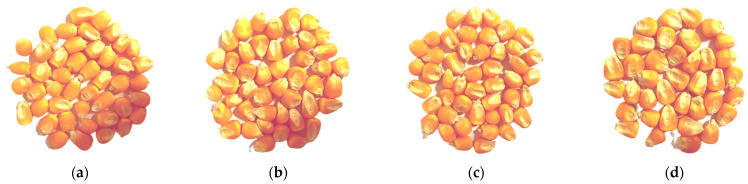
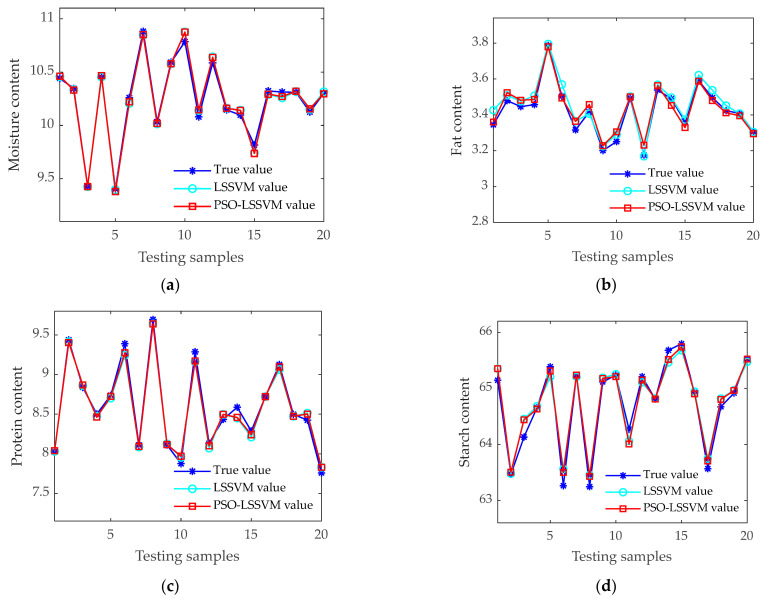
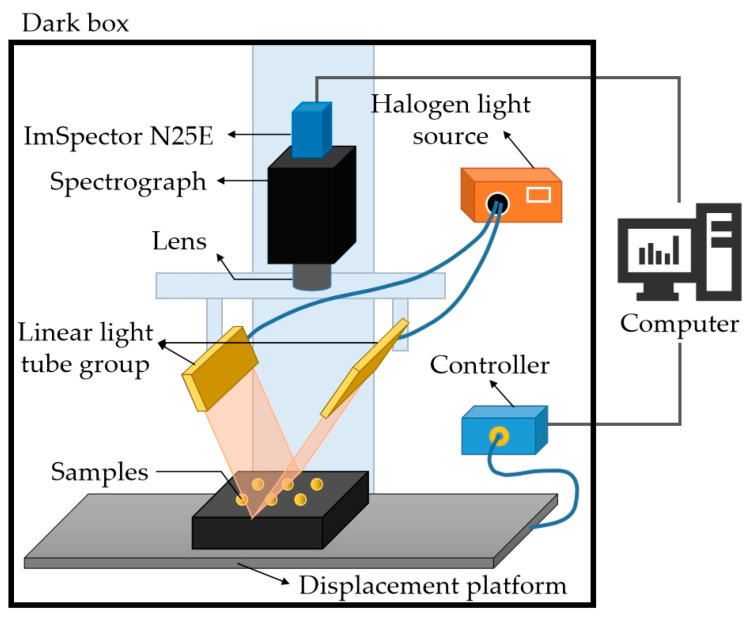
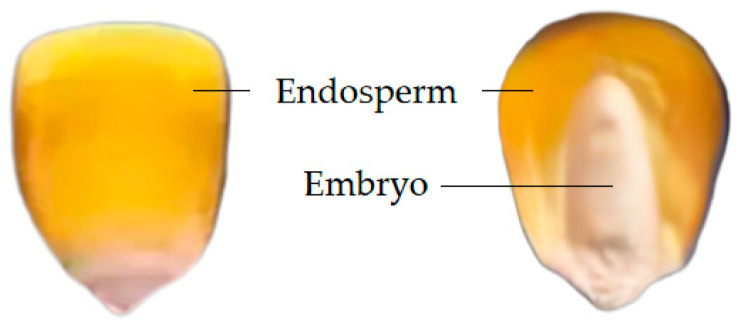
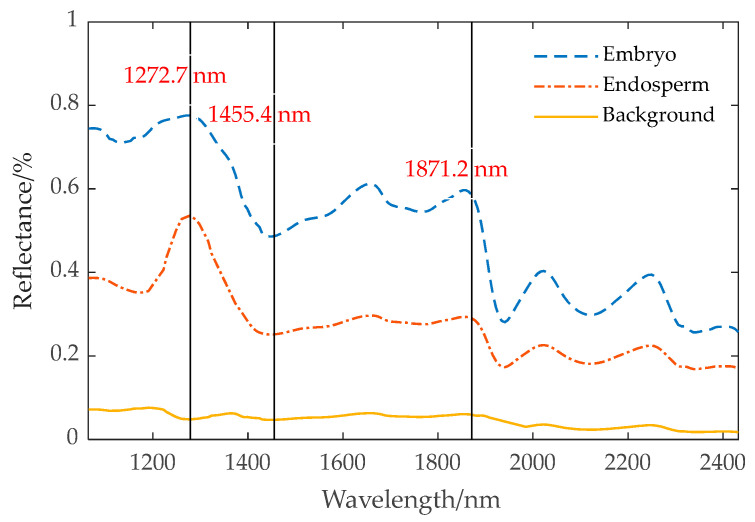
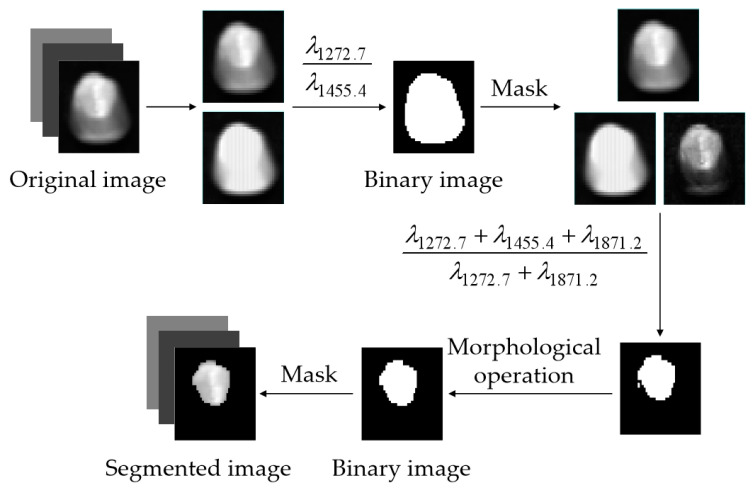
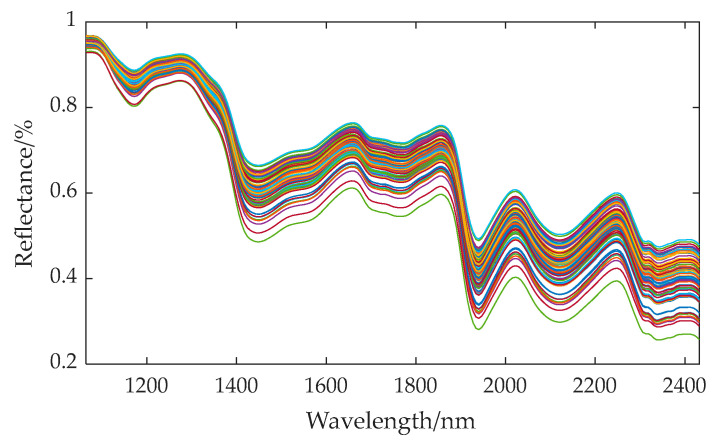
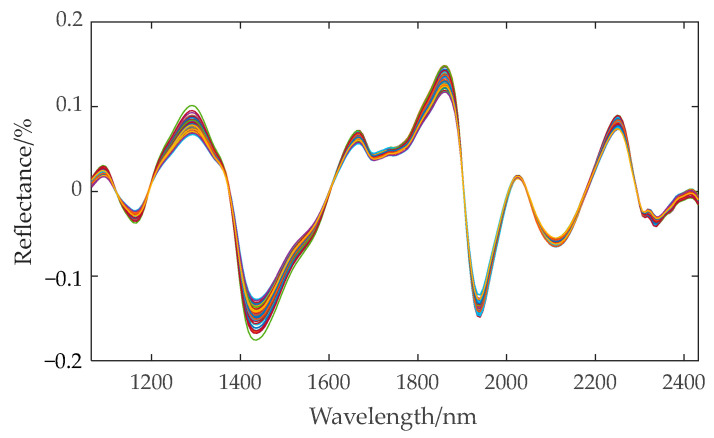
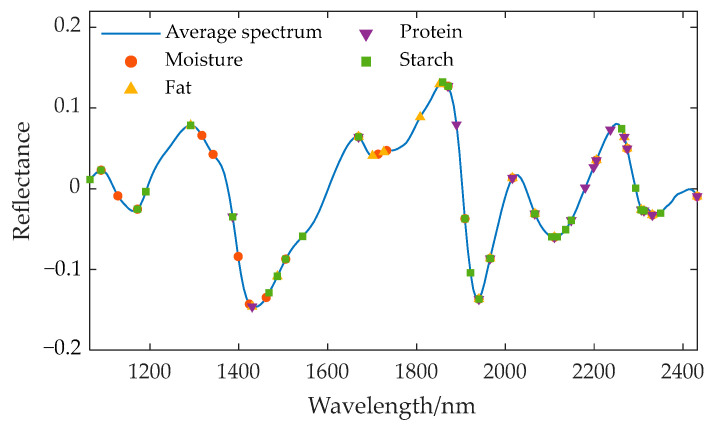
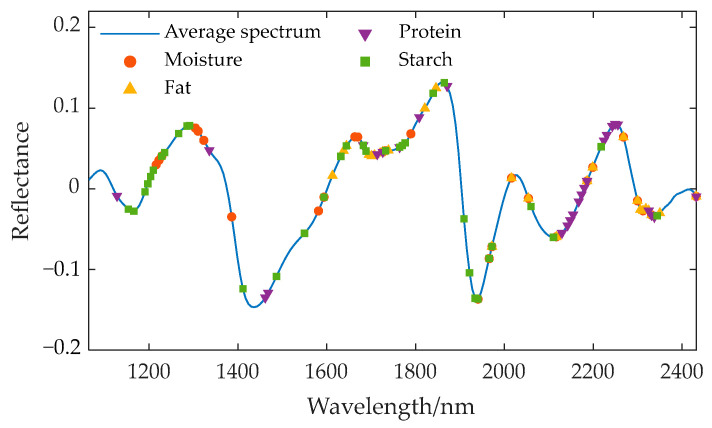
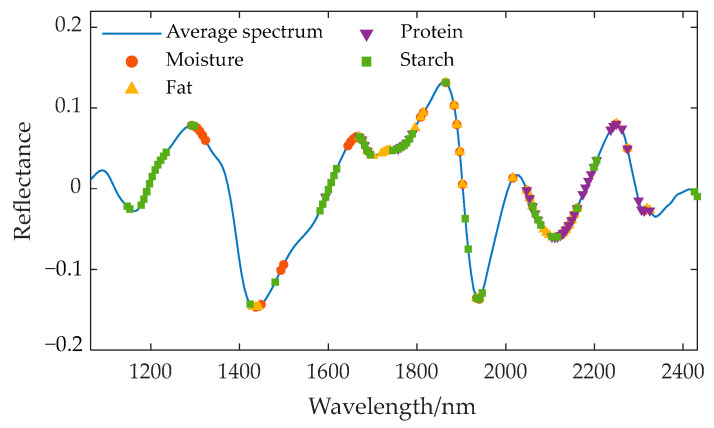
Assessing the quality of corn seeds necessitates evaluating their water, fat, protein, and starch content. This study integrates hyperspectral imaging technology with chemometric analysis techniques to achieve non-invasive and rapid detection of multiple key components in corn seeds. Hyperspectral images of the embryo surface of maize seeds were collected within the wavelength range of 1100~2498 nm. Subsequently, image segmentation techniques were applied to extract the germ structure of the corn seeds as the region of interest. Seven spectral data preprocessing algorithms were employed, and the Detrending Transformation (DT) algorithm was identified as the optimal preprocessing method through comparative analysis using the Partial Least Squares Regression (PLSR) model. To reduce spectral redundancy and streamline the prediction model, three algorithms were employed for characteristic wavelength extraction: Successive Projections Algorithm (SPA), Competitive Adaptive Reweighted Sampling (CARS), and Uninformative Variable Elimination (UVE). Using the original spectra and extracted characteristic wavelengths, PLSR, BP, RBF, and LSSVM models were constructed to detect the content of four components. The analysis indicated that the CARS-LSSVM algorithm had the best prediction performance. The PSO algorithm was employed to further optimize the parameters of the LSSVM model, thereby improving the model's prediction performance. The R values for the four components in the test set were 0.9884, 0.9490, 0.9864, and 0.9687, respectively. This indicates that hyperspectral technology combined with the DT-CARS-PSO-LSSVM algorithm can effectively detect the main component content of corn seeds. This study not only provides a scientific basis for the evaluation of corn seed quality but also opens up new avenues for the development of non-destructive testing technology in related fields.
评估玉米种子的质量需要评估其水分、脂肪、蛋白质和淀粉含量。本研究将高光谱成像技术与化学计量分析技术相结合,实现了对玉米种子多个关键成分的非侵入式和快速检测。采集了玉米种子胚表面的高光谱图像,波长范围为 1100~2498nm。随后,应用图像分割技术提取玉米种子的胚结构作为感兴趣区域。采用了七种光谱数据预处理算法,通过偏最小二乘回归(PLSR)模型的比较分析,确定了去趋势变换(DT)算法为最佳预处理方法。为了减少光谱冗余并简化预测模型,采用了三种特征波长提取算法:连续投影算法(SPA)、竞争自适应重加权采样(CARS)和无信息变量消除(UVE)。使用原始光谱和提取的特征波长,构建了 PLSR、BP、RBF 和 LSSVM 模型来检测四个成分的含量。分析表明,CARS-LSSVM 算法具有最佳的预测性能。采用粒子群算法(PSO)进一步优化 LSSVM 模型的参数,从而提高模型的预测性能。在测试集中,四个成分的 R 值分别为 0.9884、0.9490、0.9864 和 0.9687,这表明高光谱技术结合 DT-CARS-PSO-LSSVM 算法可以有效地检测玉米种子的主要成分含量。本研究不仅为玉米种子质量评价提供了科学依据,也为相关领域的无损检测技术的发展开辟了新途径。