Vaccine and Infectious Disease Division, Fred Hutchinson Cancer Center, Seattle, WA 98109, USA.
Public Health Sciences Division, Fred Hutchinson Cancer Center, Seattle, WA 98109, USA.
Viruses. 2024 Aug 27;16(9):1365. doi: 10.3390/v16091365.
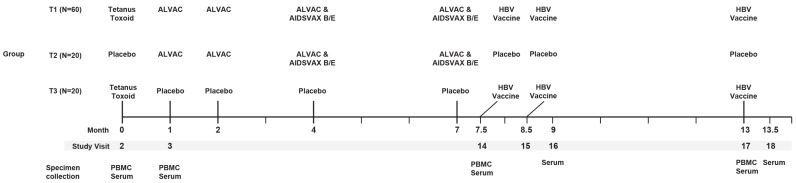
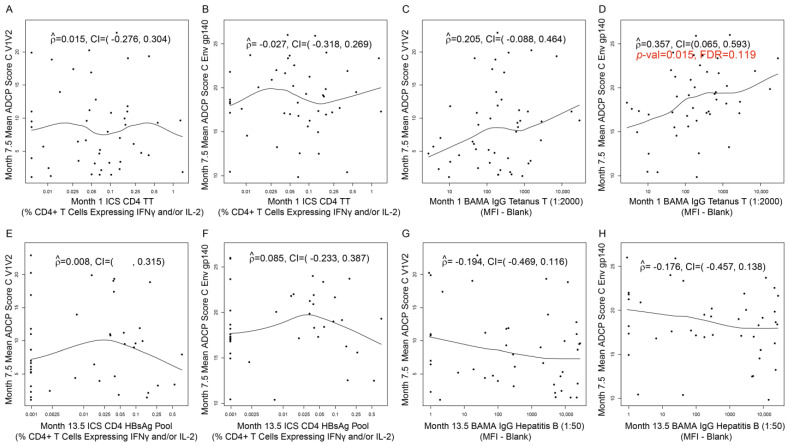
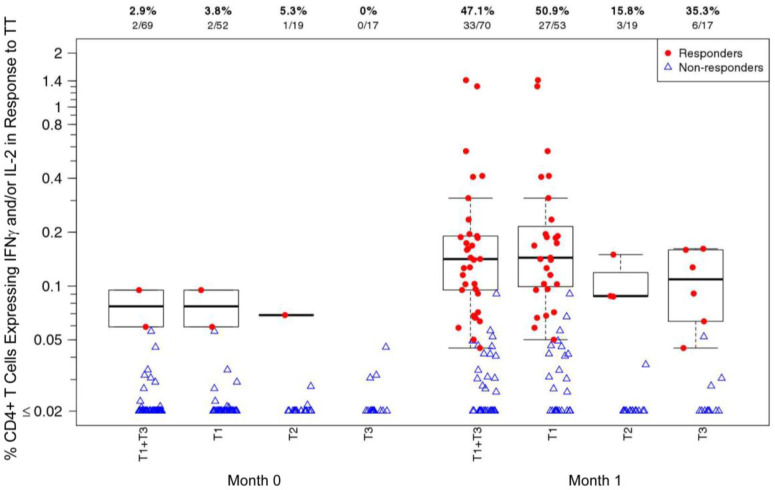
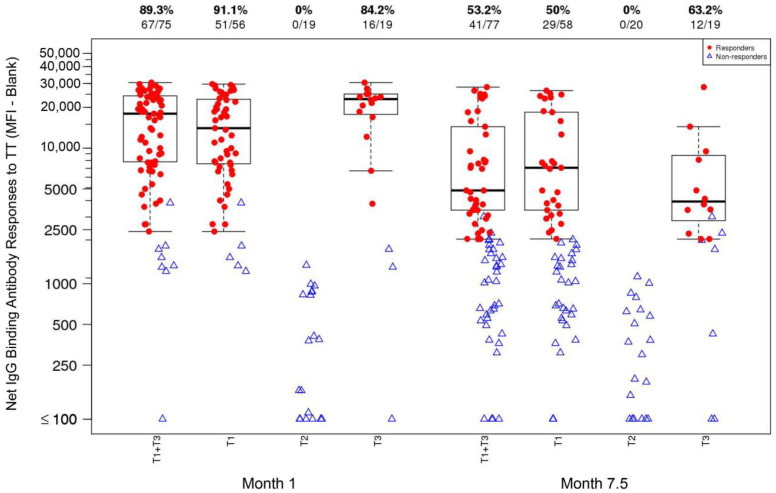
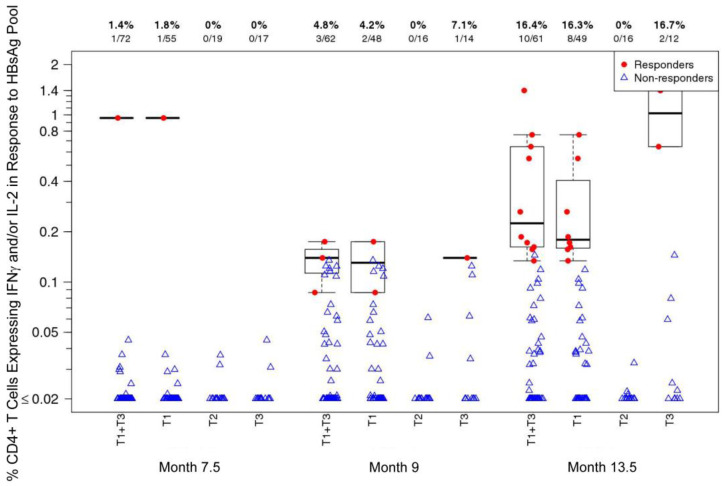
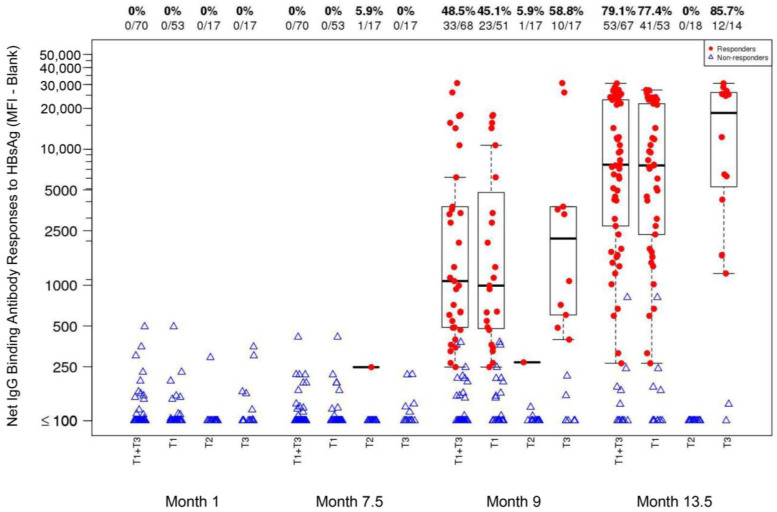
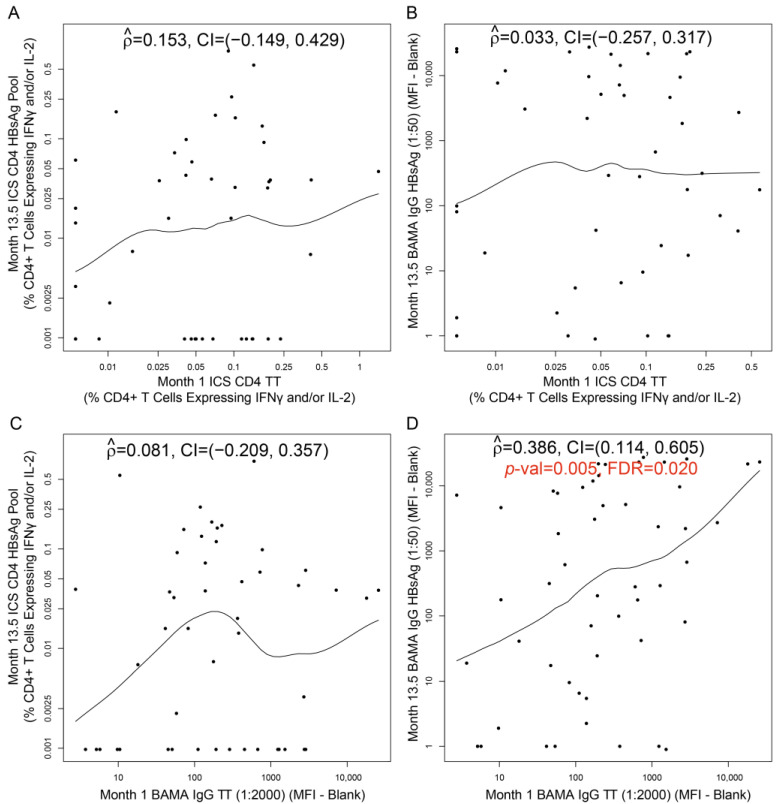
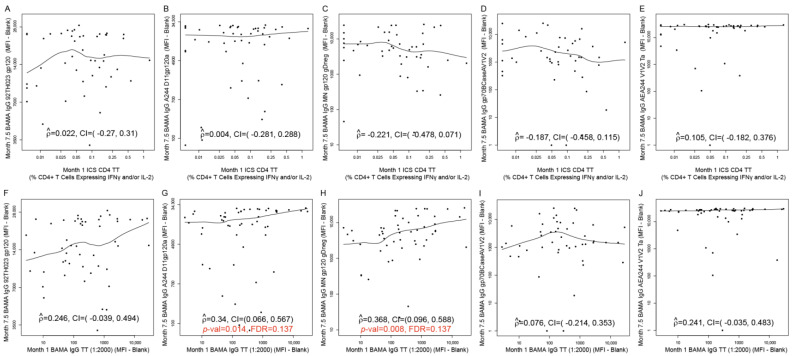
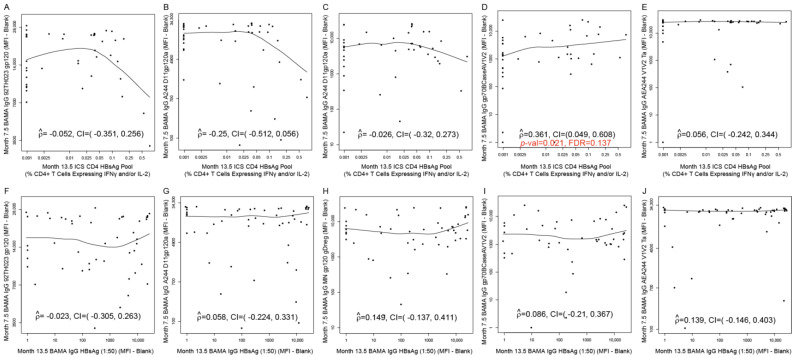
Identifying correlations between immune responses elicited via HIV and non-HIV vaccines could aid the search for correlates of HIV protection and increase statistical power in HIV vaccine-efficacy trial designs. An exploratory objective of the HVTN 097 phase 1b trial was to assess whether immune responses [focusing on those supported as correlates of risk (CoR) of HIV acquisition] induced via the RV144 pox-prime HIV vaccine regimen correlated with those induced via tetanus toxoid (TT) and/or hepatitis B virus (HBV) vaccines. We measured TT-specific and HBV-specific IgG-binding antibody responses and TT-specific and HBV-specific CD4+ T-cell responses at multiple time points in HVTN 097 participants, and we assessed their correlations at peak time points with HIV vaccine (ALVAC-HIV and AIDSVAX B/E)-induced responses. Four correlations were significant [false discovery rate-adjusted -value (FDR) ≤ 0.2]. Three of these four were with IgG-binding antibody responses to TT measured one month after TT receipt, with the strongest and most significant correlation [rho = 0.368 (95% CI: 0.096, 0.588; = 0.008; FDR = 0.137)] being with IgG-binding antibody responses to MN gp120 gDneg (B protein boost) measured two weeks after the second ALVAC-HIV and AIDSVAX B/E boost. The fourth significant correlation [(rho = 0.361; 95% CI: 0.049, 0.609; = 0.021; FDR = 0.137)] was between CD4+ T-cell responses to a hepatitis B surface antigen peptide pool, measured 2 weeks after the third HBV vaccination, and IgG-binding antibody responses to gp70BCaseAV1V2 (B V1V2 immune correlate), measured two weeks after the second ALVAC-HIV and AIDSVAX B/E boost. These moderate correlations imply that either vaccine, TT or HBV, could potentially provide a moderately useful immunogenicity predictor for the ALVAC-HIV and AIDSVAX B/E HIV vaccine regimen.
鉴定 HIV 疫苗和非 HIV 疫苗引发的免疫反应之间的相关性,可以帮助寻找 HIV 保护的相关因素,并提高 HIV 疫苗功效试验设计的统计能力。HVTN 097 期 1b 试验的一个探索性目标是评估通过 RV144 痘苗疫苗方案诱导的免疫反应(重点关注那些被认为是 HIV 感染风险相关因素的反应)是否与破伤风类毒素(TT)和/或乙型肝炎病毒(HBV)疫苗诱导的免疫反应相关。我们在 HVTN 097 参与者中多个时间点测量了 TT 特异性和 HBV 特异性 IgG 结合抗体反应以及 TT 特异性和 HBV 特异性 CD4+T 细胞反应,并评估了它们在峰值时间点与 HIV 疫苗(ALVAC-HIV 和 AIDSVAX B/E)诱导的反应之间的相关性。有四个相关性具有统计学意义(错误发现率校正值(FDR)≤0.2)。这四个相关性中的三个与 TT 接种一个月后 TT 特异性 IgG 结合抗体反应相关,其中最强且最显著的相关性[rho=0.368(95%CI:0.096,0.588; =0.008;FDR=0.137)]是与 MN gp120 gDneg(B 蛋白增强)的 IgG 结合抗体反应相关,该反应在第二次 ALVAC-HIV 和 AIDSVAX B/E 增强后的两周内测量。第四个显著相关性[rho=0.361;95%CI:0.049,0.609; =0.021;FDR=0.137)]是在第三次 HBV 接种后两周测量的乙型肝炎表面抗原肽池的 CD4+T 细胞反应与 gp70BCaseAV1V2(B V1V2 免疫相关因素)的 IgG 结合抗体反应之间,该反应在第二次 ALVAC-HIV 和 AIDSVAX B/E 增强后的两周内测量。这些中度相关性表明,TT 或 HBV 疫苗都可能为 ALVAC-HIV 和 AIDSVAX B/E HIV 疫苗方案提供一种有用的免疫原性预测指标。