
依非韦伦和多替拉韦对 HIV 感染者代谢组学和炎症谱及血小板活化的比较影响:一项初步研究。
Comparative Effects of Efavirenz and Dolutegravir on Metabolomic and Inflammatory Profiles, and Platelet Activation of People Living with HIV: A Pilot Study.
机构信息
Department of Immunology, Faculty of Health Sciences, University of Pretoria, Pretoria 0001, South Africa.
Human Metabolomics, Faculty of Natural and Agricultural Sciences, North-West University, Potchefstroom 2520, South Africa.
出版信息
Viruses. 2024 Sep 14;16(9):1462. doi: 10.3390/v16091462.
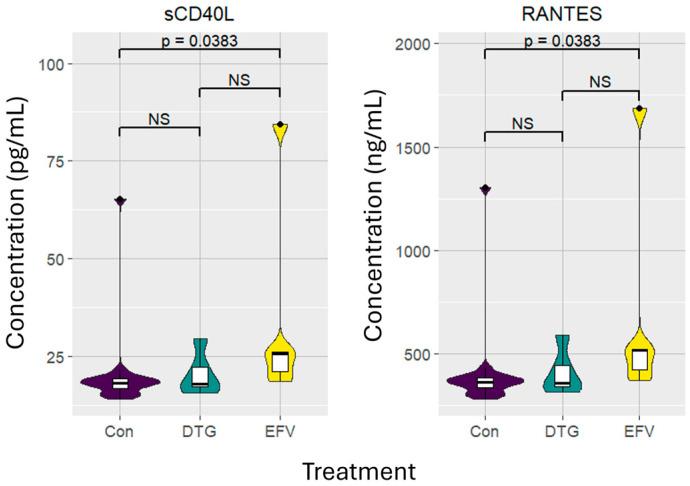
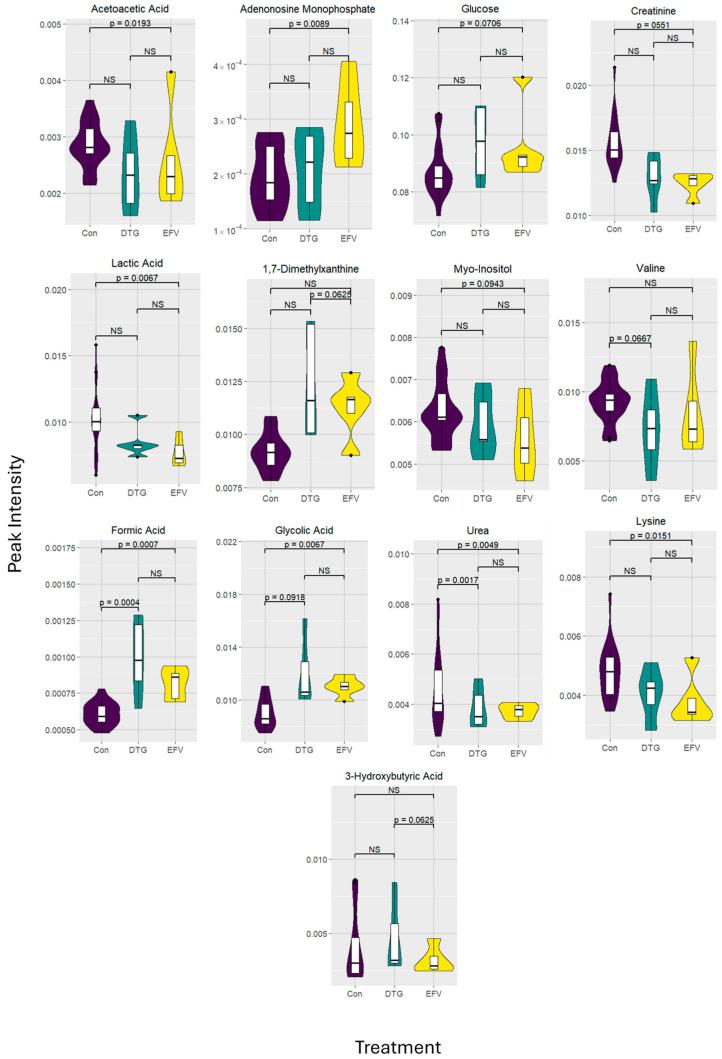
Antiretroviral therapy (ART) has reduced the mortality and morbidity associated with HIV. However, irrespective of treatment, people living with HIV remain at a higher risk of developing non-AIDS-associated diseases. In 2019, the World Health Organization recommended the transition from efavirenz (EFV)- to dolutegravir (DTG)-based ART. Data on the impact of this transition are still limited. The current study therefore investigated the metabolic profiles, cytokine inflammatory responses, and platelet activation before and after the treatment transition. Plasma samples from nine virally suppressed adults living with HIV and sixteen healthy, HIV-uninfected individuals residing in Gauteng, South Africa were compared. Metabolite and cytokine profiles, and markers associated with platelet activation, were investigated with untargeted proton magnetic resonance metabolomics, multiplex suspension bead array immunoassays, and sandwich enzyme-linked immunosorbent assays, respectively. In those individuals with normal C-reactive protein levels, the transition to a DTG-based ART regimen resulted in decreased concentrations of acetoacetic acid, creatinine, adenosine monophosphate, 1,7-dimethylxanthine, glycolic acid, 3-hydroxybutyric acid, urea, and lysine. Moreover, increased levels of formic acid, glucose, lactic acid, myo-inositol, valine, glycolic acid, and 3-hydroxybutyric acid were observed. Notably, levels of interleukin-6, platelet-derived growth factor-BB, granulocyte-macrophage colony-stimulating factor, tumor necrosis factor-alpha, soluble cluster of differentiation 40 ligand, as well as regulated on activation, normal T-cell expressed and secreted (RANTES) reached levels close to those observed in the healthy control participants. The elevated concentration of macrophage inflammatory protein-1 alpha was the only marker indicative of elevated levels of inflammation associated with DTG-based treatment. The transition from EFV- to DTG-based regimens therefore appears to be of potential benefit with metabolic and inflammatory markers, as well as those associated with cardiovascular disease and other chronic non-AIDS-related diseases, reaching levels similar to those observed in individuals not living with HIV.
抗逆转录病毒疗法(ART)降低了与 HIV 相关的死亡率和发病率。然而,无论接受何种治疗,HIV 感染者仍然面临更高的非艾滋病相关疾病的风险。2019 年,世界卫生组织建议将基于依非韦伦(EFV)的 ART 方案转换为基于多替拉韦(DTG)的方案。关于这种转换的影响的数据仍然有限。因此,本研究调查了治疗转换前后的代谢谱、细胞因子炎症反应和血小板激活。比较了来自南非豪登省 9 名病毒抑制的 HIV 感染者和 16 名健康、未感染 HIV 的个体的血浆样本。使用非靶向质子磁共振代谢组学、多重悬浮珠阵列免疫分析和夹心酶联免疫吸附测定分别研究了代谢物和细胞因子谱以及与血小板激活相关的标志物。在那些 C 反应蛋白水平正常的个体中,向 DTG 为基础的 ART 方案转换导致乙酰乙酸、肌酐、单磷酸腺苷、1,7-二甲基黄嘌呤、甘醇酸、3-羟基丁酸、尿素和赖氨酸的浓度降低。此外,还观察到甲酸、葡萄糖、乳酸、肌醇、缬氨酸、甘醇酸和 3-羟基丁酸的水平增加。值得注意的是,白细胞介素-6、血小板衍生生长因子-BB、粒细胞-巨噬细胞集落刺激因子、肿瘤坏死因子-α、可溶性 CD40 配体以及调节激活、正常 T 细胞表达和分泌(RANTES)的水平接近健康对照组。巨噬细胞炎症蛋白-1α水平升高是唯一表明与 DTG 为基础的治疗相关的炎症水平升高的标志物。因此,从 EFV 向 DTG 为基础的方案转换似乎具有潜在的益处,包括代谢和炎症标志物,以及与心血管疾病和其他非艾滋病相关的慢性疾病相关的标志物,其水平与未感染 HIV 的个体相似。

 Zotero 插件