Department of Sociology, Cornell University, Uris Hall, 109 Tower Rd, Ithaca, 14853, New York, United States of America.
Cornell Population Center, Cornell University, Martha Van Rensselaer Hall, Ithaca, 14850, New York, United States of America.
Sci Rep. 2024 Sep 28;14(1):22462. doi: 10.1038/s41598-024-73416-6.
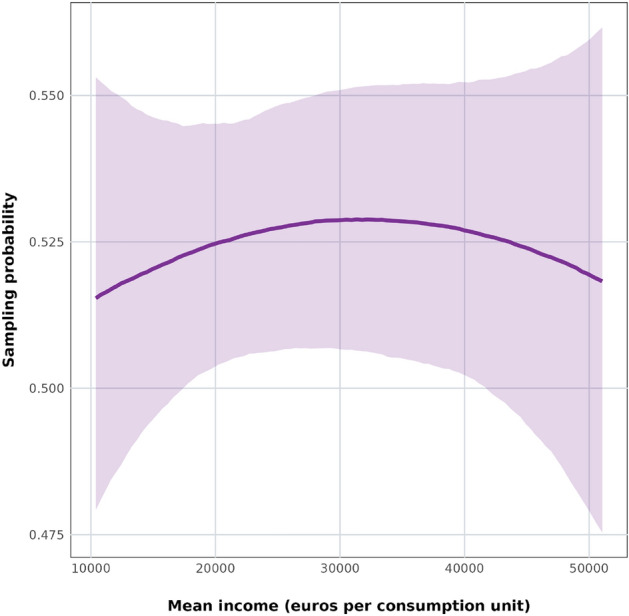
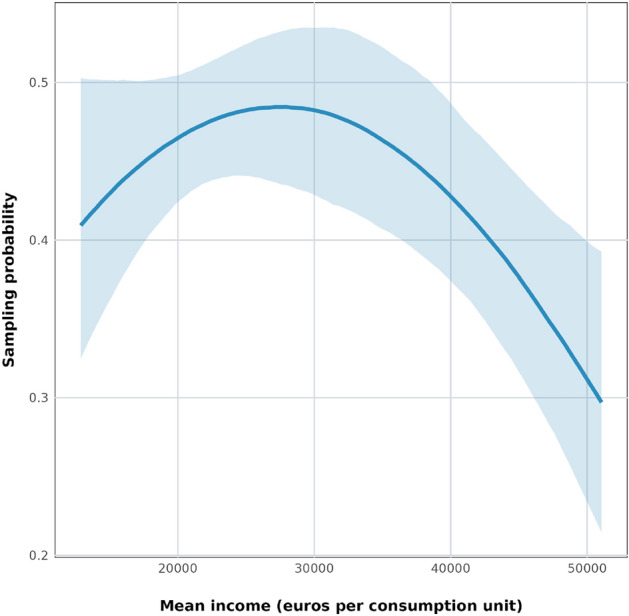
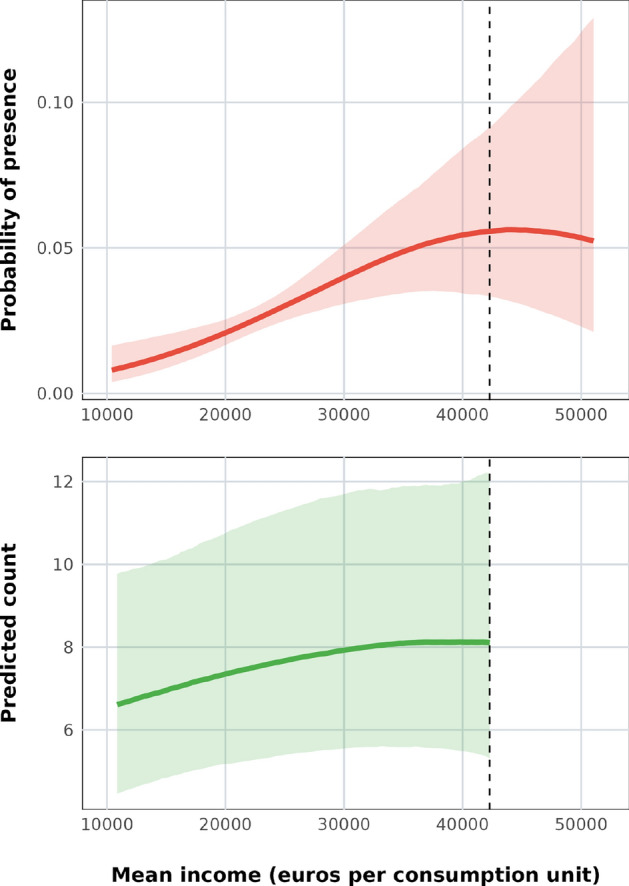
Climatic, ecological, and socioeconomic factors are facilitating the spread of mosquito-borne diseases, heightening the importance of vector surveillance and control. Citizen science is proving to be an effective tool to track mosquito populations, but methods are needed to detect and account for small scale sampling biases in citizen science surveillance. In this article we combine two types of traditional mosquito surveillance records with data from the Mosquito Alert citizen science system to explore the ways in which the socioeconomic characteristics of urban neighborhoods result in sampling biases in citizen scientists' mosquito reports, while also shaping the spatial distribution of mosquito populations themselves. We use Barcelona, Spain, as an example, and focus on Aedes albopictus, an invasive vector species of concern worldwide. Our results suggest citizen scientists' sampling effort is focused more in Barcelona's lower and middle income census tracts than in its higher income ones, whereas Ae. albopictus populations are concentrated in the city's upper-middle income tracts. High resolution estimates of the spatial distribution of Ae. albopictus risk can be improved by controlling for citizen scientists' sampling effort, making it possible to provide better insights for efficiently targeting control efforts. Our methodology can be replicated in other cities faced with vector mosquitoes to improve public health responses to mosquito-borne diseases, which impose massive burdens on communities worldwide.
气候、生态和社会经济因素正在促进蚊媒疾病的传播,因此加强了对病媒监测和控制的重视。公民科学被证明是一种有效的追踪蚊子种群的工具,但需要有方法来检测和解释公民科学监测中的小规模抽样偏差。在本文中,我们结合了两种传统的蚊子监测记录以及 Mosquito Alert 公民科学系统的数据,以探讨城市社区的社会经济特征如何导致公民科学家的蚊子报告中的抽样偏差,同时也塑造了蚊子种群本身的空间分布。我们以西班牙巴塞罗那为例,重点研究了一种具有全球入侵性的病媒物种——白纹伊蚊。研究结果表明,与高收入的街区相比,公民科学家的抽样工作更多地集中在巴塞罗那的低收入和中等收入的普查区内,而白纹伊蚊种群则集中在城市的中上收入区内。通过控制公民科学家的抽样工作,可以提高对白纹伊蚊风险的空间分布的高分辨率估计,从而有可能为有效靶向控制工作提供更好的见解。我们的方法可以在其他面临病媒蚊子的城市中复制,以改善对蚊媒疾病的公共卫生应对措施,这些疾病给全世界的社区带来了巨大的负担。