Department of Medicine, University of California, San Diego, La Jolla, San Diego, CA, 92093, USA.
National Center for Microscopy and Imaging Research, Department of Neurosciences, University of California San Diego, La Jolla, San Diego, CA, 92093, USA.
J Neuroinflammation. 2024 Sep 28;21(1):245. doi: 10.1186/s12974-024-03214-4.
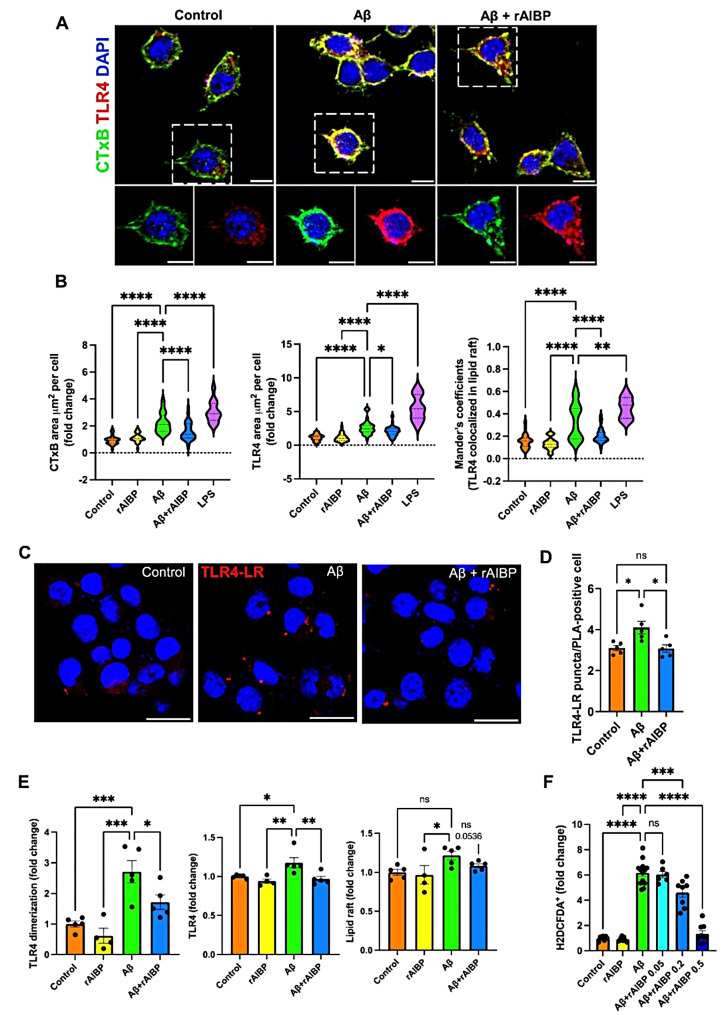
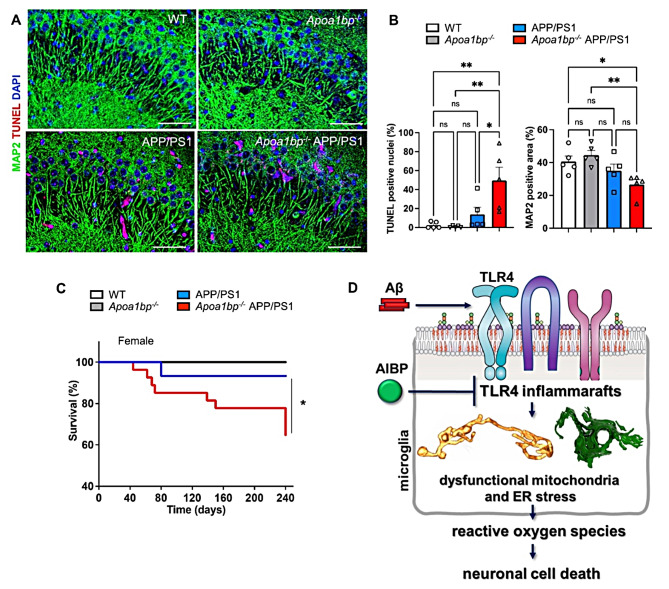
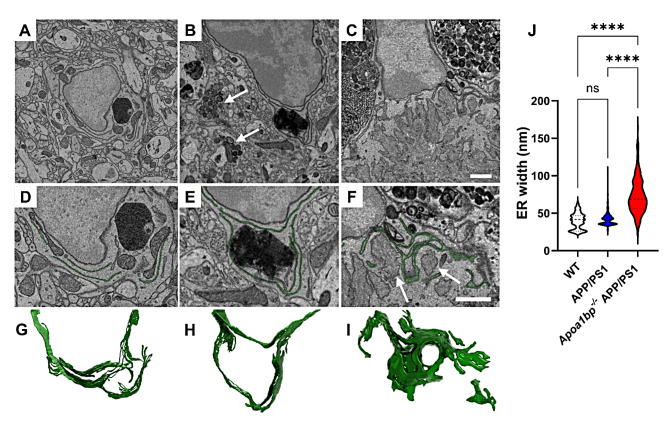
Microglia-driven neuroinflammation plays an important role in the development of Alzheimer's disease. Microglia activation is accompanied by the formation and chronic expression of TLR4 inflammarafts, defined as enlarged and cholesterol-rich lipid rafts serving as an assembly platform for TLR4 dimers and complexes of other inflammatory receptors. The secreted apoA-I binding protein (APOA1BP or AIBP) binds TLR4 and selectively targets cholesterol depletion machinery to TLR4 inflammaraft-expressing inflammatory, but not homeostatic microglia. Here we demonstrated that amyloid-beta (Aβ) induced formation of TLR4 inflammarafts in microglia in vitro and in the brain of APP/PS1 mice. Mitochondria in Apoa1bp APP/PS1 microglia were hyperbranched and cupped, which was accompanied by increased reactive oxygen species and the dilated endoplasmic reticulum. The size and number of Aβ plaques and neuronal cell death were significantly increased, and the animal survival was decreased in Apoa1bpAPP/PS1 compared to APP/PS1 female mice. These results suggest that AIBP exerts control of TLR4 inflammarafts and mitochondrial dynamics in microglia and plays a protective role in Alzheimer's disease associated oxidative stress and neurodegeneration.
小胶质细胞驱动的神经炎症在阿尔茨海默病的发展中起着重要作用。小胶质细胞的激活伴随着 TLR4 炎症小体的形成和慢性表达,TLR4 炎症小体被定义为扩大的、富含胆固醇的脂筏,作为 TLR4 二聚体和其他炎症受体复合物的组装平台。分泌的载脂蛋白 A-I 结合蛋白(APOA1BP 或 AIBP)与 TLR4 结合,并选择性地将胆固醇耗竭机制靶向 TLR4 炎症小体表达的炎症性但非稳态小胶质细胞。在这里,我们证明了淀粉样蛋白-β(Aβ)在体外和 APP/PS1 小鼠的大脑中诱导小胶质细胞中 TLR4 炎症小体的形成。Apoa1bp APP/PS1 小胶质细胞中的线粒体呈超分支和杯状,伴随着活性氧的增加和扩张的内质网。Aβ斑块的大小和数量以及神经元细胞死亡显著增加,与 APP/PS1 雌性小鼠相比,Apoa1bpAPP/PS1 小鼠的动物存活率降低。这些结果表明,AIBP 对小胶质细胞中的 TLR4 炎症小体和线粒体动力学发挥控制作用,并在与阿尔茨海默病相关的氧化应激和神经退行性变中发挥保护作用。