Duong An Hoai
Griffith University, Brisbane, QLD, Australia.
Clin Pediatr (Phila). 2024 Sep 28;64(4):99228241281126. doi: 10.1177/00099228241281126.
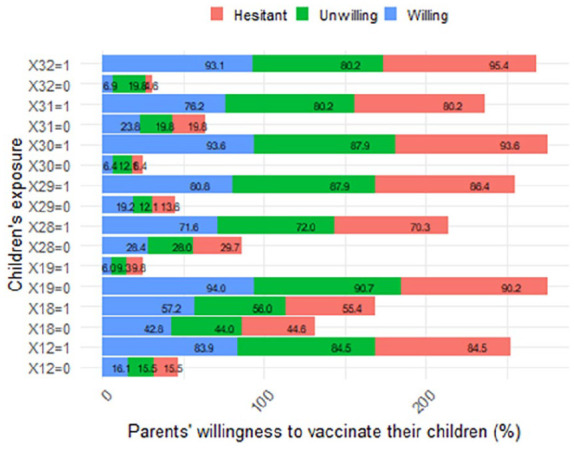
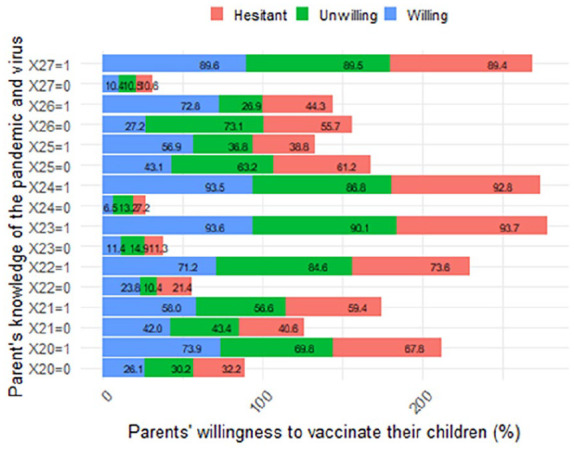
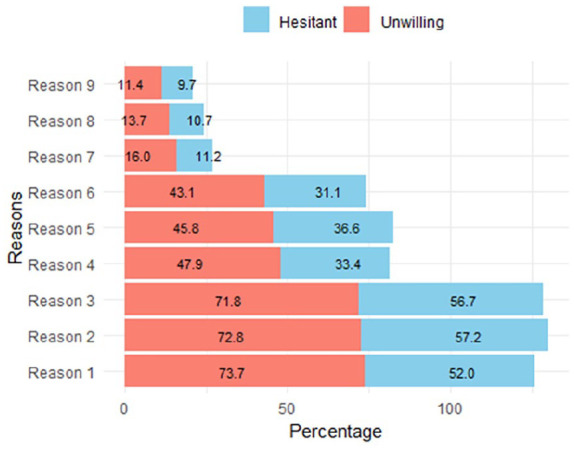
Despite strides in vaccinating priority groups against COVID-19, children under 5 years in Vietnam are still under-immunized, emphasizing a significant gap in prioritization. This study aimed to assess parental willingness to vaccinate children aged 6 months to under 5 years against COVID-19 in Vietnam and identify influential factors affecting this willingness. Data were collected via a survey of 5960 parents/guardians between May and June 2022. Multinomial logistic regression was employed to analyze the impact of various factors on parents' willingness to vaccinate their children, alongside investigating reasons for reluctance or refusal and preferences for vaccine origins. Approximately 50.5%, 30.2%, and 19.3% of parents were willing, hesitant, and unwilling to vaccinate their children, respectively. Primary reasons for reluctance included concerns about vaccine safety, efficacy, and the severity of the pandemic. The most preferred vaccines originated in the United States. Factors significantly influencing willingness included parents' age, knowledge of COVID-19 and vaccines, residency, education, perception of information sufficiency, children's comorbidities, and family members' vaccination status. Promoting child vaccination habits can boost COVID-19 immunization rates. Targeting hesitancy among parents of children with comorbidities is crucial. Enhancing parental knowledge and leveraging fully vaccinated family members are effective strategies.
尽管在为优先群体接种新冠疫苗方面取得了进展,但越南5岁以下儿童的免疫接种率仍然较低,这凸显了在优先排序方面存在的显著差距。本研究旨在评估越南6个月至5岁儿童的父母为其接种新冠疫苗的意愿,并确定影响这一意愿的因素。2022年5月至6月期间,通过对5960名父母/监护人进行调查收集数据。采用多项逻辑回归分析各种因素对父母为子女接种疫苗意愿的影响,同时调查不愿或拒绝接种的原因以及对疫苗产地的偏好。分别约有50.5%、30.2%和19.3%的父母愿意、犹豫和不愿意为子女接种疫苗。不愿接种的主要原因包括对疫苗安全性、有效性以及疫情严重程度的担忧。最受欢迎的疫苗原产于美国。显著影响意愿的因素包括父母的年龄、对新冠和疫苗知识了解、居住地、教育程度、对信息充足性的认知、儿童的合并症以及家庭成员的疫苗接种状况。促进儿童接种习惯可以提高新冠疫苗接种率。针对患有合并症儿童的父母的犹豫态度至关重要。加强父母知识并利用已完全接种疫苗的家庭成员是有效的策略。