Wado Yohannes Dibaba, Bangha Martin, Kabiru Caroline W, Feyissa Garumma T
African Population and Health Research Center, APHRC Campus, Manga Close, P.O. Box 10787-00100, Nairobi, Kenya.
Dornsife School of Public Health, Drexel University, Philadelphia, USA.
Reprod Health. 2020 Sep 30;17(1):149. doi: 10.1186/s12978-020-00998-5.
Addressing adolescents' sexual and reproductive health and rights (SRHR) requires an understanding of the socio-cultural and spatial settings within which they live. One setting of particular importance is the informal settlements or 'slums' that are gradually dominating the urban space. We undertook a scoping review and synthesis of existing evidence on adolescent SRHR in slums in sub-Saharan Africa (SSA) focusing on the characteristics and nature of existing evidence.
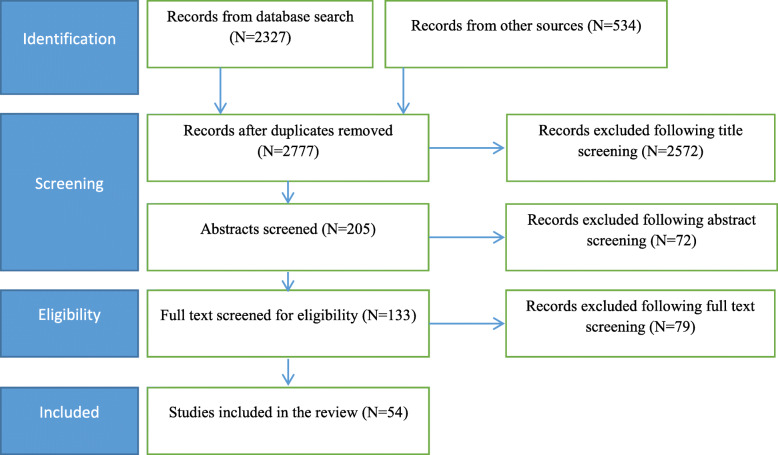
The scoping review was conducted based on Arksey and O'Malley framework and in accordance with the guidance on scoping reviews from the Joanna Briggs Institute (JBI) and using PRISMA reporting guidelines for scoping reviews. A comprehensive search was undertaken in PubMed, POPLINE, African Journals Online (AJOL), Bioline International and Google Scholar. The search was confined to studies published in peer reviewed journals and reports published online between January 2000 and May 2019. Studies were included in the review if they addressed SRHR issues among adolescents living in urban slums in SSA.
The review included a total of 54 studies. The majority (79.5%) of studies were quantitative. The bulk of studies (85.2%) were observational studies with only eight intervention studies. While half (27) of the studies focused exclusively on adolescents (10-19 years), 12 studies combined adolescents with other young people (10-24 years). The studies were skewed towards sexual behavior (44%) and HIV/AIDS (43%) with very few studies focusing on other SRHR issues such as contraception, abortion, gender-based violence and sexually transmitted infections (STIs) other than HIV. Most of the studies highlighted the significantly higher risks for poor SRHR outcomes among adolescents in slums as compared to their peers in other settlements.
Young people growing up in slums face tremendous challenges in relation to their SRHR needs resulting in poor outcomes such as early and unintended pregnancy, STIs, and sexual violence. The results of this review point to several potential target areas for programming, policy, and research aimed at improved adolescent SRHR in slums in SSA.
解决青少年的性与生殖健康及权利(SRHR)问题需要了解他们所处的社会文化和空间环境。一个特别重要的环境是正逐渐主导城市空间的非正式住区或“贫民窟”。我们对撒哈拉以南非洲(SSA)贫民窟中青少年SRHR的现有证据进行了范围界定审查和综合分析,重点关注现有证据的特征和性质。
范围界定审查基于阿克西和奥马利框架进行,并按照乔安娜·布里格斯研究所(JBI)的范围界定审查指南以及使用PRISMA范围界定审查报告指南。在PubMed、POPLINE、非洲期刊在线(AJOL)、Bioline International和谷歌学术上进行了全面搜索。搜索限于2000年1月至2019年5月期间发表在同行评审期刊上的研究以及在线发表的报告。如果研究涉及SSA城市贫民窟青少年中的SRHR问题,则纳入本综述。
该综述共纳入54项研究。大多数研究(79.5%)为定量研究。大部分研究(85.2%)为观察性研究,只有8项干预性研究。虽然一半(27项)研究专门关注青少年(10 - 19岁),但有12项研究将青少年与其他年轻人(10 - 24岁)合并研究。这些研究偏向性行为(44%)和艾滋病毒/艾滋病(HIV/AIDS)(43%),很少有研究关注其他SRHR问题,如避孕、堕胎、基于性别的暴力以及除艾滋病毒外的性传播感染(STIs)。大多数研究强调,与其他住区的同龄人相比,贫民窟青少年SRHR不良结局的风险显著更高。
在贫民窟成长的年轻人在满足其SRHR需求方面面临巨大挑战,导致诸如早孕和意外怀孕、性传播感染以及性暴力等不良后果。本综述结果指出了几个潜在的目标领域,可用于制定方案、政策以及开展研究,以改善SSA贫民窟青少年的SRHR状况。