School of Nutrition, Food Science and Technology, Hawassa University, Hawassa, Ethiopia.
Institute for Enhancing Health through Agriculture, IHA, Texas A&M University, College Station, TX 77843, USA.
J Nutr Sci. 2024 Sep 19;13:e39. doi: 10.1017/jns.2024.53. eCollection 2024.
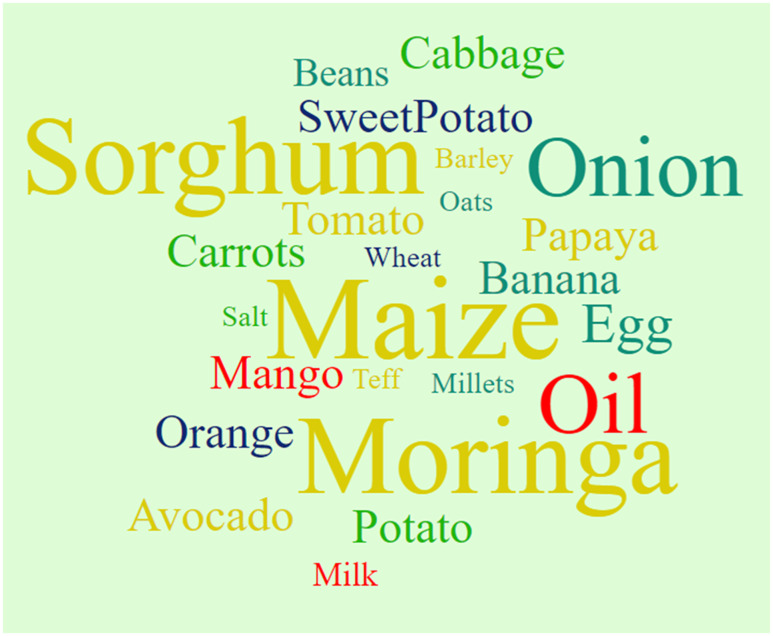
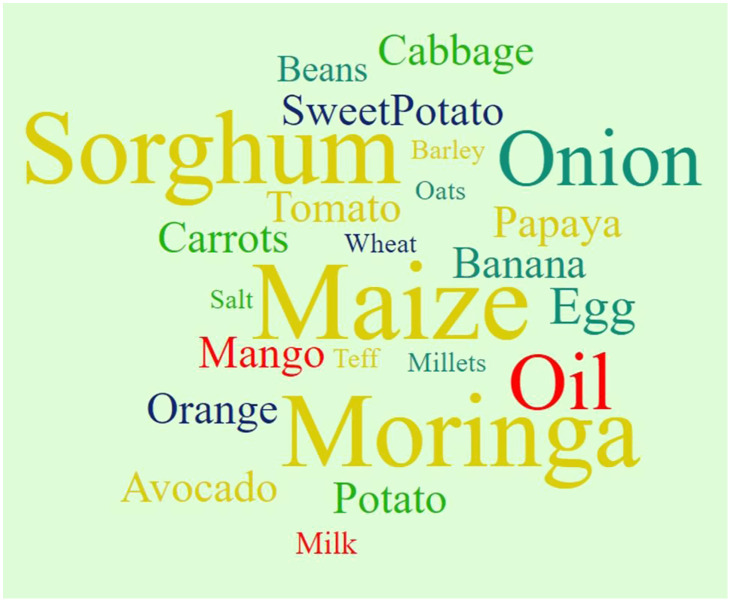
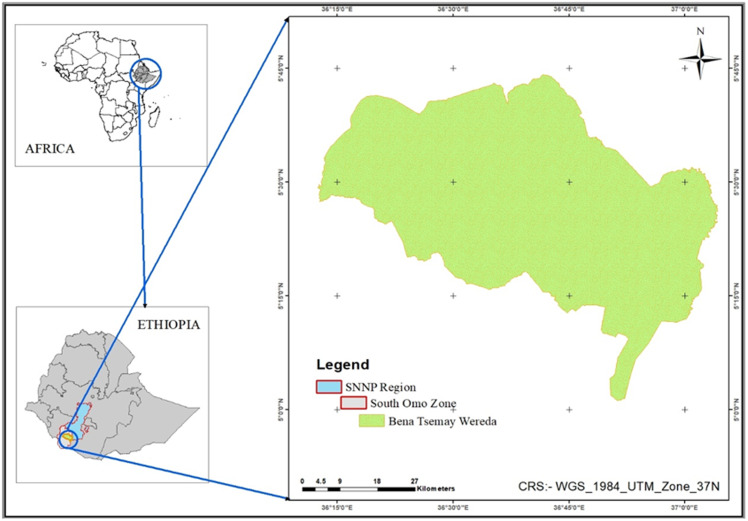
The current study aims to characterise the complementary feeding practice and identify locally available climate-resilient crops that can be used for complementary feeding among agro-pastoralists in Ethiopia. A phenomenological study in Benna-Tsemay district, comprising focused group discussions, key informant interviews, and household observations, was conducted. A pretested guide was used to capture information regarding types of complementary food, lists of food items, and ingredients included in their complementary formulation. A thematic analysis for emerging points of discussion was carried out. Three major themes, including infant and young child feeding practices, food items included in complementary food, and their consumption frequencies, as well as the incorporation of climate-resilient crops into complementary foods as coping mechanisms, emerged. Breastfeeding was common and regarded as essential. Gruel and porridge from grains, roots, and tubers were regular parts of complementary foods in the study area. Moringa and sorghum were dominantly identified as climate-resilient crops regularly grown and used in complementary foods. Growing these crops was regarded as a coping strategy for drought and seasonal constraints. The district is one of the most drought-prone areas in Ethiopia, compromising the quality of complementary food. Unlike the World Health Organization recommendation, the grains, roots, and tubers-based diet formed the basis of complementary food lacking flesh foods, eggs, pulses, and other fruits and vegetables. Thus, it is recommended to improve complementary food quality through value-addition using locally accessible crops.
本研究旨在描述埃塞俄比亚农牧民群体的补充喂养实践,并确定可用于补充喂养的当地抗灾作物。本研究在本纳-特塞马地区开展了一项现象学研究,包括焦点小组讨论、关键知情人访谈和家庭观察。使用经过预测试的指南来获取有关补充食品类型、食品清单以及补充配方中包含的成分的信息。对出现的讨论要点进行了主题分析。出现了三个主要主题,包括婴幼儿喂养实践、补充食品中包含的食品以及它们的消费频率,以及将抗灾作物纳入补充食品作为应对机制。母乳喂养很常见,被认为是必不可少的。在研究区域,谷物、根茎和块茎制成的糊和粥是补充食品的常规部分。辣木和高粱被确定为主要的抗灾作物,经常在补充食品中种植和使用。种植这些作物被认为是应对干旱和季节性限制的一种策略。该地区是埃塞俄比亚最干旱的地区之一,这影响了补充食品的质量。与世界卫生组织的建议不同,以谷物、根茎和块茎为基础的饮食构成了补充食品的基础,缺乏肉类、蛋类、豆类和其他水果和蔬菜。因此,建议通过使用当地可获得的作物进行增值来提高补充食品的质量。