Golden Gregory J, Wu Vincent H, Hamilton Jacob T, Amses Kevin R, Shapiro Melanie R, Japp Alberto Sada, Liu Chengyang, Pampena Maria Betina, Kuri-Cervantes Leticia, Knox James J, Gardner Jay S, Atkinson Mark A, Brusko Todd M, Prak Eline T Luning, Kaestner Klaus H, Naji Ali, Betts Michael R
Department of Microbiology, University of Pennsylvania, Perelman School of Medicine, Philadelphia, PA 19104, USA.
Institute for Immunology, University of Pennsylvania, Perelman School of Medicine, Philadelphia, PA 19104, USA.
bioRxiv. 2024 Sep 16:2024.04.23.590798. doi: 10.1101/2024.04.23.590798.
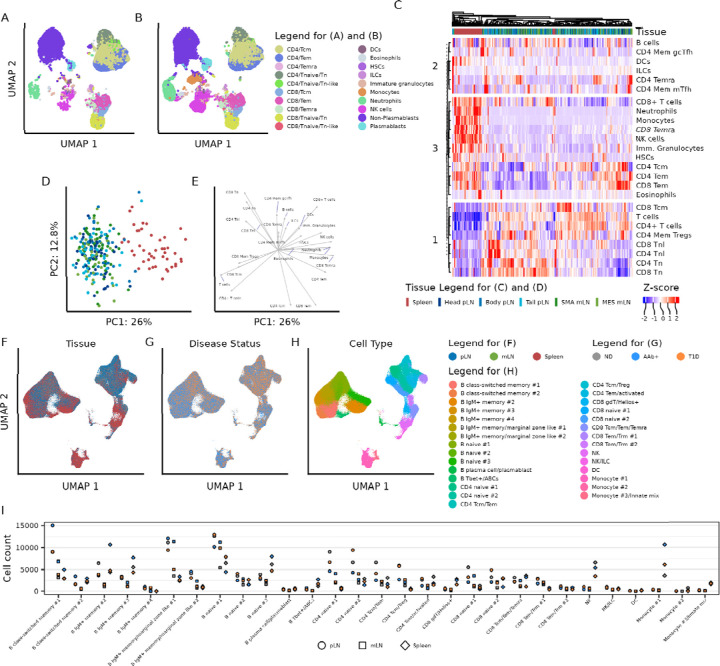
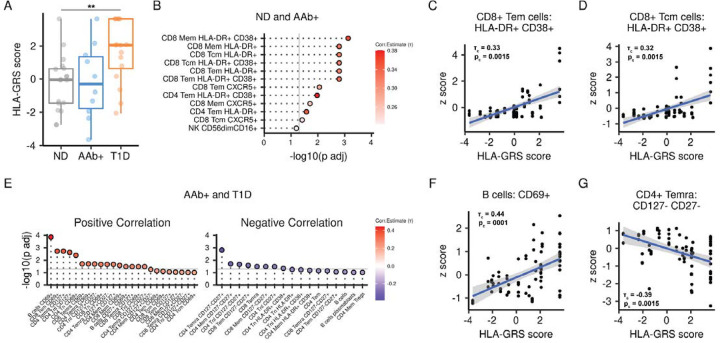
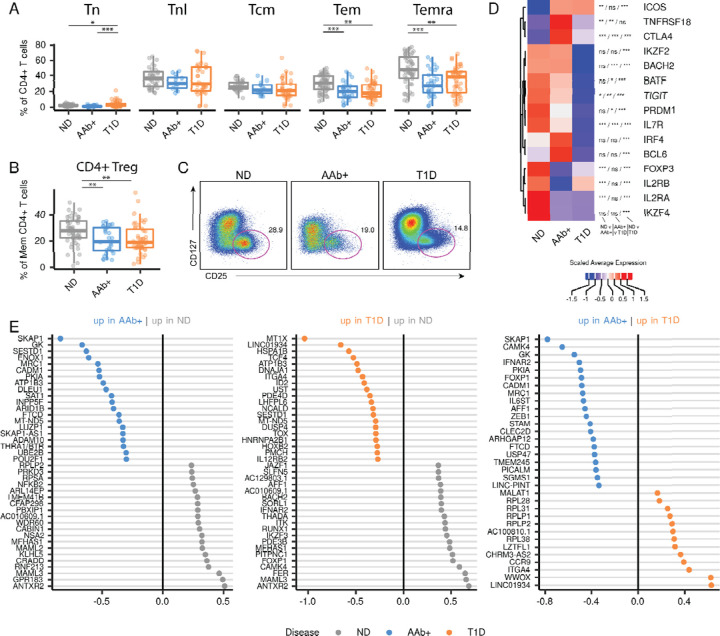
Autoimmune destruction of pancreatic β cells results in type 1 diabetes (T1D), with pancreatic immune infiltrate representing a key feature in this process. Studies of human T1D immunobiology have predominantly focused on circulating immune cells in the blood, while mouse models suggest diabetogenic lymphocytes primarily reside in pancreas-draining lymph nodes (pLN). A comprehensive study of immune cells in human T1D was conducted using pancreas draining lymphatic tissues, including pLN and mesenteric lymph nodes, and the spleen from non-diabetic control, β cell autoantibody positive non-diabetic (AAb+), and T1D organ donors using complementary approaches of high parameter flow cytometry and CITEseq. Immune perturbations suggestive of a proinflammatory environment were specific for T1D pLN and AAb+ pLN. In addition, certain immune populations correlated with high T1D genetic risk independent of disease state. These datasets form an extensive resource for profiling human lymphatic tissue immune cells in the context of autoimmunity and T1D.
胰腺β细胞的自身免疫性破坏导致1型糖尿病(T1D),胰腺免疫浸润是这一过程的关键特征。人类T1D免疫生物学的研究主要集中在血液中的循环免疫细胞,而小鼠模型表明致糖尿病淋巴细胞主要存在于引流胰腺的淋巴结(pLN)中。利用高参数流式细胞术和CITEseq等互补方法,对非糖尿病对照、β细胞自身抗体阳性非糖尿病(AAb+)和T1D器官供体的引流胰腺淋巴组织(包括pLN和肠系膜淋巴结)以及脾脏中的免疫细胞进行了全面研究。提示促炎环境的免疫扰动在T1D的pLN和AAb+的pLN中具有特异性。此外,某些免疫群体与高T1D遗传风险相关,且与疾病状态无关。这些数据集构成了一个丰富的资源,用于在自身免疫和T1D背景下分析人类淋巴组织免疫细胞。