Dumesic Daniel A, Rasouli Melody A, Katz Jessica D, Lu Gwyneth G, Dharanipragada Devyani, Turcu Adina F, Grogan Tristan R, Flores Kimberly E, Magyar Clara E, Abbott David H, Chazenbalk Gregorio D
Department of Obstetrics and Gynecology, University of California, Los Angeles, Los Angeles, CA 90095, USA.
Division of Metabolism, Endocrinology, Nutrition and Diabetes, University of Michigan, Ann Arbor, MI 48103, USA.
J Endocr Soc. 2024 Sep 17;8(11):bvae162. doi: 10.1210/jendso/bvae162. eCollection 2024 Sep 26.
Adipose steroid metabolism modifies body fat development in polycystic ovary syndrome (PCOS).
To determine whether subcutaneous (SC) abdominal adipose aldo-keto reductase 1C3 (AKR1C3; a marker of testosterone generation) is increased in normal-weight women with PCOS vs age- and body mass index (BMI)-matched normoandrogenic ovulatory women (controls) and is related to SC abdominal adipose activator protein-1 (AP-1; a marker of adipocyte differentiation) and/or androgen receptor (AR) protein expression in predicting fat accretion.
Prospective cohort study.
Academic center.
Eighteen normal-weight PCOS women; 17 age- and BMI-matched controls.
Circulating hormone/metabolic determinations, intravenous glucose tolerance testing, total body dual-energy x-ray absorptiometry, SC abdominal fat biopsy, immunohistochemistry.
Clinical characteristics, hormonal concentrations, body fat distribution, SC adipose AKR1C3, AR, and AP-1 protein expression.
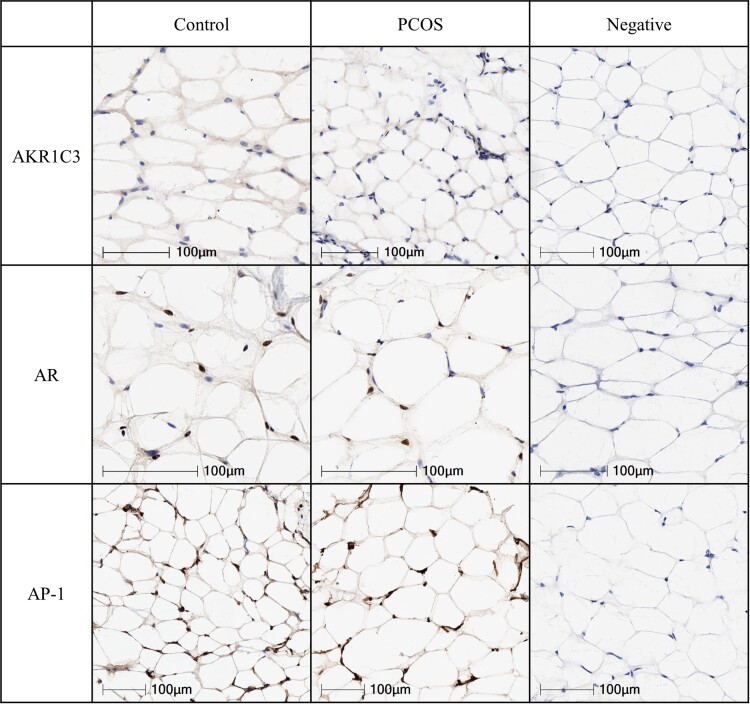
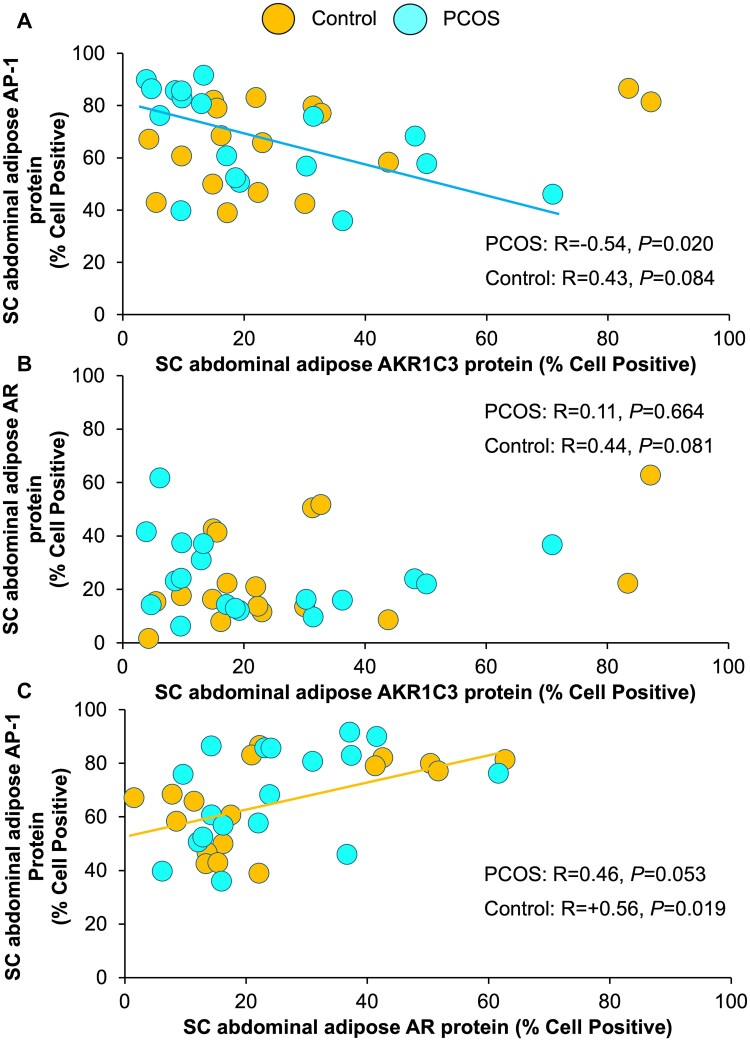
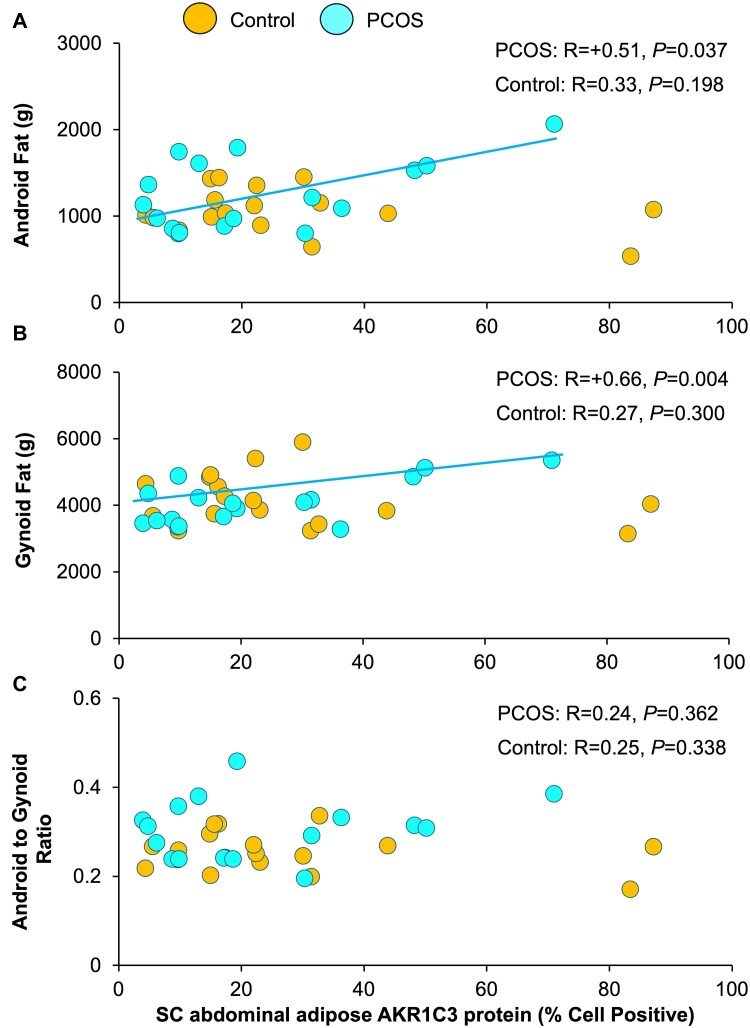
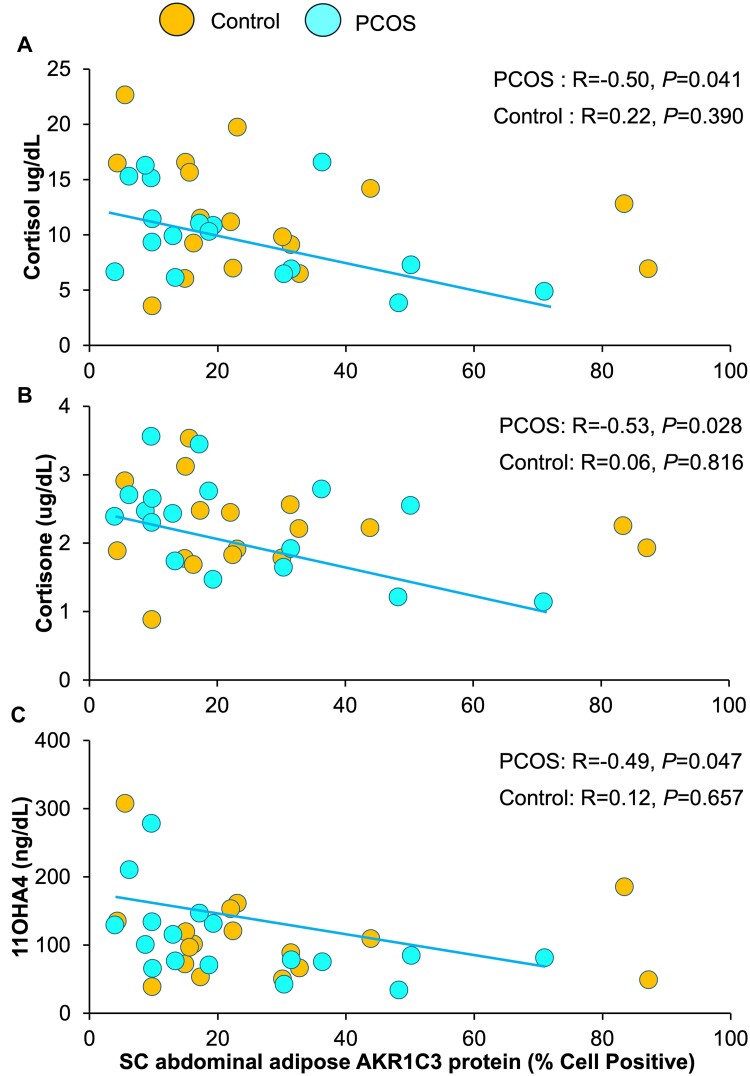
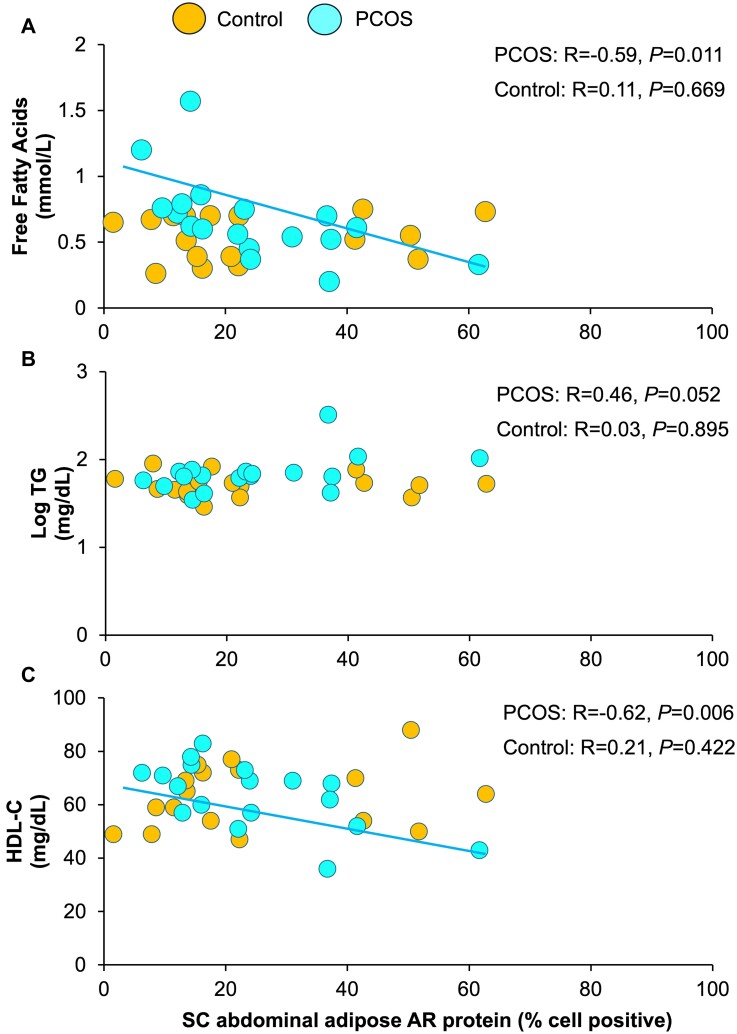
Women with PCOS had significantly higher serum androgen levels and greater android/gynoid fat mass ratios than controls. SC adipose AKR1C3, AR, and AP-1 protein expressions were comparable between the study groups, but groups differed in correlations. In PCOS women vs controls, SC adipose AKR1C3 protein expression correlated positively with android and gynoid fat masses and negatively with SC adipose AP-1 protein expression. SC adipose AR protein expression correlated negatively with fasting serum free fatty acid and high-density lipoprotein levels. In both study groups, SC adipose AKR1C3 protein expression negatively correlated with serum cortisol levels.
In normal-weight PCOS women, SC abdominal adipose AKR1C3 protein expression, in combination with intra-adipose AP-1 and AR-dependent events, predicts fat accretion in the presence of physiological cortisol levels.
脂肪类固醇代谢会改变多囊卵巢综合征(PCOS)患者的体脂发育。
确定与年龄和体重指数(BMI)匹配的正常雄激素水平排卵女性(对照组)相比,体重正常的PCOS女性皮下(SC)腹部脂肪醛酮还原酶1C3(AKR1C3;睾酮生成标志物)是否增加,以及在预测脂肪堆积方面,其是否与SC腹部脂肪激活蛋白-1(AP-1;脂肪细胞分化标志物)和/或雄激素受体(AR)蛋白表达相关。
前瞻性队列研究。
学术中心。
18名体重正常的PCOS女性;17名年龄和BMI匹配的对照组女性。
循环激素/代谢测定、静脉葡萄糖耐量试验、全身双能X线吸收法、SC腹部脂肪活检、免疫组织化学。
临床特征、激素浓度、体脂分布、SC脂肪AKR1C3、AR和AP-1蛋白表达。
PCOS女性的血清雄激素水平显著高于对照组,且男性型/女性型脂肪量比更高。研究组之间SC脂肪AKR1C3、AR和AP-1蛋白表达相当,但组间相关性存在差异。与对照组相比,PCOS女性中,SC脂肪AKR1C3蛋白表达与男性型和女性型脂肪量呈正相关,与SC脂肪AP-1蛋白表达呈负相关。SC脂肪AR蛋白表达与空腹血清游离脂肪酸和高密度脂蛋白水平呈负相关。在两个研究组中,SC脂肪AKR1C3蛋白表达均与血清皮质醇水平呈负相关。
在体重正常的PCOS女性中,SC腹部脂肪AKR1C3蛋白表达,结合脂肪内AP-1和AR依赖性事件,可在生理皮质醇水平存在的情况下预测脂肪堆积。