Winkler-Dworak Maria, Zeman Kryštof, Sobotka Tomáš
Vienna Institute of Demography, Austrian Academy of Sciences, Vienna, Austria.
Hum Reprod Open. 2024 Sep 10;2024(3):hoae052. doi: 10.1093/hropen/hoae052. eCollection 2024.
What are the factors influencing the decline in the birth rates observed in higher-income countries in the later phase of the COVID-19 pandemic?
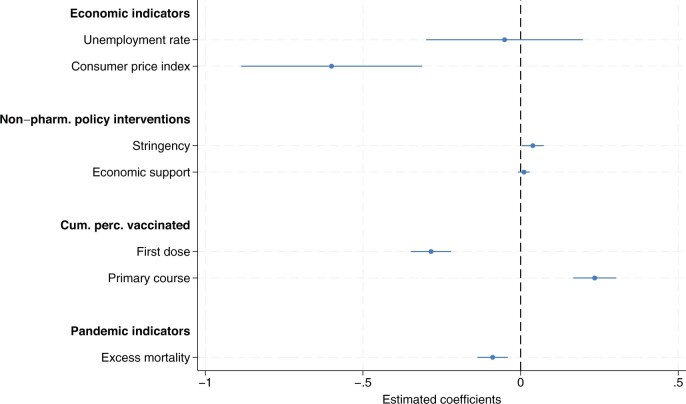
Our results suggest that economic uncertainty, non-pharmaceutical policy interventions, and the first wave of the population-wide vaccination campaign were associated with the decline in birth rates during 2022.
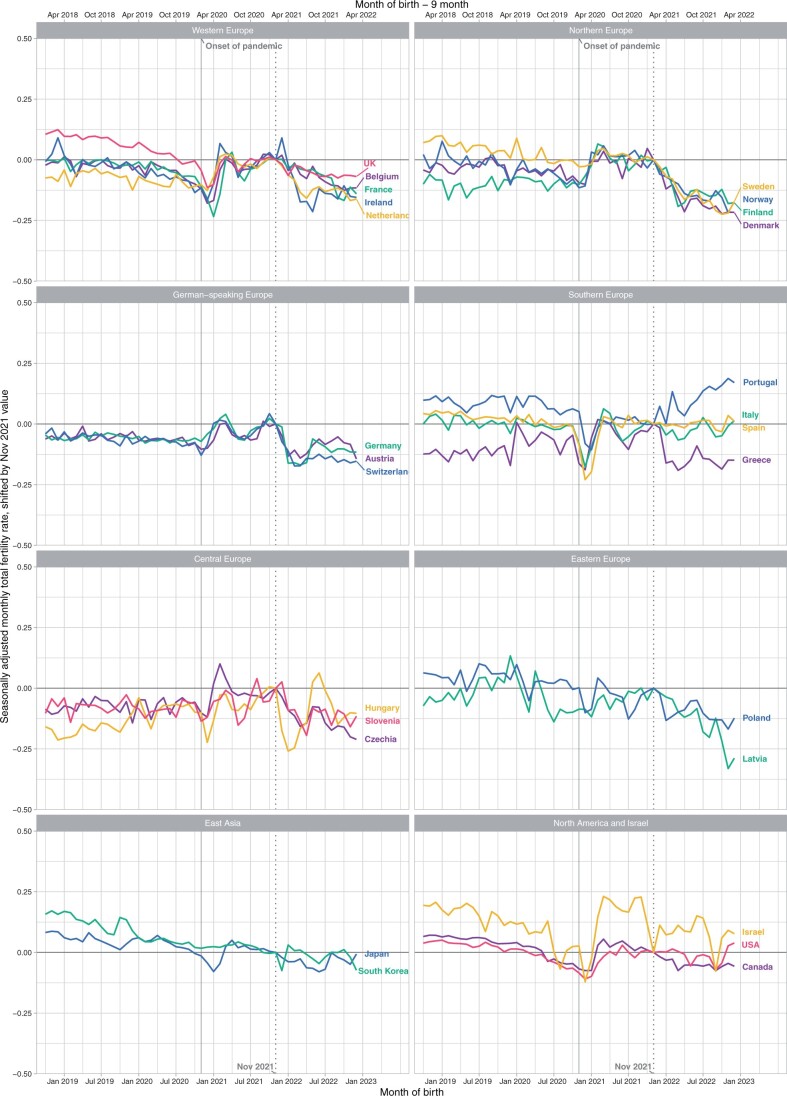
During the COVID-19 pandemic, birth rates in most higher-income countries first briefly declined and then shortly recovered, showing no common trends afterwards until early 2022, when they unexpectedly dropped.
This study uses population-wide data on monthly total fertility rates (TFRs) adjusted for seasonality and calendar effects provided in the Human Fertility Database (HFD). Births taking place between November 2020 and October 2022 correspond to conceptions occurring between February 2020 and January 2022, i.e. after the onset of the pandemic but prior to the Russian invasion of Ukraine. The data cover 26 countries, including 21 countries in Europe, the USA, Canada, Israel, Japan, and the Republic of Korea.
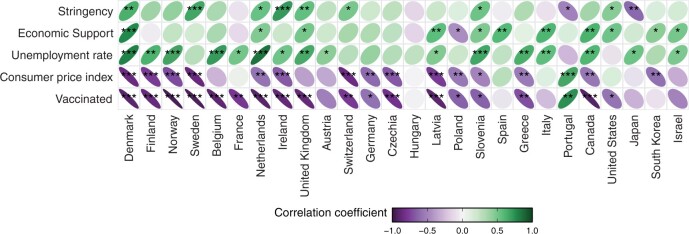
PARTICIPANTS/MATERIALS SETTING METHODS: First, we provided a descriptive analysis of the monthly changes in the TFR. Second, we employed linear fixed effects regression models to estimate the association of explanatory factors with the observed seasonally adjusted TFRs. Our analysis considered three broader sets of explanatory factors: economic uncertainty, policy interventions restricting mobility and social activities outside the home, and the progression of vaccination programmes.
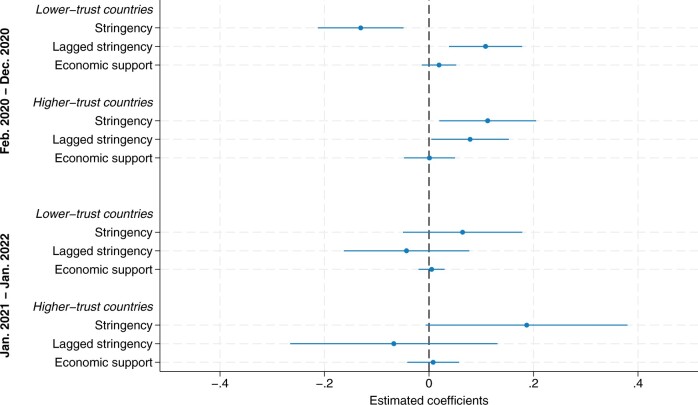
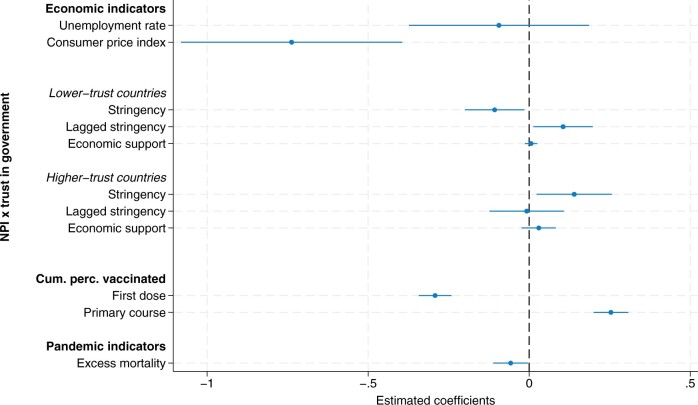
We found that birth trends during the COVID-19 pandemic were associated with economic uncertainty, as measured by increased inflation ( < 0.001), whereas unemployment did not show any link to births during the pandemic ( = 0.677). The stringency of pandemic policy interventions was linked to a postponement of births, but only in countries with lower institutional trust and only in the early phase of the pandemic ( = 0.003). In countries with higher trust, stricter containment measures were positively associated with birth rates, both for conceptions in the first year of the pandemic ( = 0.019) and, albeit only weakly significant, for conceptions later in the pandemic ( = 0.057). Furthermore, we found a negative association between the share of the population having received the first dose of the COVID-19 vaccination and TFRs ( < 0.001), whereas the share of the population having completed the primary vaccination course (usually consisting of two doses) was linked to a recovery of birth rates ( < 0.001).
N/A.
Our research is restricted to higher-income countries with relatively strong social support policies provided by the government as well as wide access to modern contraception. Our data did not allow analyses of birth trends by key characteristics, such as age, birth order, and social status.
This is the first multi-country study of the drivers of birth trends in the later phase of the COVID-19 pandemic. In the past, periods following epidemics and health crises were typically associated with a recovery in births. In contrast, our results show that the gradual phasing out of pandemic containment measures, allowing increased mobility and a return to more normal work and social life, contributed to declining birth rates in some countries. In addition, our analysis indicates that some women avoided pregnancy until completion of the primary vaccination protocol.
STUDY FUNDING/COMPETING INTERESTS: This study did not use any external funding. The authors acknowledge funding from their home institution, the Vienna Institute of Demography of the Austrian Academy of Sciences, and from the Open-Access Fund of the Austrian Academy of Sciences. For the purpose of open access, the authors have applied a CC BY public copyright licence to any Author Accepted Manuscript versions arising from this submission. All authors declare that they have no conflicts of interest.
在新冠疫情后期,高收入国家出生率下降的影响因素有哪些?
我们的研究结果表明,经济不确定性、非药物政策干预以及首轮全民疫苗接种运动与2022年期间的出生率下降有关。
在新冠疫情期间,大多数高收入国家的出生率先是短暂下降,随后很快恢复,之后直至2022年初都没有呈现出共同趋势,而在2022年初出生率意外下降。
研究设计、规模、持续时间:本研究使用了人类生育数据库(HFD)中经季节性和日历效应调整后的月度总生育率(TFR)的全人口数据。2020年11月至2022年10月期间的出生情况对应于2020年2月至2022年1月期间的受孕情况,即疫情爆发后但在俄罗斯入侵乌克兰之前。数据涵盖26个国家,包括欧洲的21个国家、美国、加拿大、以色列、日本和韩国。
参与者/材料、设置、方法:首先,我们对总生育率的月度变化进行了描述性分析。其次,我们采用线性固定效应回归模型来估计解释性因素与经季节性调整后的总生育率之间的关联。我们的分析考虑了三组更广泛的解释性因素:经济不确定性、限制外出流动和社交活动范围的政策干预以及疫苗接种计划的进展情况。
我们发现,新冠疫情期间的出生趋势与经济不确定性有关,以通货膨胀加剧来衡量(<0.001),而失业率在疫情期间与出生情况没有任何关联(=0.677)。疫情政策干预的严格程度与生育推迟有关,但仅在机构信任度较低的国家以及疫情早期(=0.003)。在信任度较高的国家,更严格的防控措施与出生率呈正相关,无论是在疫情第一年的受孕情况(=0.019),还是在疫情后期的受孕情况(尽管只是微弱显著,=0.057)。此外,我们发现接种第一剂新冠疫苗的人口比例与总生育率之间存在负相关(<0.001),而完成初级疫苗接种疗程(通常为两剂)的人口比例与出生率的回升有关(<0.001)。
无。
局限性、谨慎原因:我们的研究仅限于政府提供相对强大社会支持政策且广泛可获得现代避孕措施的高收入国家。我们的数据无法按年龄(如年龄、胎次和社会地位)等关键特征分析出生趋势。
这是首次对新冠疫情后期出生趋势驱动因素进行的多国研究。过去,疫情和健康危机之后的时期通常与出生人数回升有关。相比之下,我们的研究结果表明,逐步取消疫情防控措施,使得流动性增加并回归到更正常的工作和社会生活,在一些国家导致了出生率下降。此外,我们的分析表明,一些女性会避免怀孕,直到完成初级疫苗接种方案。
研究资金/利益冲突:本研究未使用任何外部资金。作者感谢来自其所在机构奥地利科学院维也纳人口研究所的资金支持,以及奥地利科学院开放获取基金提供的资金。为实现开放获取,作者已对本提交产生的任何作者接受稿件版本应用了知识共享署名公共版权许可。所有作者声明他们没有利益冲突。