Liu Mingtao, Cheng Zhangkai J, Chen Jiaxi, Li Haiyang, Xue Mingshan, Fu Xing, Li Yanjun, Wang Jiaxin, You Chenwei, Hu Haisheng, Wu Haojie, Huang Huimin, Sun Baoqing
Department of Clinical Laboratory of the First Affiliated Hospital of Guangzhou Medical University, State Key Laboratory of Respiratory Disease, National Center for Respiratory Medicine, National Clinical Research Center for Respiratory Disease, Guangzhou Institute of Respiratory Health, Guangzhou, 510120, People's Republic of China.
KingMed School of Laboratory Medicine, Guangzhou Medical University, Guangzhou, 511495, People's Republic of China.
J Inflamm Res. 2024 Sep 25;17:6729-6742. doi: 10.2147/JIR.S458428. eCollection 2024.
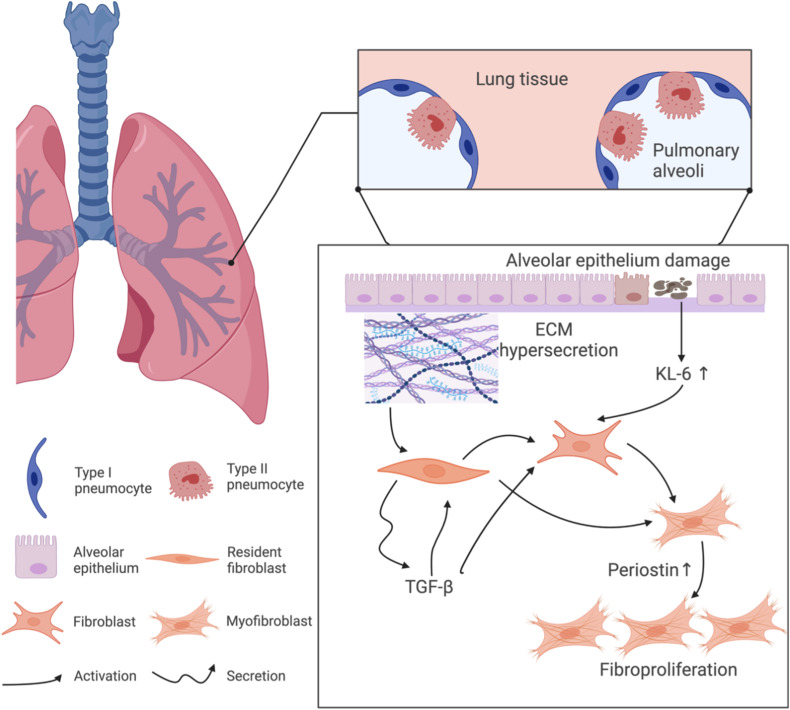
While serum periostin and Krebs von den Lungen-6 (KL-6) have been acknowledged as independent markers in idiopathic pulmonary fibrosis (IPF) diagnosis, the clinical combinatory potential of these biomarkers combined with high-resolution computed tomography (HRCT) has yet to be fully explored.
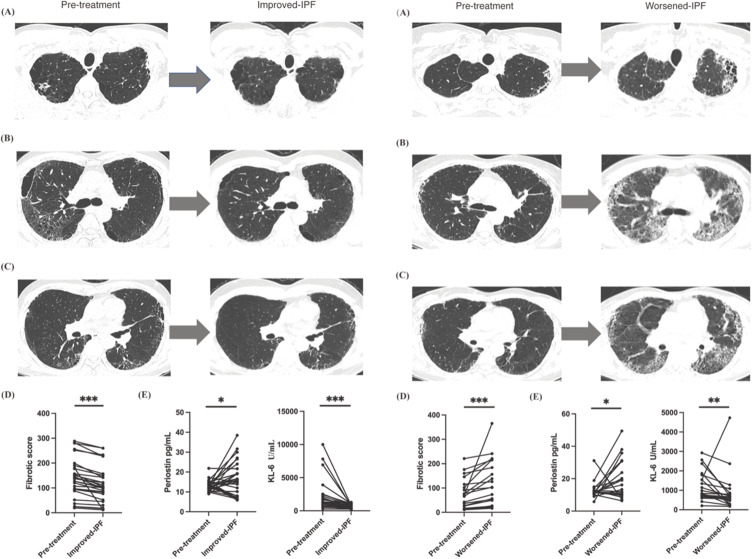
This retrospective study involved 78 participants, comprising 51 UIP-IPF patients and 27 healthy controls. All subjects underwent clinical and laboratory examinations, particularly the detection of periostin and KL-6 using ELISA with innovative HRCT fibrosis score evaluations at admission and discharge during hospitalization in UIP-IPF patients.
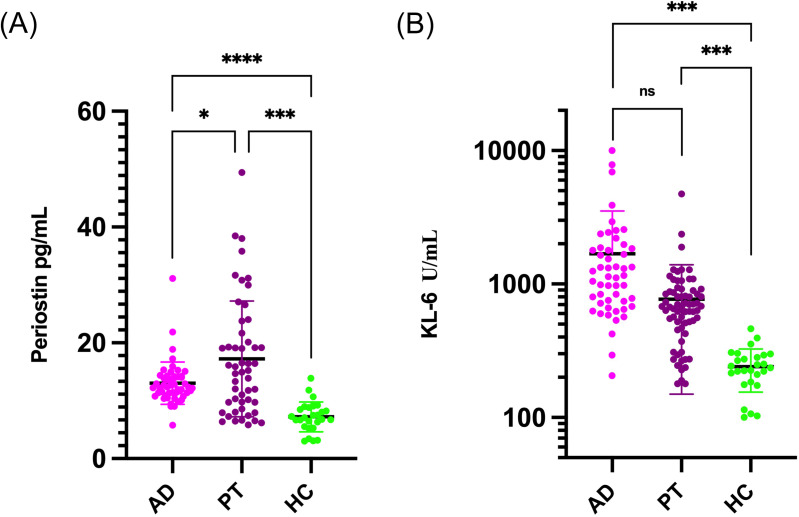
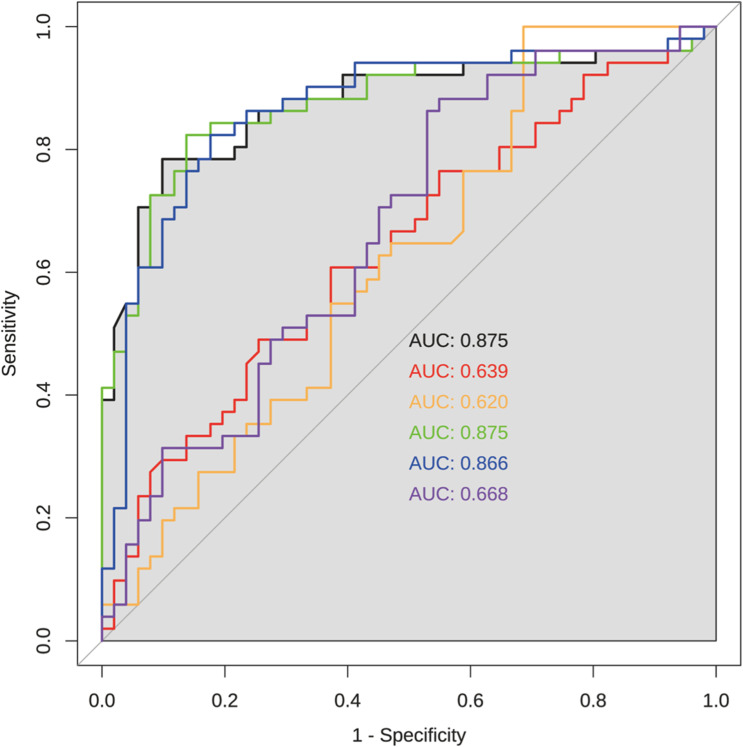
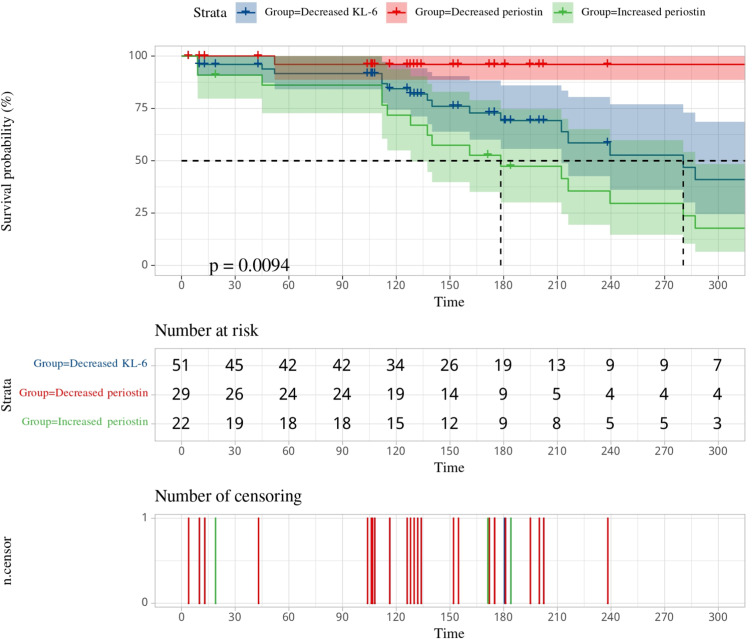
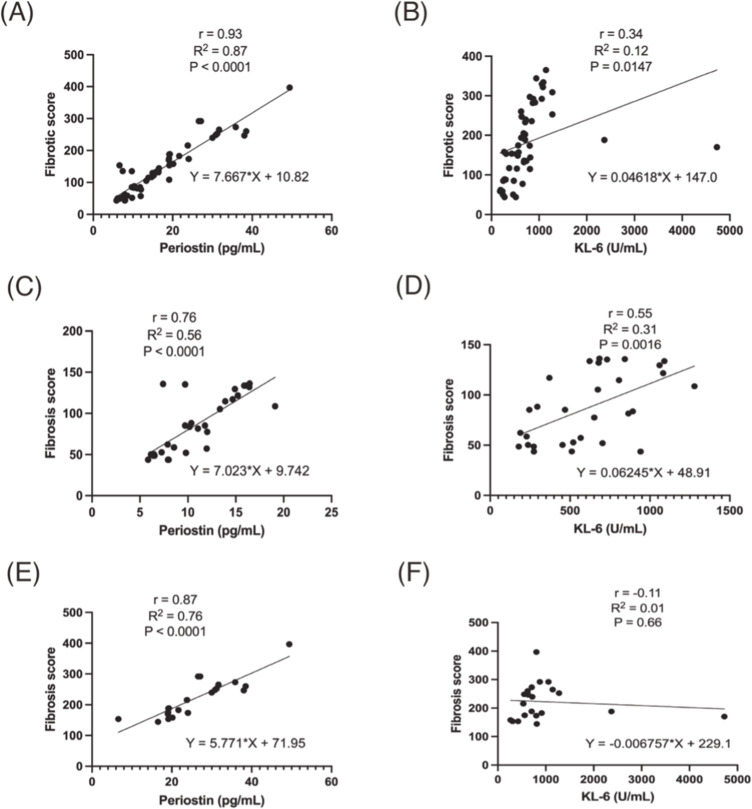
In our cohort of patients with IPF, predominantly male, over an average follow-up period of 195.27 days. Serum levels of periostin and KL-6 were significantly elevated in IPF patients compared to healthy controls (*p < 0.05). Post-treatment, KL-6 levels decreased significantly, while periostin levels increased. Notably, periostin exhibited superior prognostic accuracy over KL-6, with a higher AUC of 0.875 than 0.639 in ROC analysis. An increase in periostin levels correlated with disease progression, as evidenced by worsened HRCT fibrotic scores and decreased survival probability. These findings underscore periostin's potential as a reliable biomarker for assessing IPF severity and therapeutic response.
Our findings underscore the preeminence of serum periostin over KL-6 in UIP-IPF diagnosis, particularly when conjoined with HRCT fibrosis score.
虽然血清骨膜蛋白和克雷布斯-冯-登-龙根-6(KL-6)已被公认为特发性肺纤维化(IPF)诊断中的独立标志物,但这些生物标志物与高分辨率计算机断层扫描(HRCT)联合的临床潜力尚未得到充分探索。
这项回顾性研究纳入了78名参与者,包括51名UIP-IPF患者和27名健康对照。所有受试者均接受了临床和实验室检查,特别是在UIP-IPF患者住院期间入院和出院时使用ELISA检测骨膜蛋白和KL-6,并进行创新性的HRCT纤维化评分评估。
在我们的IPF患者队列中,主要为男性,平均随访期为195.27天。与健康对照相比,IPF患者血清骨膜蛋白和KL-6水平显著升高(*p < 0.05)。治疗后,KL-6水平显著下降,而骨膜蛋白水平升高。值得注意的是,在ROC分析中,骨膜蛋白的预后准确性优于KL-6,其AUC为0.875,高于KL-6的0.639。骨膜蛋白水平升高与疾病进展相关,HRCT纤维化评分恶化和生存概率降低证明了这一点。这些发现强调了骨膜蛋白作为评估IPF严重程度和治疗反应的可靠生物标志物的潜力。
我们的研究结果强调了血清骨膜蛋白在UIP-IPF诊断中优于KL-6,特别是与HRCT纤维化评分结合时。