Department of Radiation Oncology, University of Minnesota, Minneapolis, MN, United States.
University of Minnesota Medical School, University of Minnesota, Minneapolis, MN, United States.
Front Immunol. 2024 Sep 13;15:1438044. doi: 10.3389/fimmu.2024.1438044. eCollection 2024.
This is a prospective, rigorous inquiry into the systemic immune effects of standard adjuvant chemoradiotherapy, for WHO grade 4, glioblastoma. The purpose is to identify peripheral immunologic effects never yet reported in key immune populations, including myeloid-derived suppressor cells, which are critical to the immune suppressive environment of glioblastoma. We hypothesize that harmful immune-supportive white blood cells, myeloid derived suppressor cells, expand in response to conventionally fractionated radiotherapy with concurrent temozolomide, essentially promoting systemic immunity similar what is seen in chronic diseases like diabetes and heart disease.
16 patients were enrolled in a single-institution, observational, immune surveillance study where peripheral blood was collected and interrogated by flow cytometry and RNAseq. Tumor tissue from baseline assessment was analyzed with spatial proteomics to link peripheral blood findings to baseline tissue characteristics.
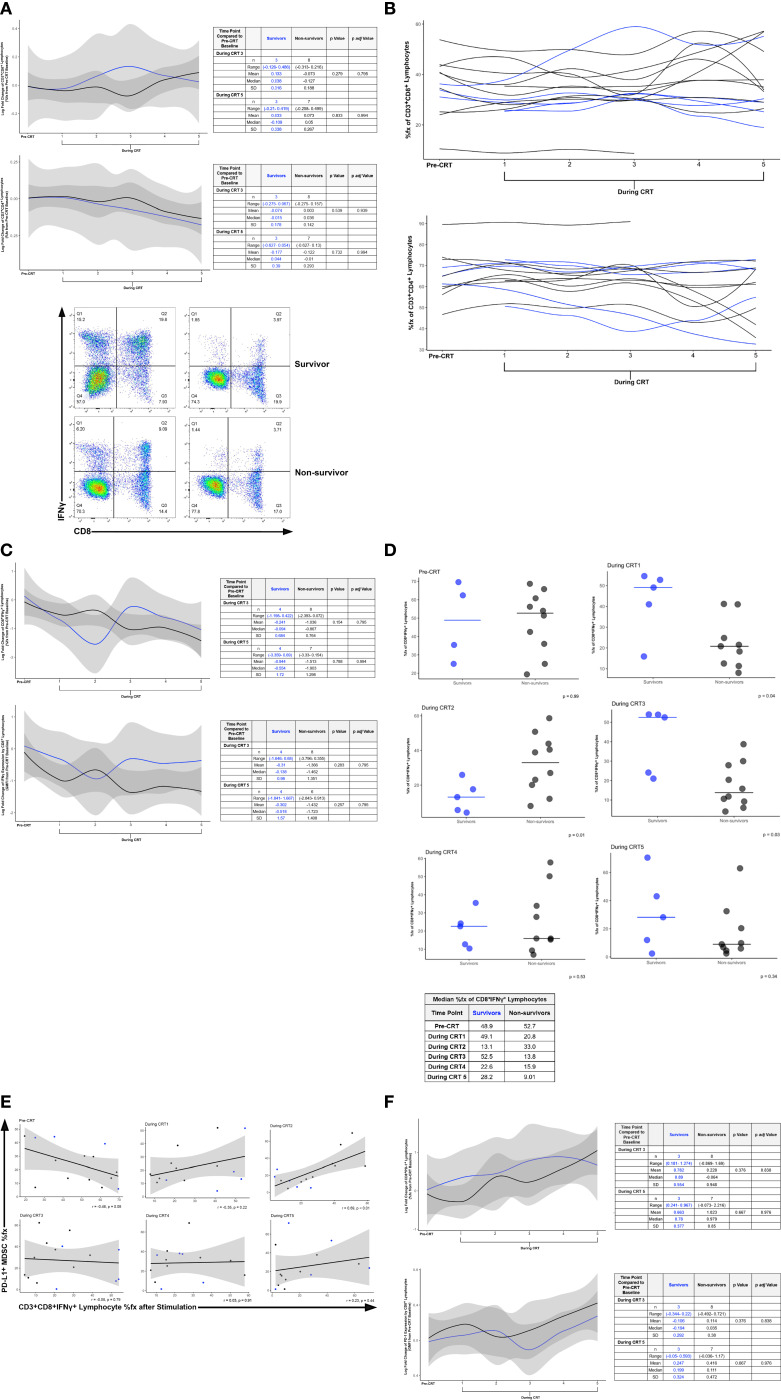
We identified an increase in myeloid-derived suppressor cells during the final week of a six-week treatment of chemoradiotherapy in peripheral blood of patients that were not alive at two years after diagnosis compared to those who were living. This was also associated with a decrease in CD8 T lymphocytes that produced IFNγ, the potent anti-tumor cytokine.
These data suggest that, as in chronic inflammatory disease, systemic immunity is impaired following delivery of adjuvant chemoradiotherapy. Finally, baseline investigation of myeloid cells within tumor tissue did not differ between survival groups, indicating immune surveillance of peripheral blood during adjuvant therapy may be a critical missing link to educate our understanding of the immune effects of standard of care therapy for glioblastoma.
这是一项针对标准辅助放化疗对 WHO 分级 4 级胶质母细胞瘤系统免疫影响的前瞻性、严格调查。目的是确定以前从未在关键免疫群体中报道过的外周免疫效应,包括髓系来源的抑制细胞,这对胶质母细胞瘤的免疫抑制环境至关重要。我们假设有害的免疫支持性白细胞,髓系来源的抑制细胞,在接受常规分割放疗联合替莫唑胺治疗时会扩张,实质上促进了类似于糖尿病和心脏病等慢性疾病中所见的全身免疫。
16 名患者入组了一项单中心、观察性免疫监测研究,在此研究中采集外周血并通过流式细胞术和 RNAseq 进行分析。基线评估时的肿瘤组织进行空间蛋白质组学分析,将外周血发现与基线组织特征联系起来。
我们发现,与两年后仍存活的患者相比,在接受六周辅助放化疗治疗的最后一周,存活患者的外周血中髓系来源的抑制细胞增加。这也与产生 IFNγ的 CD8 T 淋巴细胞减少有关,IFNγ是一种有效的抗肿瘤细胞因子。
这些数据表明,与慢性炎症性疾病一样,辅助放化疗后全身免疫受损。最后,肿瘤组织内髓系细胞的基线研究在生存组之间没有差异,这表明辅助治疗期间外周血的免疫监测可能是一个关键的缺失环节,有助于我们了解胶质母细胞瘤标准治疗的免疫效应。