Cappai Marta, Casti Marta, Pia Giorgio
Dipartimento di Ingegneria Meccanica, Chimica e dei Materiali, Università degli Studi di Cagliari, Piazza d'Armi, 09123, Cagliari, Italy.
Materialia Association, 09037, San Gavino Monreale, Sardinia, Italy.
Sci Rep. 2024 Sep 30;14(1):22671. doi: 10.1038/s41598-024-73192-3.
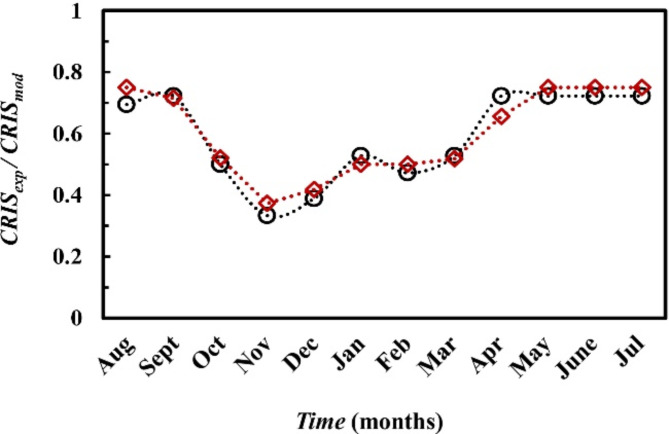
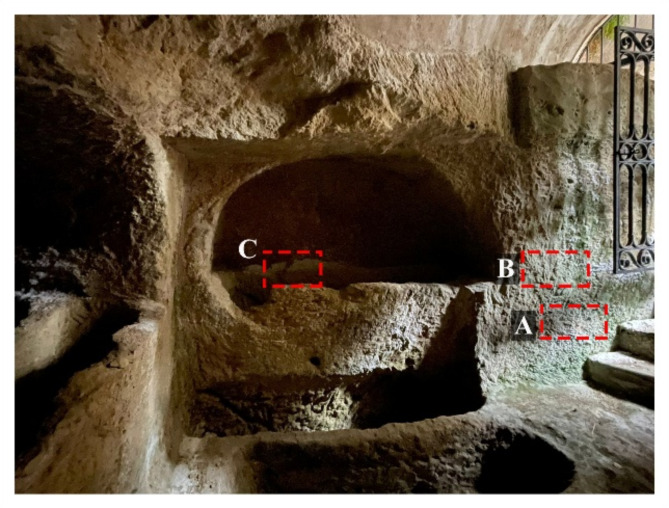
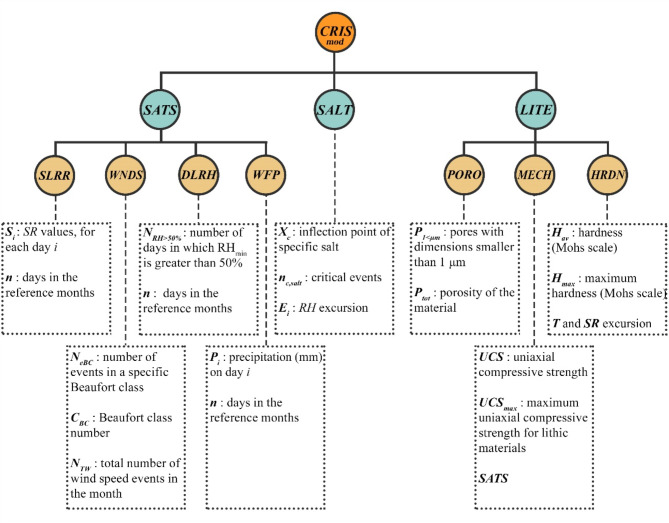
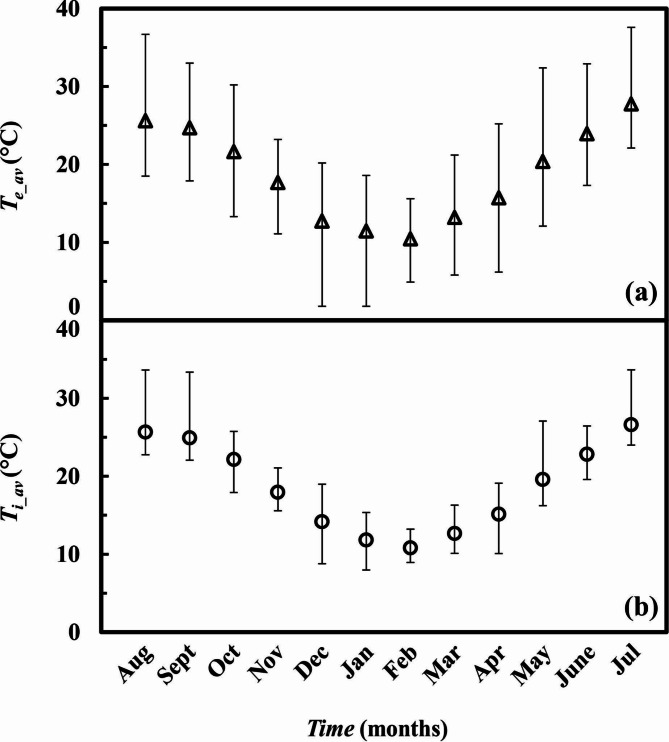
In this study, a fuzzy model is presented for predicting the possibility of degradation due to salt crystallisation cycles. The formalization of the proposed model has been based on the multivariable approach which considers environmental data (such as temperature, solar radiation, wind speed, rain quantity, relative humidity), characteristic inflection points of specific salts and stone features derived from laboratory characterizations (including mechanical properties, porosity, and mineralogical composition). Modeling results have been compared with experimental data elaborations acquired by monitoring a semi-confined archaeological site situated in the city of Cagliari (Munatius Irenaus cubicle), revealing substantial alignment in the degradation kinetics trends. Moreover, the achieved outcomes show the remarkable capability to identify salt crystallisation phenomenon type (efflorescence or subflorescence).
在本研究中,提出了一种模糊模型,用于预测因盐结晶循环导致的劣化可能性。所提出模型的形式化基于多变量方法,该方法考虑环境数据(如温度、太阳辐射、风速、降雨量、相对湿度)、特定盐类的特征拐点以及从实验室表征得出的石材特性(包括力学性能、孔隙率和矿物成分)。将建模结果与通过监测位于卡利亚里市(穆纳提乌斯·伊雷纳斯小室)的半封闭考古遗址获得的实验数据处理结果进行了比较,结果表明在劣化动力学趋势方面具有显著一致性。此外,所取得的成果显示出识别盐结晶现象类型(泛霜或亚泛霜)的卓越能力。