He Hujun, Zhu Haolei, Yang Xingke, Zhang Weiwei, Wang Jinghao
School of Earth Science and Resources, Chang'an University, 710054, Xi'an, China.
Key Laboratory of Western Mineral Resources and Geological Engineering, Ministry of Education, Chang'an University, 710054, Xi'an, China.
Sci Rep. 2024 Sep 30;14(1):22654. doi: 10.1038/s41598-024-73357-0.
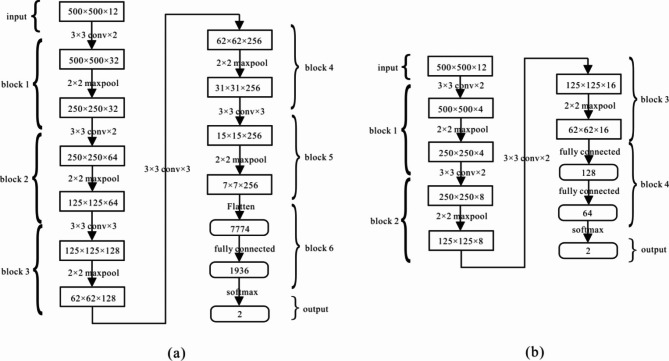
Current research in deep learning, which is widely used in mineral prospectivity prediction, focuses on obtaining high-performance models to predict mineral resources. However, because the network structure and depth of different algorithms differ, there are some differences in the correlation between the spatial pattern of ore-generating geological big data and the spatial location of discovered ore deposits; this causes instability in the prediction. To solve this problem, this paper proposes the use of ensemble learning to synthesize convolutional neural network algorithms and self-attention mechanism algorithms for mineral prospectivity prediction. In this study, 14 factors related to gold mineralization were selected, 10 types of geochemical exploration data (Au, Ag, As, Cu, Pb, Zn, Hg, Sb, W, and Mo) and 4 geological factors (ductile shear zones, brittle fault zones, mineralization-alteration body zones, and metamorphic quartz sandstone zones). Six classical convolutional neural network models (MobileNet V2, ResNet 50, VGG 16, AlexNet, LeNet, and VIT) were used to extract the features of the metallogenic factors. After training, a network model with an accuracy over 94% was obtained. Then, the mineral prospectivity of an unknown area was predicted. The models were evaluated according to their accuracy. Using these results, ensemble learning was performed, areas with high potential were obtained, and the prospectivity prediction map was drawn. This map provides guidance for gold exploration in the Bawanggou mine area of the northern Hanyin gold orefield, South Qinling, China. This comprehensive method can effectively leverage the advantages of various models, fully extract the internal relationships of deep-level mineralization, and has extremely high extensibility. The calculated results can be made more scientific and stable by adding more mineralization factors and introducing an algorithm with the new structure in the future.
目前广泛应用于矿产远景预测的深度学习研究,主要集中在获取高性能模型以预测矿产资源。然而,由于不同算法的网络结构和深度存在差异,成矿地质大数据的空间格局与已发现矿床的空间位置之间的相关性存在一些差异;这导致预测结果不稳定。为了解决这个问题,本文提出使用集成学习将卷积神经网络算法和自注意力机制算法相结合用于矿产远景预测。在本研究中,选取了14个与金矿化相关的因素,包括10种地球化学勘查数据(金、银、砷、铜、铅、锌、汞、锑、钨和钼)和4个地质因素(韧性剪切带、脆性断裂带、矿化蚀变体带和变质石英砂岩带)。使用6种经典的卷积神经网络模型(MobileNet V2、ResNet 50、VGG 16、AlexNet、LeNet和VIT)提取成矿因素的特征。经过训练,获得了准确率超过94%的网络模型。然后,对未知区域的矿产远景进行预测。根据模型的准确率对其进行评估。利用这些结果进行集成学习,得到高潜力区域,并绘制了远景预测图。该图为中国南秦岭汉阴金矿区北部的霸王沟矿区的金矿勘查提供了指导。这种综合方法能够有效利用各种模型的优势,充分提取深层次矿化的内在关系,具有极高的可扩展性。通过在未来增加更多的矿化因素并引入新结构的算法,可以使计算结果更加科学和稳定。