Ranieri Umbertoluca, Bellin Christophe, Conway Lewis J, Gaal Richard, Loveday John S, Hermann Andreas, Shukla Abhay, Bove Livia E
Dipartimento di Fisica, Università di Roma La Sapienza, Rome, Italy.
Centre for Science at Extreme Conditions and School of Physics and Astronomy, University of Edinburgh, Edinburgh, UK.
Commun Chem. 2024 Sep 30;7(1):220. doi: 10.1038/s42004-024-01309-w.
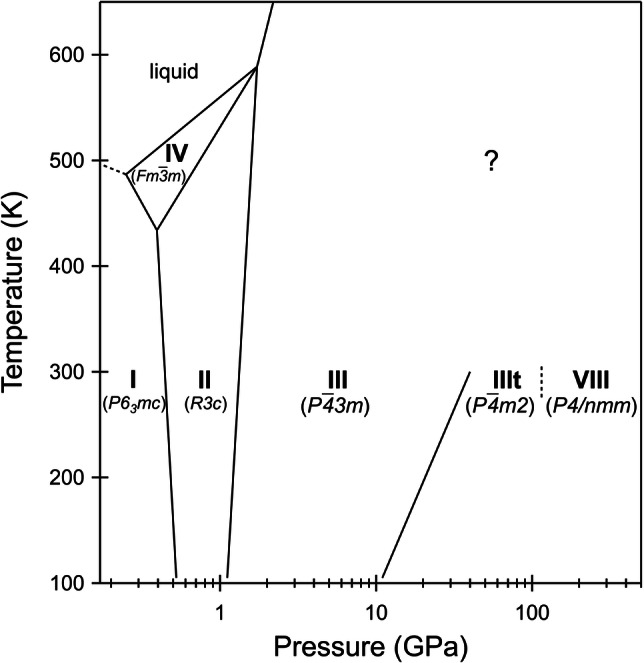
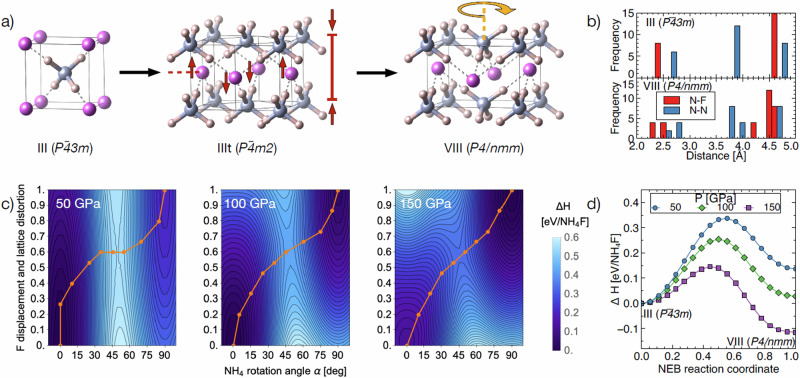
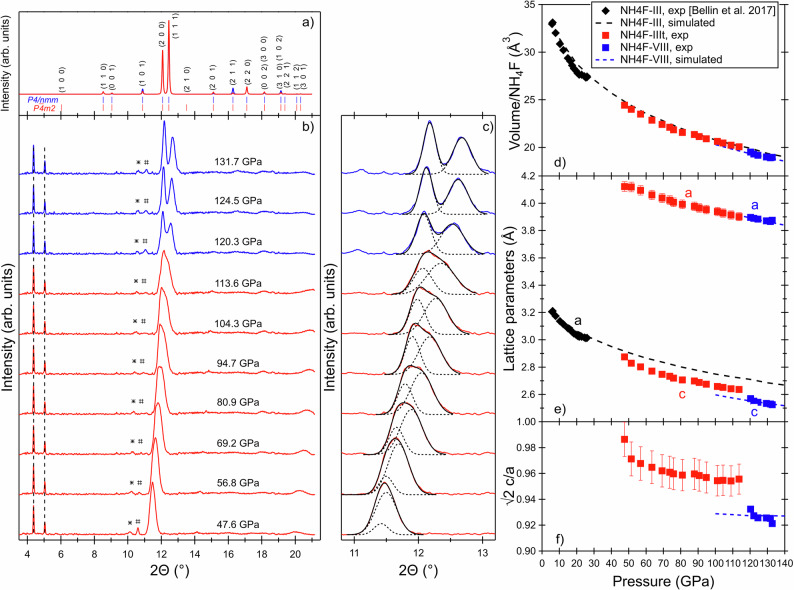
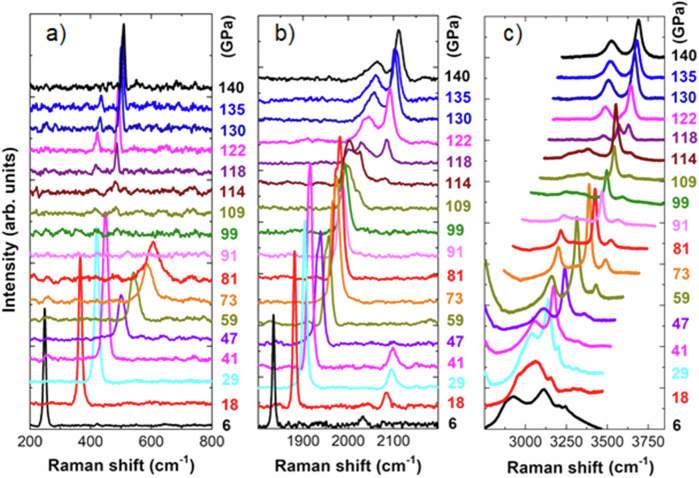
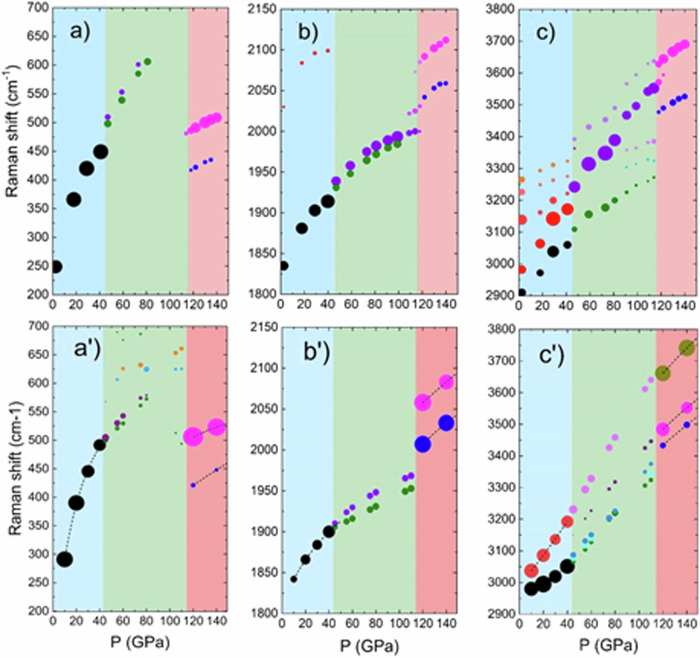
Ammonium fluoride (NH₄F) exhibits a variety of crystalline phases depending on temperature and pressure. By employing Raman spectroscopy and synchrotron X-ray diffraction beyond megabar pressures (up to 140 GPa), we have here observed a novel dense solid phase of NH₄F, characterised by the tetragonal P4/nmm structure also observed in other ammonium halides under less extreme pressure conditions, typically a few GPa. Using detailed ab-initio calculations and reevaluating earlier theoretical models pertaining to other ammonium halides, we examine the microscopic mechanisms underlying the transition from the low-pressure cubic phase (P-43m) to the newly identified high-pressure tetragonal phase (P4/nmm). Notably, NH₄F exhibits distinctive properties compared to its counterparts, resulting in a significantly broader pressure range over which this transition unfolds, facilitating the identification of its various stages. Our analysis points to a synergistic interplay driving the transition to the P4/nmm phase, which we name phase VIII. At intermediate pressures (around 40 GPa), a displacive transition of fluorine ions initiates a tetragonal distortion of the cubic phase. Subsequently, at higher pressures (around 115 GPa), every second ammonium ion undergoes a rotational shift, adopting an anti-tetrahedral arrangement. This coupled effect orchestrates the transition process, leading to the formation of the tetragonal phase.
氟化铵(NH₄F)根据温度和压力呈现出多种晶相。通过在超过兆巴压力(高达140吉帕)下使用拉曼光谱和同步加速器X射线衍射,我们在此观察到一种新型的NH₄F致密固相,其特征为四方P4/nmm结构,在较低极端压力条件下(通常为几吉帕)的其他卤化铵中也观察到这种结构。通过详细的从头算计算并重新评估与其他卤化铵相关的早期理论模型,我们研究了从低压立方相(P-43m)到新发现的高压四方相(P4/nmm)转变背后的微观机制。值得注意的是,与其他卤化铵相比,NH₄F具有独特的性质,导致这种转变发生的压力范围显著更宽,便于识别其各个阶段。我们的分析指出了一种协同相互作用驱动向P4/nmm相的转变,我们将其命名为VIII相。在中等压力(约40吉帕)下,氟离子的位移转变引发立方相的四方畸变。随后,在更高压力(约115吉帕)下,每隔一个铵离子发生旋转位移,采用反四面体排列。这种耦合效应协调了转变过程,导致四方相的形成。