Medical Oncologist, Private Oncology Practice, Antalya, Turkey.
Department of Medical Oncology, Necmettin Erbakan University, Konya, Turkey.
BMC Cancer. 2024 Sep 30;24(1):1207. doi: 10.1186/s12885-024-12985-1.
Synthetic data may proxy clinical data. At the absence of direct clinical data, this study aimed to compare Irinotecan and Ifosfamide (II) with Topotecan in synthetic, recurrent small cell lung cancer (SCLC) patients within a simulated clinical trial.
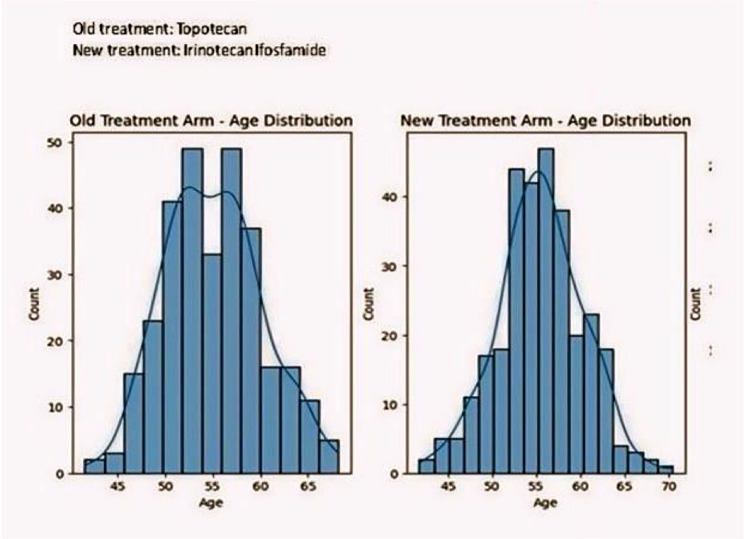
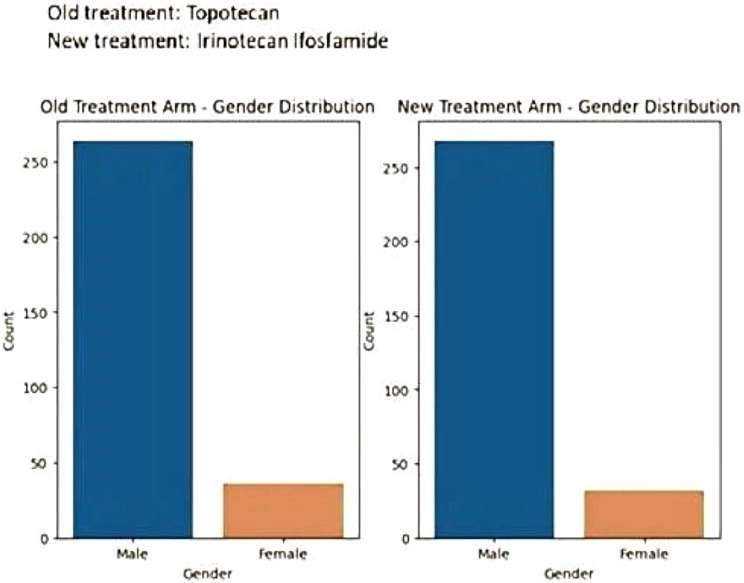
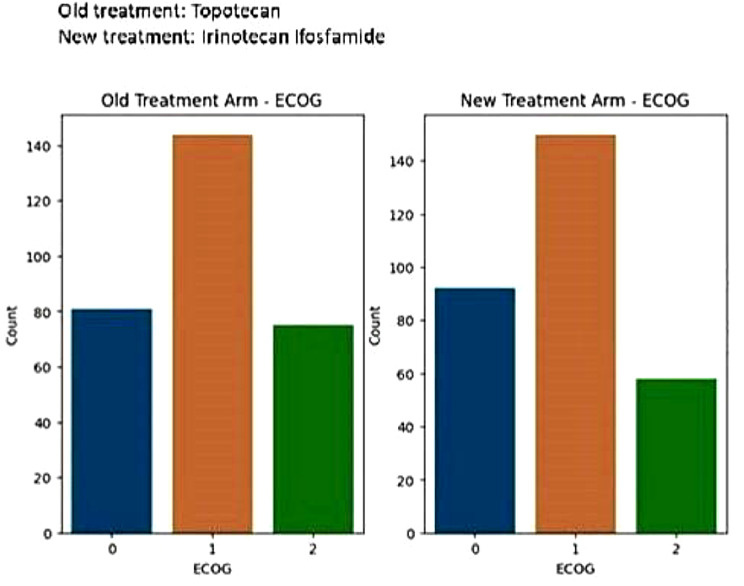
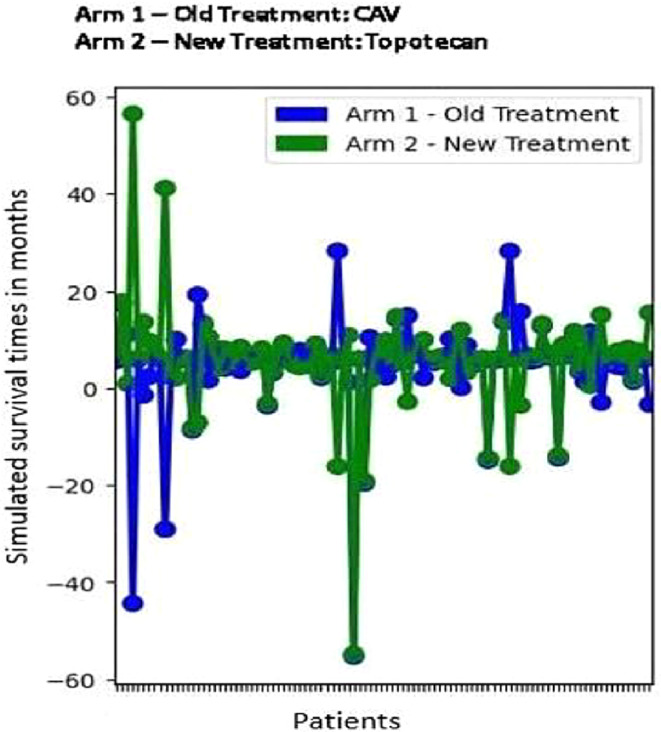
Two simulation stages were conducted. Initially, 200 recurrent SCLC cases were simulated to replicate a previous phase 3 trial, testing the utility of Cox proportional hazards model and simulation methodology together, where patients were randomized to receive Cyclophosphamide, Adriamycin, Vincristine (CAV) or Topotecan. In the second stage, 600 recurrent SCLC patients were simulated and randomized to compare Topotecan versus II in terms of overall survival (OAS), using Reinforcement Learning (RL) and Cox proportional hazards model.
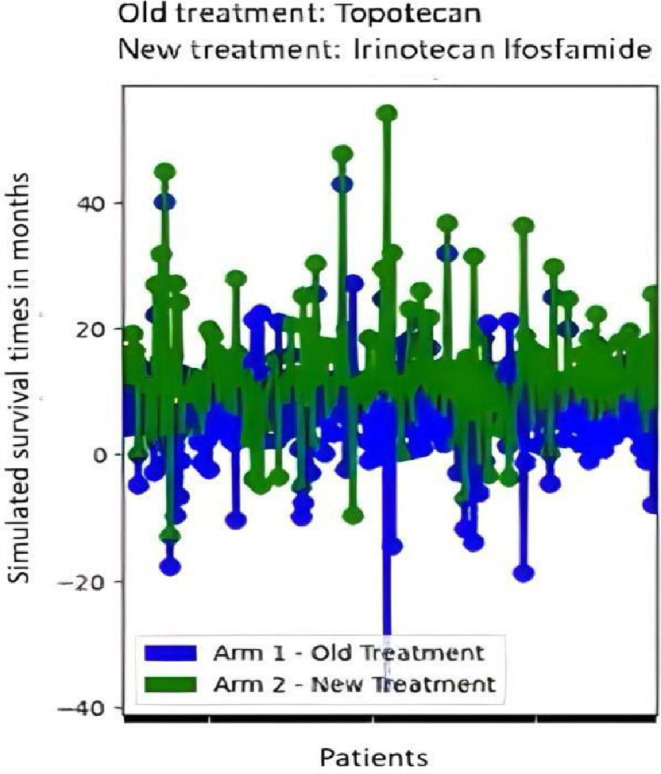
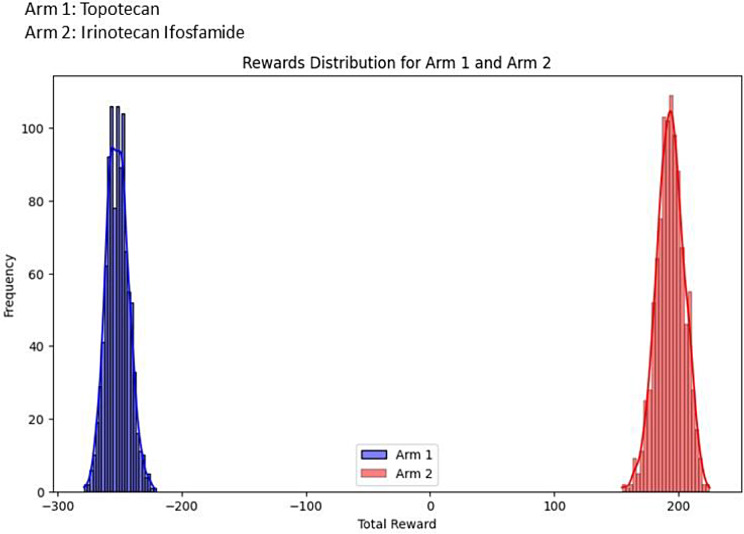
CAV versus Topotecan comparison showed no statistical difference in overall survival (hazard ratio (HR): 0.89, 95% CI: 0.67-1.18, P = 0.418), aligning with the original clinical trial. For the Topotecan versus II comparison, the RL framework significantly favored the II arm (mean reward points: 193.43 versus - 251.82, permutation P < 0.0001). Likewise, II arm exhibited superior median OAS compared to Topotecan arm (11.12 versus 6.30 months). HR was 0.44 (95% CI: 0.38-0.52) with P < 0.0001, in favor of II.
Artificial trial results for CAV versus Topotecan matched the original trial, confirming indifference of OAS. Additionally, II yielded superior overall survival compared to Topotecan in recurrent SCLC patients. These demonstrate the potential of RL and simulation in conjunction with Cox modelling for similar studies. However, definitive conclusions necessitate a randomized clinical trial between II and Topotecan in this patient cohort.
合成数据可以代理临床数据。在缺乏直接临床数据的情况下,本研究旨在模拟临床试验中比较伊立替康和异环磷酰胺(II)与拓扑替康在合成复发性小细胞肺癌(SCLC)患者中的疗效。
进行了两个模拟阶段。最初,模拟了 200 例复发性 SCLC 病例,以复制先前的 3 期试验,共同测试 Cox 比例风险模型和模拟方法的效用,其中患者被随机分配接受环磷酰胺、阿霉素、长春新碱(CAV)或拓扑替康治疗。在第二阶段,模拟了 600 例复发性 SCLC 患者,并使用强化学习(RL)和 Cox 比例风险模型随机比较拓扑替康与 II 组的总生存期(OAS)。
CAV 与拓扑替康比较在总生存期(风险比(HR):0.89,95%置信区间:0.67-1.18,P=0.418)方面无统计学差异,与原始临床试验一致。对于拓扑替康与 II 的比较,RL 框架明显有利于 II 组(平均奖励点数:193.43 与-251.82,置换 P<0.0001)。同样,II 组的中位 OAS 优于拓扑替康组(11.12 与 6.30 个月)。HR 为 0.44(95%置信区间:0.38-0.52),P<0.0001,有利于 II。
CAV 与拓扑替康的人工试验结果与原始试验一致,证实 OAS 无差异。此外,II 组在复发性 SCLC 患者中的总生存期优于拓扑替康。这些结果表明,RL 和模拟与 Cox 模型相结合在类似研究中具有潜力。然而,在该患者队列中,需要进行 II 与拓扑替康之间的随机临床试验才能得出明确的结论。