Ingram School of Nursing, Faculty of Medicine and Health Sciences, McGill University, 680 Rue Sherbrooke West, 18Th Floor, Office 1812, Montréal, QC, H3A 2M7, Canada.
Centre for Clinical Epidemiology, Lady Davis Institute for Medical Research, Sir Mortimer B. Davis Jewish General Hospital, CIUSSS West-Central Montreal, 3755 Chem. de La Côte-Sainte-Catherine, Montréal, QC, H3T 1E2, Canada.
Implement Sci. 2024 Sep 30;19(1):68. doi: 10.1186/s13012-024-01398-0.
Implementation strategies targeting individual healthcare professionals and teams, such as audit and feedback, educational meetings, opinion leaders, and reminders, have demonstrated potential in promoting evidence-based nursing practice. This systematic review examined the effects of the 19 Cochrane Effective Practice and Organization Care (EPOC) healthcare professional-level implementation strategies on nursing practice and patient outcomes.
A systematic review was conducted following the Cochrane Handbook, with six databases searched up to February 2023 for randomized studies and non-randomized controlled studies evaluating the effects of EPOC implementation strategies on nursing practice. Study selection and data extraction were performed in Covidence. Random-effects meta-analyses were conducted in RevMan, while studies not eligible for meta-analysis were synthesized narratively based on the direction of effects. The quality of evidence was assessed using GRADE.
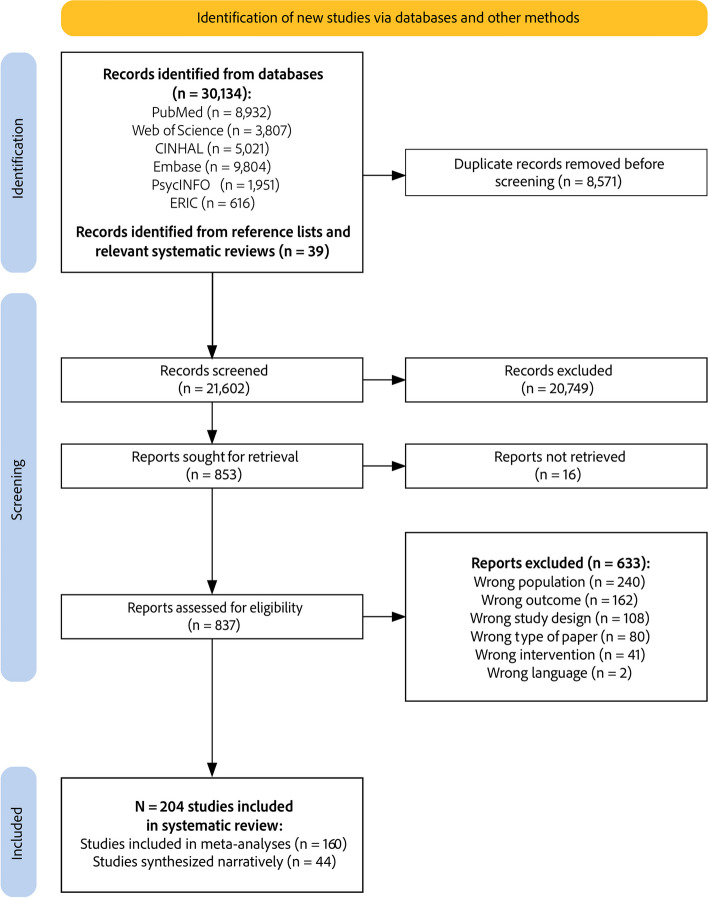
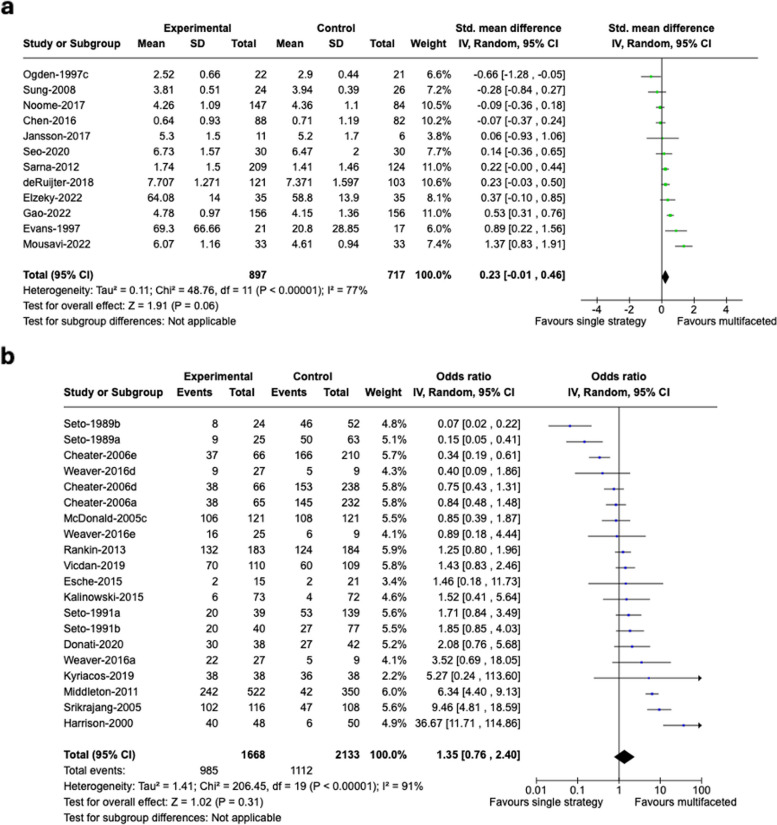
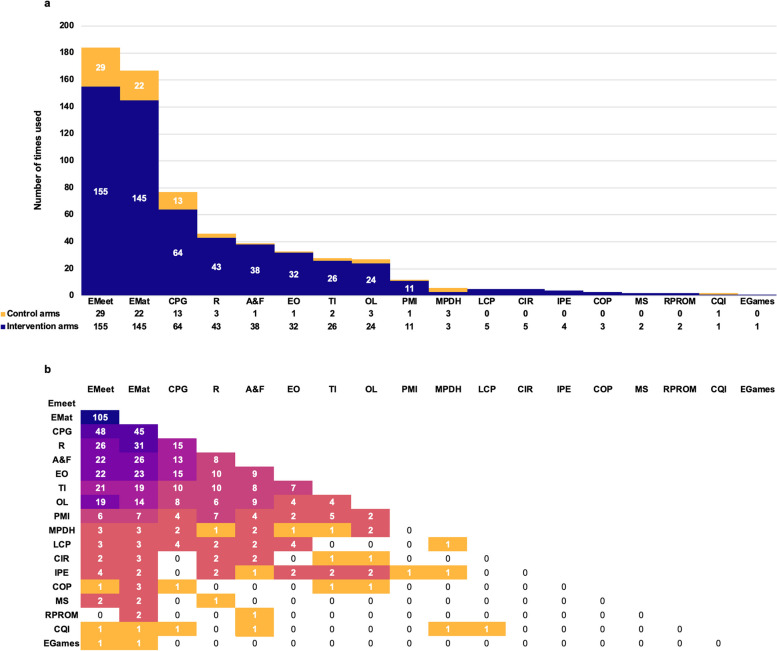
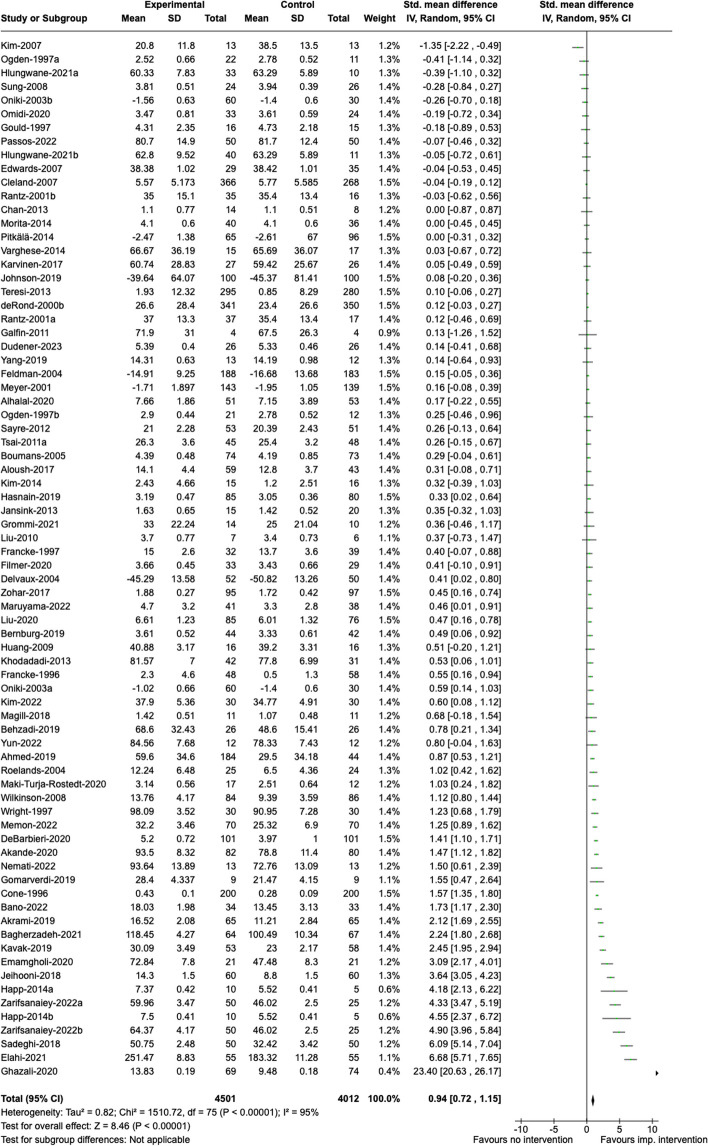
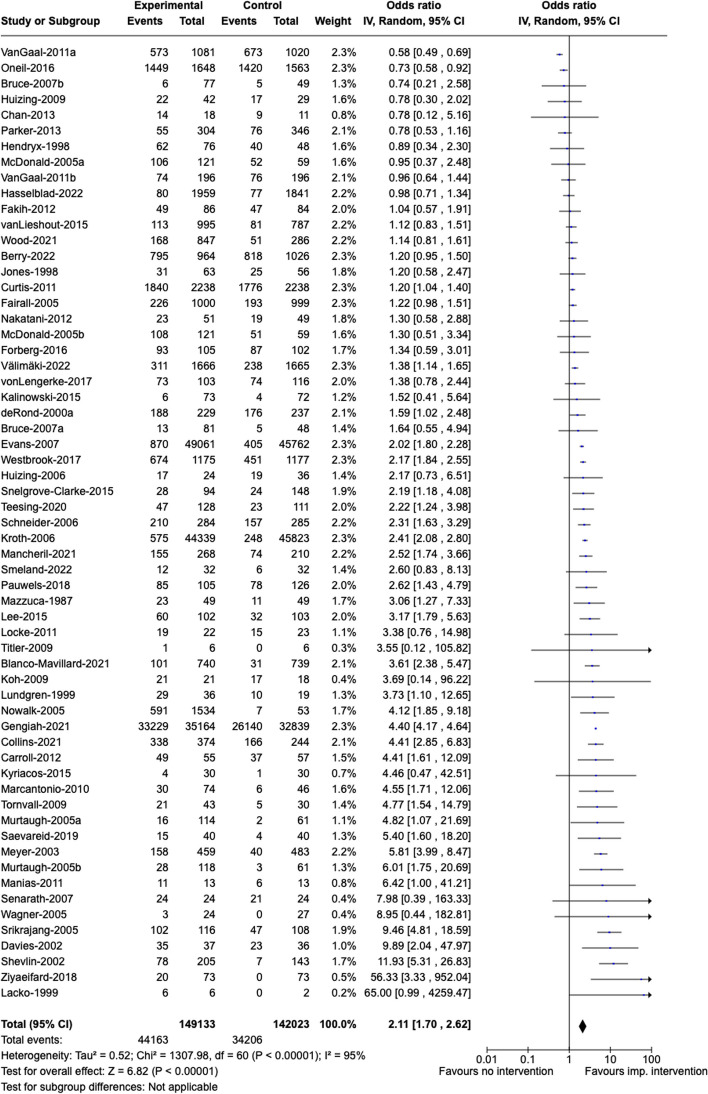
Out of 21,571 unique records, 204 studies (152 randomized, 52 controlled, non-randomized) enrolling 36,544 nurses and 340,320 patients were included. Common strategies (> 10% of studies) were educational meetings, educational materials, guidelines, reminders, audit and feedback, tailored interventions, educational outreach, and opinion leaders. Implementation strategies as a whole improved clinical practice outcomes compared to no active intervention, despite high heterogeneity. Group and individual education, patient-mediated interventions, reminders, tailored interventions and opinion leaders had statistically significant effects on clinical practice outcomes. Individual education improved nurses' attitude, knowledge, perceived control, and skills, while group education also influenced perceived social norms. Although meta-analyses indicate a small, non-statistically significant effect of multifaceted versus single strategies on clinical practice, the narrative synthesis of non-meta-analyzed studies shows favorable outcomes in all studies comparing multifaceted versus single strategies. Group and individual education, as well as tailored interventions, had statistically significant effects on patient outcomes.
Multiple types of implementation strategies may enhance evidence-based nursing practice, though effects vary due to strategy complexity, contextual factors, and variability in outcome measurement. Some evidence suggests that multifaceted strategies are more effective than single component strategies. Effects on patient outcomes are modest. Healthcare organizations and implementation practitioners may consider employing multifaceted, tailored strategies to address local barriers, expand the use of underutilized strategies, and assess the long-term impact of strategies on nursing practice and patient outcomes.
PROSPERO CRD42019130446.
针对个体医护人员和团队的实施策略,如审核和反馈、教育会议、意见领袖和提醒,已显示出在促进循证护理实践方面的潜力。本系统评价考察了 19 项 Cochrane 有效实践和组织护理(EPOC)医护人员层面实施策略对护理实践和患者结局的影响。
按照 Cochrane 手册进行系统评价,在六个数据库中检索截至 2023 年 2 月评估 EPOC 实施策略对护理实践影响的随机研究和非随机对照研究。在 Covidence 中进行研究选择和数据提取。在 RevMan 中进行随机效应荟萃分析,对于不符合荟萃分析条件的研究,根据效应方向进行叙述性综合。使用 GRADE 评估证据质量。
在 21571 条独特记录中,纳入了 204 项研究(152 项随机研究,52 项对照非随机研究),共纳入 36544 名护士和 340320 名患者。常见策略(超过 10%的研究)包括教育会议、教育材料、指南、提醒、审核和反馈、针对性干预、教育外展和意见领袖。尽管存在高度异质性,但与无积极干预相比,实施策略整体上改善了临床实践结局。团体和个体教育、患者介导干预、提醒、针对性干预和意见领袖对临床实践结局有统计学显著影响。个体教育提高了护士的态度、知识、感知控制和技能,而团体教育也影响了感知的社会规范。尽管荟萃分析表明多方面策略与单一策略相比对临床实践的影响较小,但对未进行荟萃分析的研究的叙述性综合表明,在所有比较多方面策略与单一策略的研究中,结果均有利。团体和个体教育以及针对性干预对患者结局有统计学显著影响。
多种实施策略可能增强循证护理实践,但由于策略复杂性、背景因素和结局测量的变异性,效果有所不同。有证据表明,多方面策略比单一组成部分策略更有效。对患者结局的影响较小。医疗保健组织和实施从业者可以考虑采用多方面、针对性的策略来解决当地的障碍,扩大对利用不足的策略的使用,并评估策略对护理实践和患者结局的长期影响。
PROSPERO CRD42019130446。