Marelli Ariane, Rozenblum Ronen, Bolster-Foucault Clara, Via-Dufresne Ley Alicia, Maynard Noemie, Amaria Khush, Galuppi Barb, Strohm Sonya, Nguyen Linda, Dawe-McCord Claire, Putterman Connie, Kovacs Adrienne H, Gorter Jan Willem
McGill Adult Unit for Congenital Heart Disease Excellence, McGill University Health Centre, Montreal, QC, Canada.
Cardiovascular Health Across the Lifespan Program, Research Institute of the McGill University Health Centre, Montreal, QC, Canada.
JMIR Pediatr Parent. 2024 Oct 1;7:e51606. doi: 10.2196/51606.
Transition from pediatric to adult health care varies and is resource intensive. Patient-centered health information technology (HIT) interventions are increasingly being developed in partnership with patients.
This study aims to develop an internet-based mobile app intervention for patients with brain-based disabilities to improve transition in care readiness.
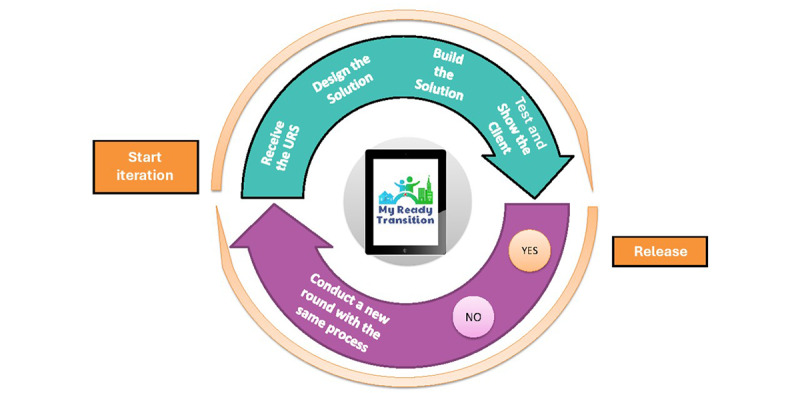
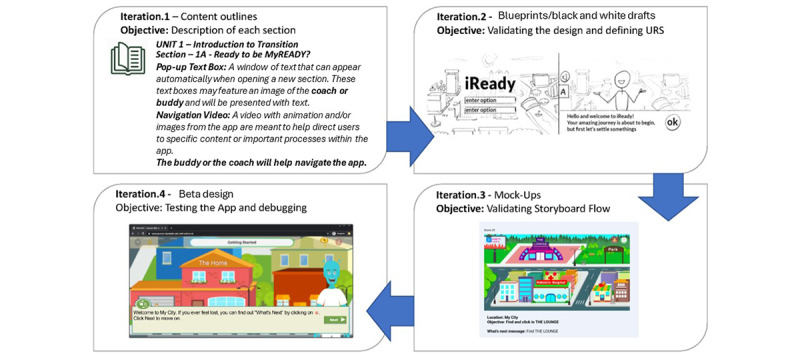
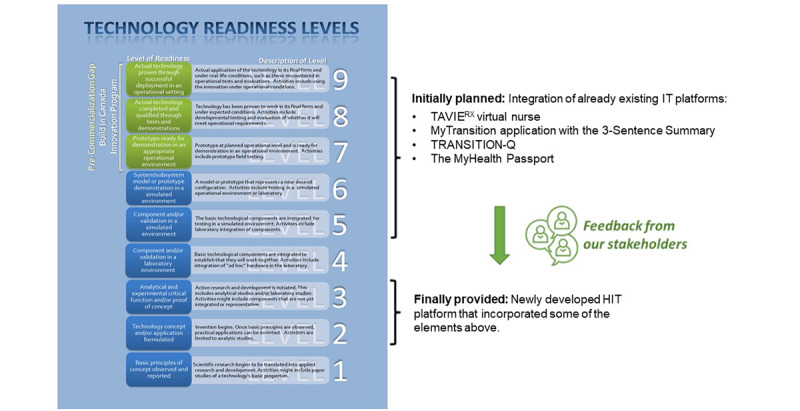
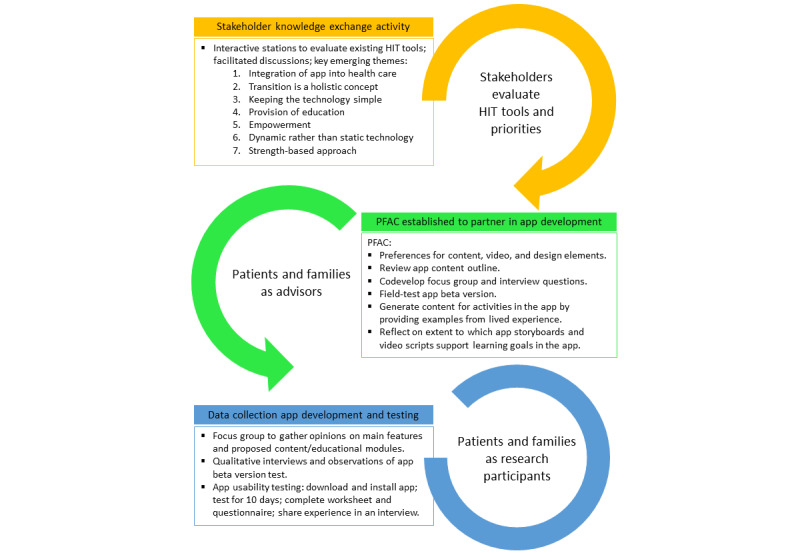
The app was designed for patients aged 15 to 17 years with brain-based disabilities having the ability to use a mobile app. A multidisciplinary team, an industry partner, and a patient and family advisory council was assembled. We hypothesized that existing tools could be migrated into the app to address education, empowerment, and navigation. We used cognitive learning theory to support chapters targeting transition in care skill sets. We used the agile iterative methodology to engage stakeholders.
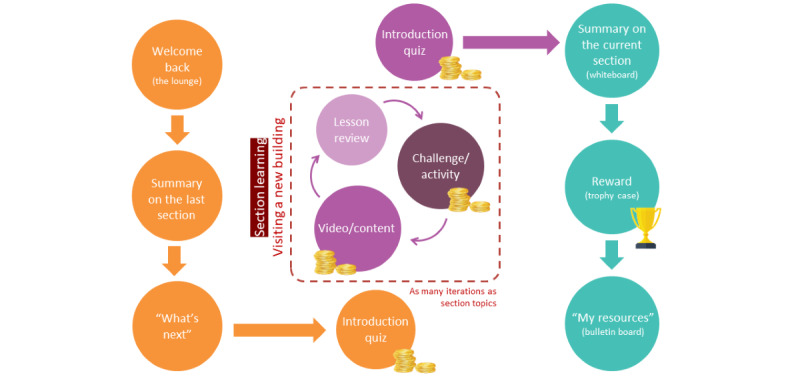
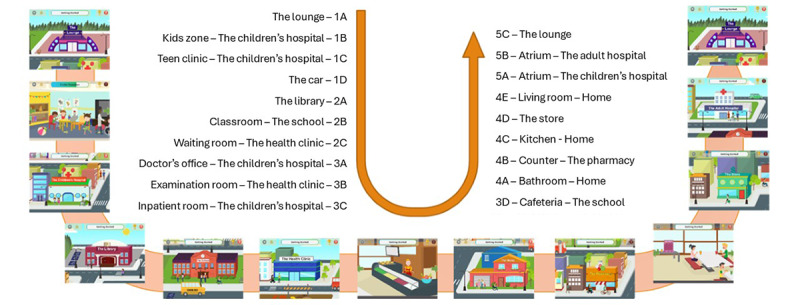
We developed a novel MyREADY Transition HIT platform. An electronic mentor supported cognitive learning with messaging, quizzes, rewards, and videos. We used gaming to guide navigation through a fictitious health care city. Adapting existing tools was achieved by the patient and family advisory council requesting personalization. Our iterative design required time-consuming back-end technology management. Developing the platform took 24 months instead of our grant-approved 12 months, impacting the onset of the planned trial within the allotted budget.
A novel patient-centered HIT platform to improve health care transition was successfully developed in partnership with patients and industry. Careful resource management was needed to achieve timely delivery of the end product, flagging the cautious planning required to deliver HIT tools in time for the much-needed trials informing their clinical application.
ClinicalTrials.gov NCT03852550; https://clinicaltrials.gov/study/NCT03852550.
从儿科医疗向成人医疗的过渡存在差异且资源密集。以患者为中心的健康信息技术(HIT)干预措施越来越多地与患者合作开发。
本研究旨在为患有脑部残疾的患者开发一种基于互联网的移动应用程序干预措施,以改善护理准备方面的过渡。
该应用程序是为年龄在15至17岁、有能力使用移动应用程序且患有脑部残疾的患者设计的。组建了一个多学科团队、一个行业合作伙伴以及一个患者和家庭咨询委员会。我们假设可以将现有工具迁移到应用程序中,以解决教育、赋权和导航问题。我们使用认知学习理论来支持针对护理技能集过渡的章节。我们使用敏捷迭代方法来吸引利益相关者。
我们开发了一个新颖的MyREADY过渡HIT平台。一个电子导师通过消息传递、测验、奖励和视频来支持认知学习。我们利用游戏来引导用户在一个虚拟的医疗保健城市中导航。通过患者和家庭咨询委员会要求个性化,实现了对现有工具的改编。我们的迭代设计需要耗时的后端技术管理。开发该平台花费了24个月,而不是我们拨款批准的12个月,这影响了在分配预算内进行计划试验的时间。
与患者和行业合作成功开发了一个新颖的以患者为中心的HIT平台,以改善医疗保健过渡。需要仔细的资源管理来及时交付最终产品,这表明需要谨慎规划,以便及时交付HIT工具,用于急需的试验,为其临床应用提供依据。
ClinicalTrials.gov NCT03852550;https://clinicaltrials.gov/study/NCT03852550 。