College of Veterinary Medicine, Northwest A&F University, Yangling 712100, PR China.
Parasite. 2024;31:60. doi: 10.1051/parasite/2024059. Epub 2024 Oct 1.
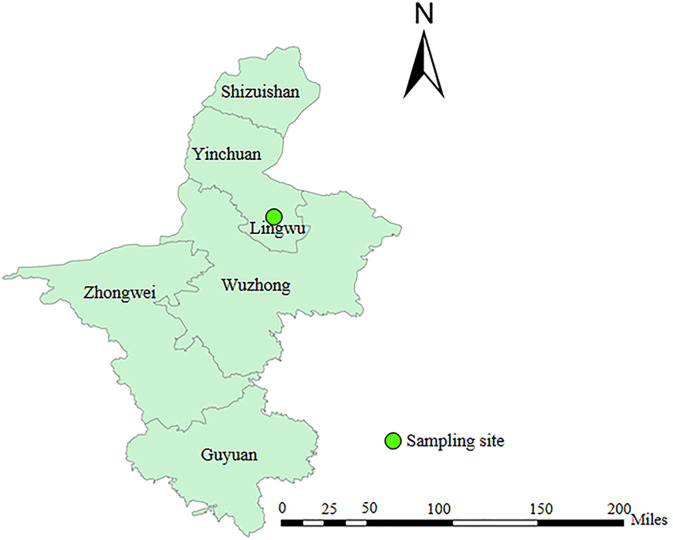
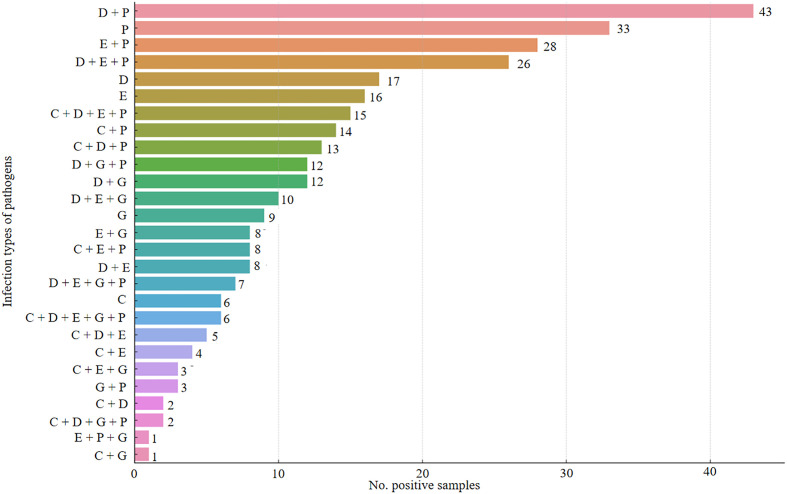
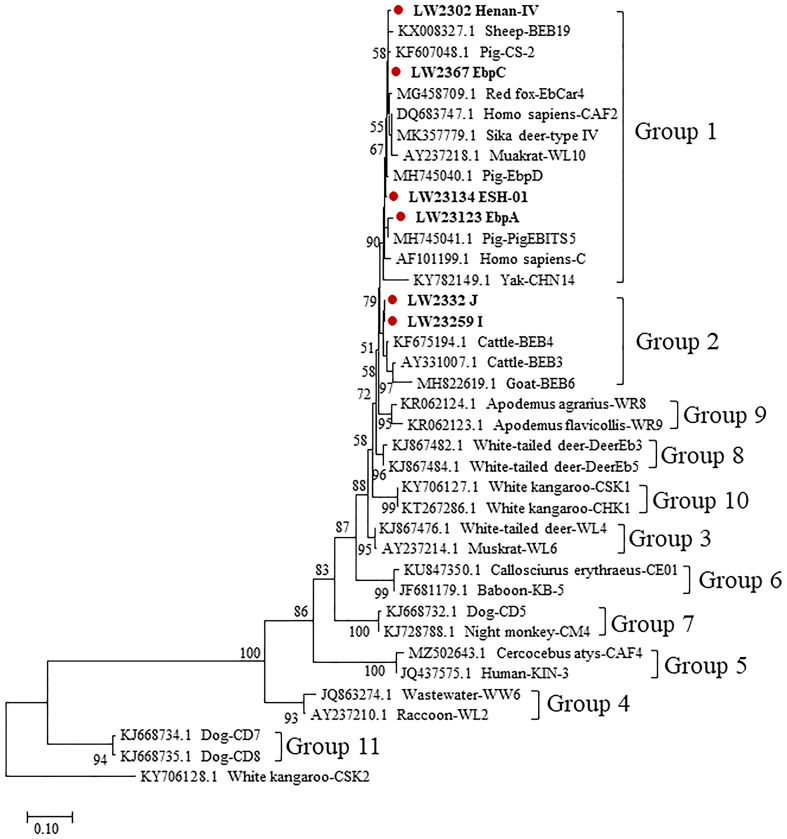
Diarrhea caused by zoonotic pathogens is one of the most common diseases in dairy calves, threatening the health of young animals. Humans are also at risk, in particular children. To explore the pathogens causing diarrhea in dairy calves, the present study applied PCR-based sequencing tools to investigate the occurrence and molecular characteristics of three parasites (Cryptosporidium spp., Giardia duodenalis, and Enterocytozoon bieneusi) and three bacterial pathogens (Escherichia coli, Clostridium perfringens, and Salmonella spp.) in 343 fecal samples of diarrheic dairy calves from five farms in Lingwu County, Ningxia Hui Autonomous Region, China. The total positive rate of these pathogens in diarrheic dairy calves was 91.0% (312/343; 95% CI, 87.9-94.0), with C. perfringens (61.5%, 211/343; 95% CI, 56.3-66.7) being the dominant one. Co-infection with two to five pathogens was found in 67.3% (231/343; 95% CI, 62.4-72.3) of investigated samples. There were significant differences (p < 0.05) in the positive rates of Cryptosporidium spp. and diarrheagenic E. coli among farms, age groups, and seasons. Two Cryptosporidium species (C. parvum and C. bovis) and five gp60 subtypes of C. parvum (IIdA15G1, IIdA20G1, IIdA19G1, IIdA14G1, and a novel IIdA13G1) were identified. Two assemblages (assemblage E and zoonotic assemblage A) of G. duodenalis and six ITS genotypes of E. bieneusi (J, Henan-IV, EbpC, I, EbpA, and ESH-01) were observed. Four virulence genes (eaeA, stx1, stx2, and st) of diarrheagenic E. coli and one toxin type (type A) of C. perfringens were detected. Our study enriches our knowledge on the characteristics and zoonotic potential of diarrhea-related pathogens in dairy calves.
由动物源病原体引起的腹泻是奶牛犊牛中最常见的疾病之一,威胁着幼畜的健康。人类也有感染风险,尤其是儿童。为了探讨导致奶牛犊牛腹泻的病原体,本研究应用基于 PCR 的测序工具,调查了宁夏回族自治区灵武市 5 个农场的 343 份腹泻奶牛犊牛粪便样本中 3 种寄生虫(隐孢子虫、贾第虫和肠外胚层原虫)和 3 种细菌病原体(大肠杆菌、产气荚膜梭菌和沙门氏菌)的发生情况和分子特征。这些病原体在腹泻奶牛犊牛中的总阳性率为 91.0%(312/343;95%CI,87.9-94.0),其中产气荚膜梭菌(61.5%,211/343;95%CI,56.3-66.7)占优势。在 67.3%(231/343;95%CI,62.4-72.3)的检测样本中发现了两种至五种病原体的混合感染。在农场、年龄组和季节之间,隐孢子虫和致泻性大肠杆菌的阳性率存在显著差异(p<0.05)。鉴定出两种隐孢子虫(小隐孢子虫和牛隐孢子虫)和小隐孢子虫的 5 种 gp60 亚型(IIdA15G1、IIdA20G1、IIdA19G1、IIdA14G1 和一种新型 IIdA13G1)。鉴定出两种贾第虫聚集群(聚集群 E 和动物源聚集群 A)和肠外胚层原虫的 6 种 ITS 基因型(J、河南 IV、EbpC、I、EbpA 和 ESH-01)。检测到致泻性大肠杆菌的 4 种毒力基因(eaeA、stx1、stx2 和 st)和产气荚膜梭菌的 1 种毒素类型(A型)。本研究丰富了我们对奶牛犊牛腹泻相关病原体特征和人畜共患潜力的认识。