Chan Chilam, Cabanes Núria Casalé, Jansen J H Marco, Guillaume Joël, Nederend Maaike, Passchier Elsemieke M, Gómez-Mellado Valentina E, Peipp Matthias, Boes Marianne, van Tetering Geert, Leusen Jeanette H W
Center for Translational Immunology, University Medical Center, Heidelberglaan 100, 3584 CX, Utrecht, The Netherlands.
Center for Molecular Medicine, University Medical Center Utrecht, Utrecht, The Netherlands.
Cancer Immunol Immunother. 2024 Oct 3;73(12):238. doi: 10.1007/s00262-024-03824-0.
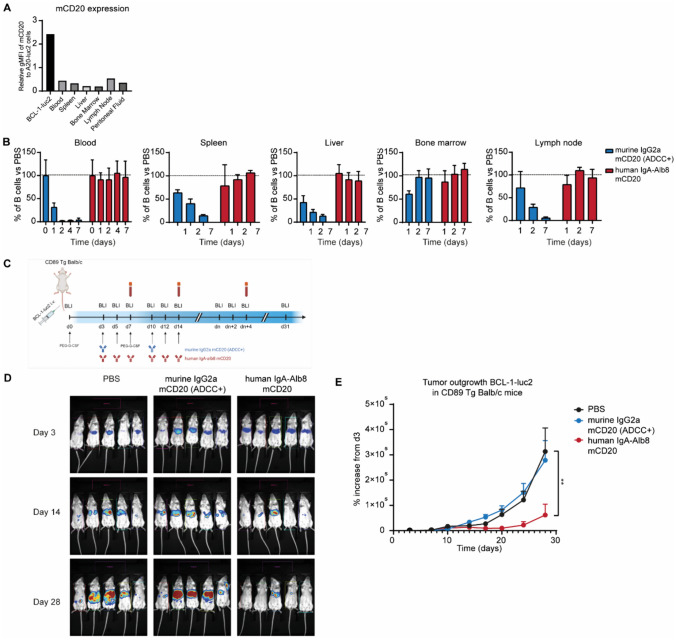
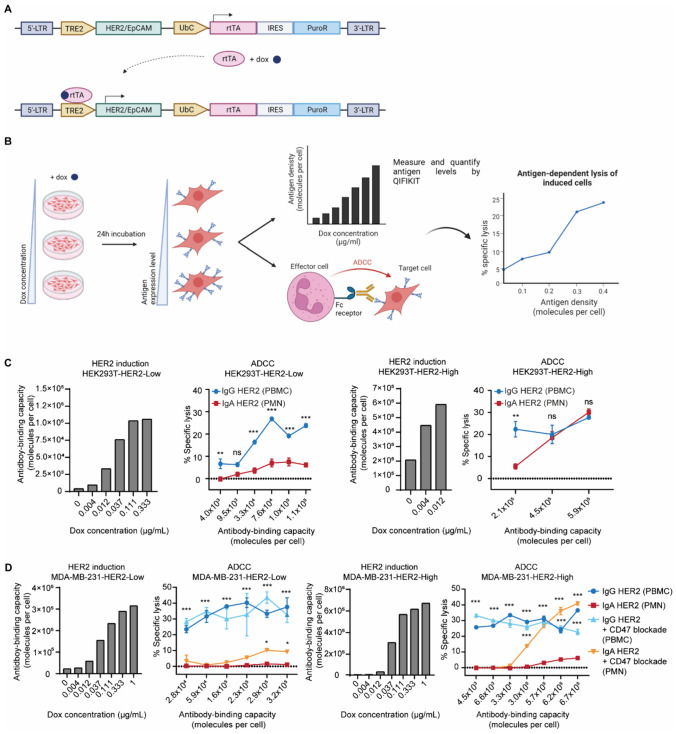
Recent advances in cancer immunotherapy, particularly the success of immune checkpoint inhibitors, have reignited interest in targeted monoclonal antibodies for immunotherapy. Antibody therapies aim to minimize on-target, off-tumor toxicity by targeting antigens overexpressed on tumor cells but not on healthy cells. Despite considerable efforts, some therapeutic antibodies have been linked to dose-limiting side effects. Our hypothesis suggests that the efficacy of IgG leads to a lower target expression threshold for tumor cell killing, contributing to these side effects. Earlier, therapeutic IgG antibodies were reformatted into the IgA isotype. Unlike IgG, which primarily engages Fc gamma receptors (FcγR) to induce antibody-dependent cellular cytotoxicity (ADCC) by NK cells and antibody-dependent cellular phagocytosis (ADCP) by monocytes/macrophages, IgA antibodies activate neutrophils through the Fc alpha receptor I (CD89, FcαRI). In previous studies, it appeared that IgA may require a higher target expression threshold for effective killing, and we aimed to investigate this in our current study. Moreover, we investigated how blocking the myeloid checkpoint CD47/SIRPα axis affect the target expression threshold. Using a tetracycline-inducible expression system, we regulated target expression in different cell lines. Our findings from ADCC assays indicate that IgA-mediated PMN ADCC requires a higher antigen expression level than IgG-mediated PBMC ADCC. Furthermore, blocking CD47 enhanced IgA-mediated ADCC, lowering the antigen threshold. Validated in two in vivo models, our results show that IgA significantly reduces tumor growth in high-antigen-expressing tumors without affecting low-antigen-expressing healthy tissues. This suggests IgA-based immunotherapy could potentially minimize on-target, off-tumor side effects, improving treatment efficacy and patient safety.
癌症免疫疗法的最新进展,尤其是免疫检查点抑制剂的成功,重新点燃了人们对用于免疫疗法的靶向单克隆抗体的兴趣。抗体疗法旨在通过靶向肿瘤细胞上过度表达而健康细胞上不表达的抗原,将靶向肿瘤外的毒性降至最低。尽管付出了巨大努力,但一些治疗性抗体仍与剂量限制性副作用有关。我们的假设表明,IgG的疗效导致肿瘤细胞杀伤的靶标表达阈值降低,从而导致这些副作用。早些时候,治疗性IgG抗体被重新格式化为IgA同种型。与主要通过Fcγ受体(FcγR)介导自然杀伤细胞诱导抗体依赖性细胞毒性(ADCC)以及单核细胞/巨噬细胞诱导抗体依赖性细胞吞噬作用(ADCP)的IgG不同,IgA抗体通过Fcα受体I(CD89,FcαRI)激活中性粒细胞。在先前的研究中,似乎IgA可能需要更高的靶标表达阈值才能有效杀伤,我们旨在在当前研究中对此进行调查。此外,我们研究了阻断髓系检查点CD47/SIRPα轴如何影响靶标表达阈值。使用四环素诱导表达系统,我们在不同细胞系中调节靶标表达。我们从ADCC试验中获得的结果表明,IgA介导的PMN ADCC比IgG介导的PBMC ADCC需要更高的抗原表达水平。此外,阻断CD47增强了IgA介导的ADCC,降低了抗原阈值。在两种体内模型中得到验证,我们的结果表明,IgA显著降低高抗原表达肿瘤的生长,而不影响低抗原表达的健康组织。这表明基于IgA的免疫疗法可能潜在地将靶向肿瘤外的副作用降至最低,提高治疗效果和患者安全性。