Rivalan Marion, Alonso Lucille, Mosienko Valentina, Bey Patrik, Hyde Alexia, Bader Michael, Winter York, Alenina Natalia
Humboldt University Institute of Biology, Chair of Cognitive Neurobiology, Berlin, Germany.
Charité - Universitätsmedizin Berlin, corporate member of Freie Universität Berlin and Humboldt-Universität zu Berlin, Berlin, Germany.
Front Behav Neurosci. 2024 Sep 18;18:1450540. doi: 10.3389/fnbeh.2024.1450540. eCollection 2024.
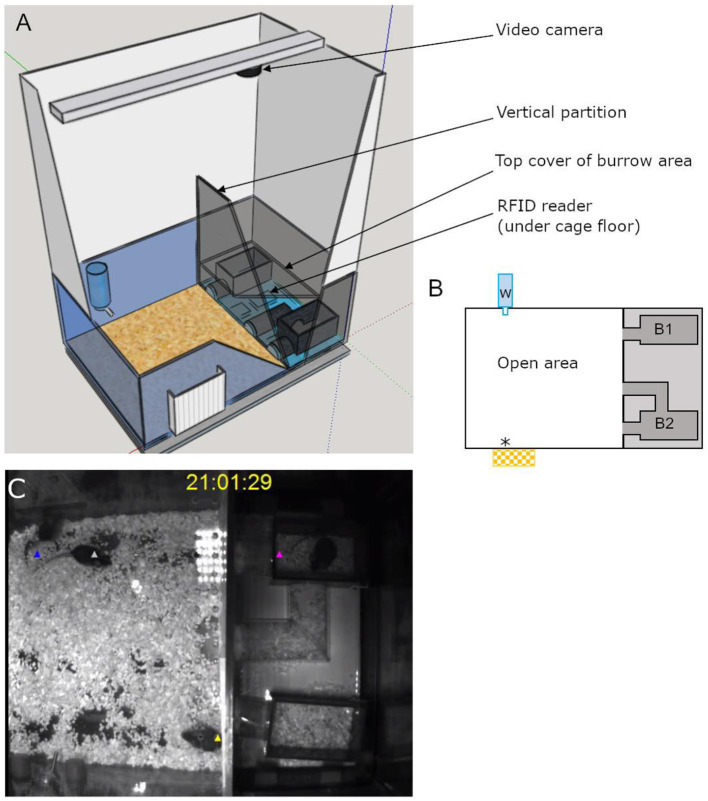
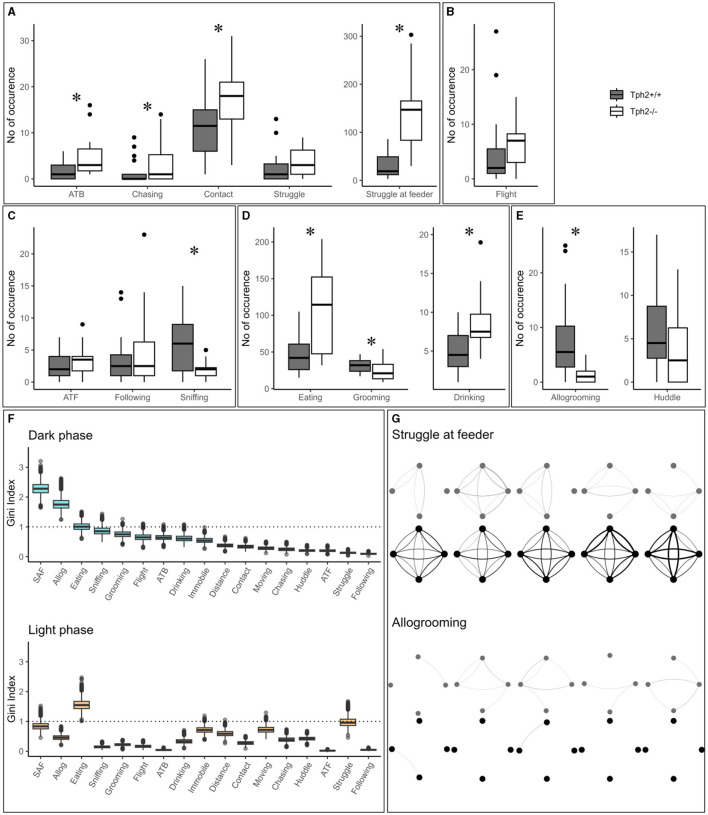
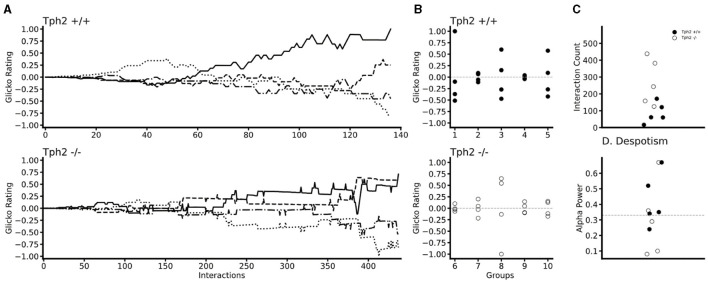
Aggression is an adaptive social behavior crucial for the stability and prosperity of social groups. When uncontrolled, aggression leads to pathological violence that disrupts group structure and individual wellbeing. The comorbidity of uncontrolled aggression across different psychopathologies makes it a potential endophenotype of mental disorders with the same neurobiological substrates. Serotonin plays a critical role in regulating impulsive and aggressive behaviors. Mice lacking in brain serotonin, due to the ablation of tryptophan hydroxylase 2 (TPH2), the rate-limiting enzyme in serotonin synthesis, could serve as a potential model for studying pathological aggression. Home cage monitoring allows for the continuous observation and quantification of social and non-social behaviors in group-housed, freely-moving mice. Using an ethological approach, we investigated the impact of central serotonin ablation on the everyday expression of social and non-social behaviors and their correlations in undisturbed, group-living -deficient and wildtype mice. By training a machine learning algorithm on behavioral time series, "allogrooming", "struggling at feeder", and "eating" emerged as key behaviors dissociating one genotype from the other. Although -deficient mice exhibited characteristics of pathological aggression and reduced communication compared to wildtype animals, they still demonstrated affiliative huddle behaviors to normal levels. Altogether, such a distinct and dynamic phenotype of -deficient mice influenced the group's structure and the subsequent development of its hierarchical organization. These aspects were analyzed using social network analysis and the Glicko rating methods. This study demonstrates the importance of the ethological approach for understanding the global impact of pathological aggression on various aspects of life, both at the individual and group levels. Home cage monitoring allows the observation of the natural behaviors of mice in a semi-natural habitat, providing an accurate representation of real-world phenomena and pathological mechanisms. The results of this study provide insights into the neurobiological substrate of pathological aggression and its potential role in complex brain disorders.
攻击行为是一种适应性社会行为,对社会群体的稳定与繁荣至关重要。若不受控制,攻击行为会导致病理性暴力,扰乱群体结构和个体福祉。不同精神病理学中不受控制的攻击行为共病,使其成为具有相同神经生物学基础的精神障碍的潜在内表型。血清素在调节冲动和攻击行为中起关键作用。由于血清素合成限速酶色氨酸羟化酶2(TPH2)缺失而缺乏脑血清素的小鼠,可作为研究病理性攻击行为的潜在模型。笼内监测可对群居、自由活动小鼠的社会和非社会行为进行持续观察和量化。我们采用行为学方法,研究了中枢血清素缺失对未受干扰、群居缺陷和野生型小鼠日常社会和非社会行为表达及其相关性的影响。通过对行为时间序列训练机器学习算法,“相互梳理毛发”“在食槽处挣扎”和“进食”成为区分不同基因型的关键行为。尽管缺陷小鼠与野生型动物相比表现出病理性攻击行为特征且交流减少,但它们仍将亲和性蜷缩行为维持在正常水平。总之,缺陷小鼠这种独特而动态的表型影响了群体结构及其等级组织的后续发展。使用社会网络分析和Glicko评分方法对这些方面进行了分析。本研究证明了行为学方法对于理解病理性攻击行为在个体和群体层面上对生活各个方面的全局影响的重要性。笼内监测允许在半自然栖息地观察小鼠的自然行为,准确呈现现实世界现象和病理机制。本研究结果为病理性攻击行为的神经生物学基础及其在复杂脑部疾病中的潜在作用提供了见解。