School of Mental Health and Psychological Sciences, Anhui Medical University, Hefei, 230032, Anhui, China.
Affiliated Mental Health Center & Hangzhou Seventh People's Hospital, Zhejiang University School of Medicine, Hangzhou, 310013, Zhejiang, China.
BMC Psychiatry. 2024 Oct 3;24(1):650. doi: 10.1186/s12888-024-06128-w.
Suicide is a critical global public health issue that demands a better understanding of its complex causes and effective interventions. This study examines data from the Hangzhou Mental Health Hotline (2014-2023) to explore the relationship between consultation themes and suicidal ideation, with an emphasis on gender differences and how these associations changed during different phases of the COVID-19 pandemic.
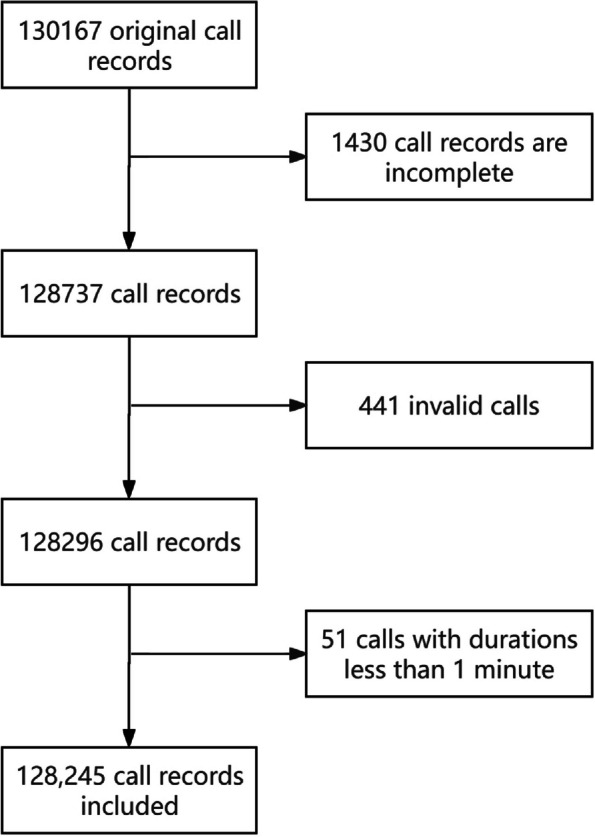
This retrospective analysis covers 128,245 calls to the hotline over a decade. Chi-square tests identified differences in suicidal ideation across consultation themes and demographics. Multivariate logistic regression models were used to examine the relationship between specific themes and suicidal ideation, adjusting for confounders. The analysis was stratified by gender and pandemic phases to assess the interaction between gender and pandemic-related changes.
The incidence of suicidal ideation was highest during the mid-pandemic phase (11.95%), compared to the pre-pandemic (7.68%) and post-pandemic phases (10.66%). Additionally, the rate was slightly higher among female callers (9.8%) than male callers (9.4%). Physical illness (OR = 4.70, 95% CI: 3.71-5.91) had the strongest association with suicidal ideation, followed by mental health issues (OR = 3.35, 95% CI: 3.03-3.70). Compared to male callers, female callers were more significantly affected by physical illness (OR = 6.86 vs. OR = 3.71, p < 0.001) and mental health issues (OR = 6.81 vs. OR = 2.11, p < 0.001). In the context of romantic relationship problems, female callers had a higher likelihood of suicidal ideation (OR = 4.13 vs. OR = 1.88, p < 0.001). Similarly, marital and family issues were more strongly associated with suicidal ideation in female callers (OR = 4.58 vs. OR = 1.21, p < 0.001). During the global COVID-19 pandemic, the association between suicidal ideation and consultation themes among male callers showed a sharp upward trend, which eased after the pandemic. In contrast, the association among female callers gradually accumulated and continued to worsen in the later stages of the pandemic.
This study highlights the necessity of implementing gender-sensitive mental health interventions tailored to different gender groups during and after global crises such as the COVID-19 pandemic, to safeguard public mental health effectively.
自杀是一个严重的全球公共卫生问题,需要更好地了解其复杂的原因和有效的干预措施。本研究通过分析杭州市心理卫生热线(2014-2023 年)的数据,探讨咨询主题与自杀意念之间的关系,重点关注性别差异以及这些关联在 COVID-19 大流行不同阶段的变化。
本回顾性分析涵盖了十年间热线的 128245 次来电。卡方检验确定了自杀意念在咨询主题和人口统计学方面的差异。多变量逻辑回归模型用于检验特定主题与自杀意念之间的关系,并对混杂因素进行了调整。分析按性别和大流行阶段进行分层,以评估性别与大流行相关变化之间的相互作用。
自杀意念的发生率在大流行中期最高(11.95%),高于大流行前(7.68%)和大流行后(10.66%)。此外,女性来电者(9.8%)的比率略高于男性来电者(9.4%)。躯体疾病(OR=4.70,95%CI:3.71-5.91)与自杀意念的关联最强,其次是心理健康问题(OR=3.35,95%CI:3.03-3.70)。与男性来电者相比,女性来电者受躯体疾病(OR=6.86 与 OR=3.71,p<0.001)和心理健康问题(OR=6.81 与 OR=2.11,p<0.001)的影响更为显著。在恋爱关系问题方面,女性来电者自杀意念的可能性更高(OR=4.13 与 OR=1.88,p<0.001)。同样,婚姻和家庭问题与女性来电者自杀意念的关联更为密切(OR=4.58 与 OR=1.21,p<0.001)。在全球 COVID-19 大流行期间,男性来电者自杀意念与咨询主题之间的关联呈急剧上升趋势,大流行后有所缓解。相比之下,女性来电者的关联逐渐积累,并在大流行后期持续恶化。
本研究强调,在 COVID-19 等全球危机期间和之后,需要针对不同性别群体实施性别敏感的心理健康干预措施,以有效维护公众心理健康。