Hu Jinda, Dai Shangming, Yuan Mengqin, Li Fengjiao, Xu Shuoguo, Gao Lichen
Department of Pharmacy, School of Pharmacy, Phase I Clinical Trial Centre, The Affiliated Changsha Central Hospital, Hengyang Medical School, University of South China, Changsha, China.
Hunan Provincial Key Laboratory of Tumor Microenvironment Responsive Drug Research, Hengyang, China.
Front Pharmacol. 2024 Sep 19;15:1438161. doi: 10.3389/fphar.2024.1438161. eCollection 2024.
Gastric cancer (GC) ranks as the fifth most prevalent cancer globally, and its pronounced invasiveness and propensity to spread provide significant challenges for therapy. At present, there are no efficacious medications available for the treatment of patients with GC. Isoliensinine (ISO), a bisbenzylisoquinoline alkaloid, was isolated from Gaertn. It possesses anti-tumor, antioxidant, and other physiological effects. Nevertheless, there is currently no available study on the impact of ISO on GC, and further investigation is needed to understand its molecular mechanism.
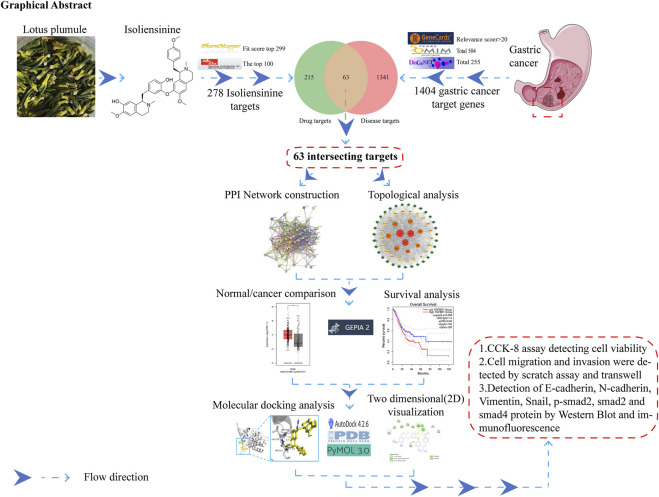
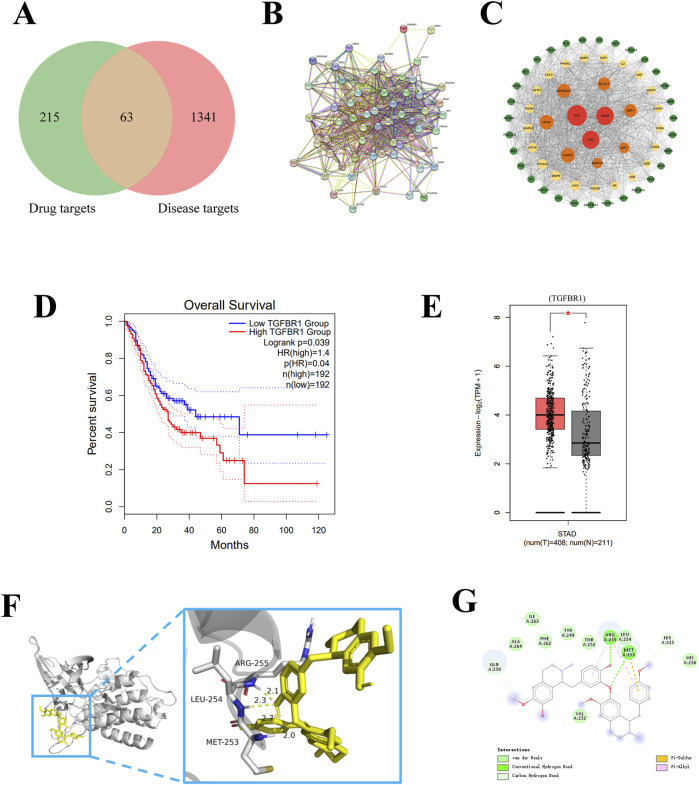
ISO target points and GC-related genes were identified, and the cross-target points of ISO and GC were obtained. We then examined cross-targeting and found genes that were differentially expressed in GCs. Kaplan-Meier survival curves were used to screen target genes, and the STRING database and Cytoscape 3.9.1 were used to construct protein-protein interactions and drug-target networks. In addition, molecular docking studies confirmed the interactions between ISO screen targets. Finally, tests were used to establish the impact of ISO on GC cells.
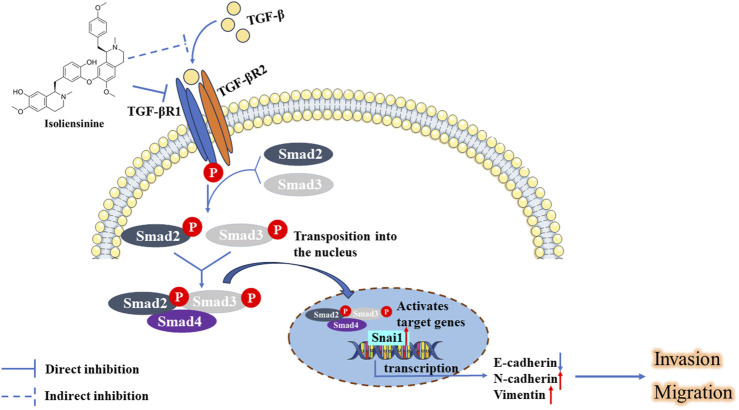
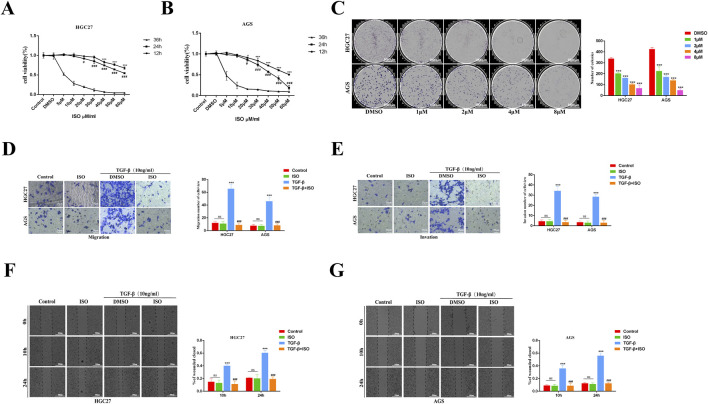
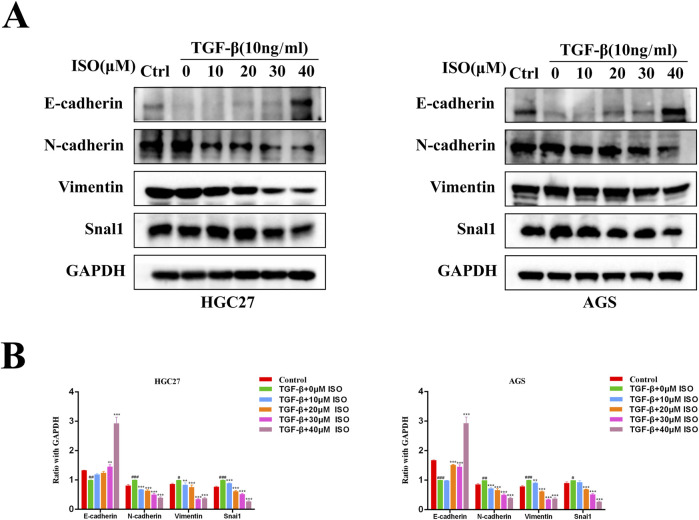
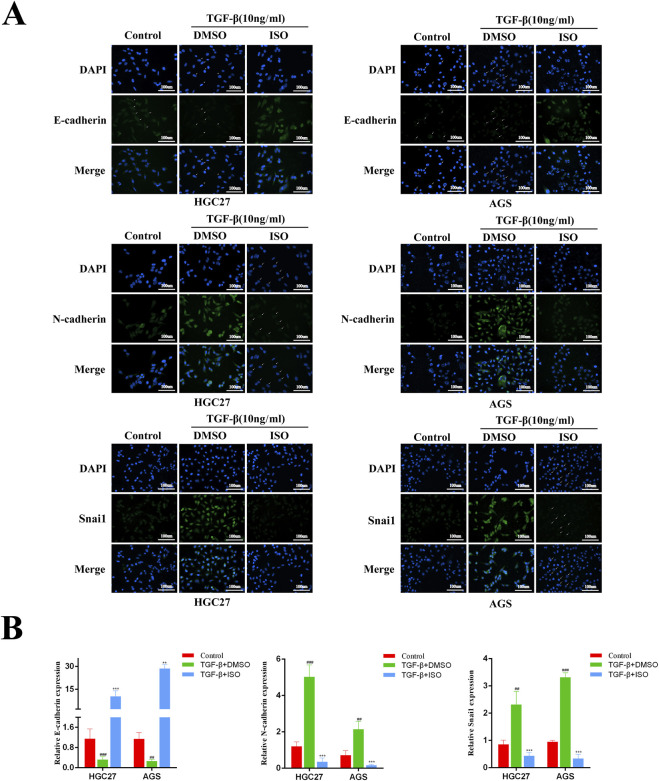
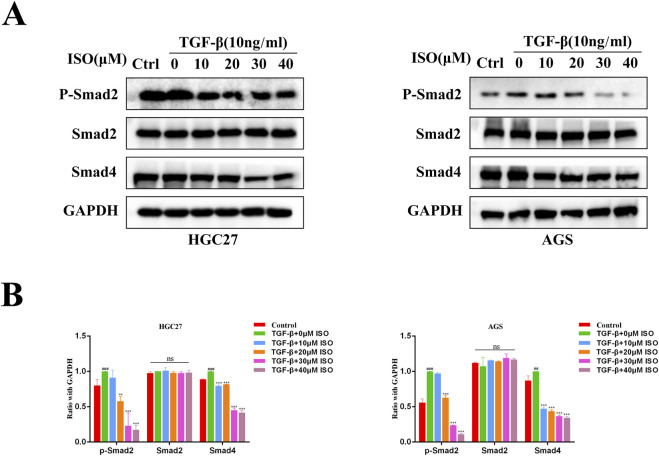
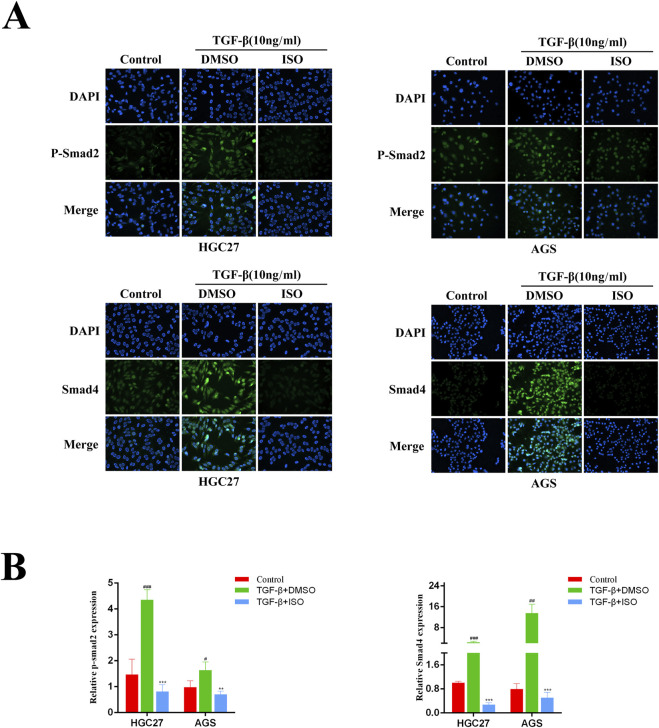
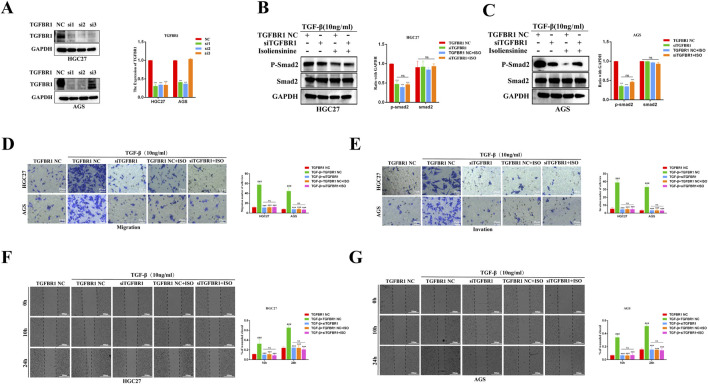
Through bioinformatics research, we have identified TGFBR1 as the target of ISO in GC. In addition, we noticed a substantial inhibition in GC cell proliferation, migration, and invasion activities following ISO treatment. Moreover, we noticed that ISO treatment effectively suppressed TGF-β-induced epithelial-mesenchymal transition (EMT) and activation of the TGF-β-Smad pathway. Furthermore, we discovered that siTGFBR1 nullified the impact of ISO on TGF-β-triggered migration, invasion, and activation of the TGF-β-Smad pathway.
Our research suggests that ISO specifically targets TGFBR1 and regulates the TGF-β-Smad signaling pathway to suppress the proliferation and migration of GC cells.
胃癌(GC)是全球第五大常见癌症,其显著的侵袭性和转移倾向给治疗带来了重大挑战。目前,尚无有效的药物可用于治疗胃癌患者。异莲心碱(ISO)是一种双苄基异喹啉生物碱,从[植物名称未给出]中分离得到。它具有抗肿瘤、抗氧化和其他生理作用。然而,目前尚无关于ISO对胃癌影响的研究,需要进一步研究以了解其分子机制。
确定ISO靶点和GC相关基因,获得ISO与GC的交叉靶点。然后我们研究交叉靶向并发现胃癌中差异表达的基因。使用Kaplan-Meier生存曲线筛选靶基因,并使用STRING数据库和Cytoscape 3.9.1构建蛋白质-蛋白质相互作用和药物-靶标网络。此外,分子对接研究证实了ISO筛选靶点之间的相互作用。最后,通过实验确定ISO对胃癌细胞的影响。
通过生物信息学研究,我们确定TGFBR1是ISO在胃癌中的靶点。此外,我们注意到ISO处理后胃癌细胞的增殖、迁移和侵袭活性受到显著抑制。而且,我们注意到ISO处理有效地抑制了TGF-β诱导的上皮-间质转化(EMT)和TGF-β-Smad信号通路的激活。此外,我们发现siTGFBR1消除了ISO对TGF-β触发的迁移、侵袭和TGF-β-Smad信号通路激活的影响。
我们的研究表明,ISO特异性靶向TGFBR1并调节TGF-β-Smad信号通路,以抑制胃癌细胞的增殖和迁移。