Oliveira Jessica Almeida, Loria Francesco, Schobinger Céline, Kuuranne Tiia, Mumenthaler Claudia, Leuenberger Nicolas
Swiss Laboratory for Doping Analyses, University Center of Legal Medicine, Lausanne, Switzerland.
Lausanne University Hospital & University of Lausanne, Lausanne, Switzerland.
Front Sports Act Living. 2024 Sep 19;6:1452079. doi: 10.3389/fspor.2024.1452079. eCollection 2024.
The study demonstrated the feasibility of incorporating RNA biomarkers, specifically 5-aminolevulinic acid synthase (ALAS2) and carbonic anhydrase 1 (CA1), to improve the hematological module of the Athlete Biological Passport (ABP) in routine antidoping context.
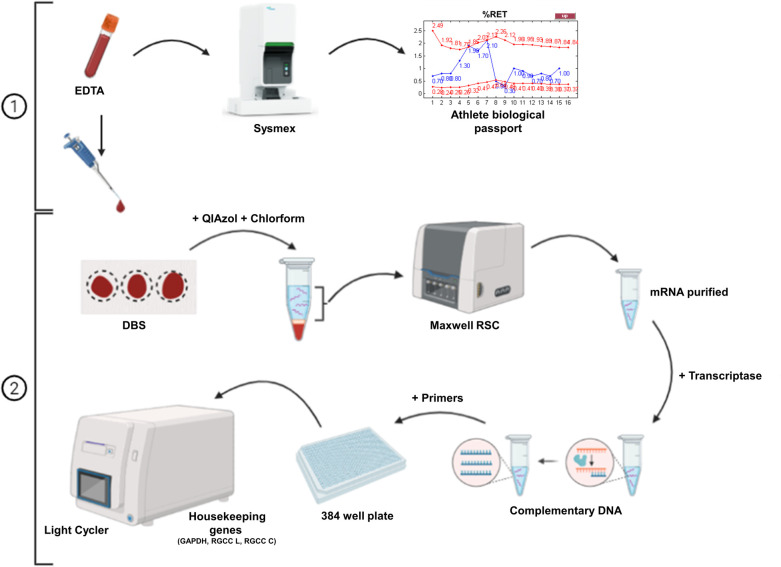
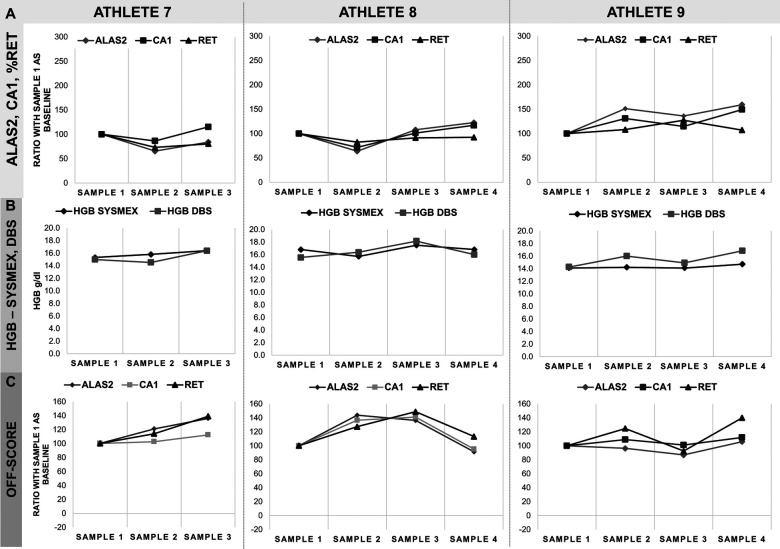
The aim was to investigate the implementation of reticulocyte (RET) related biomarkers, specifically ALAS2 and CA1, using quantitative reverse transcription polymerase chain reaction (RT-qPCR) on dried blood spots (DBS) from elite athletes. Hemoglobin changes over time in DBS samples was measured as well. Combining hemoglobin and messenger RNA (mRNA) analyses allowed to monitor alterations of the established marker, "DBS OFF-score".
Ten athletes were selected for sampling by the Swiss national antidoping organization, Swiss Sports Integrity (SSI). Samples were collected, transported and analyzed for ABP following the World Anti-Doping Agency (WADA) procedures and spotted onto Protein Saver DBS cards.
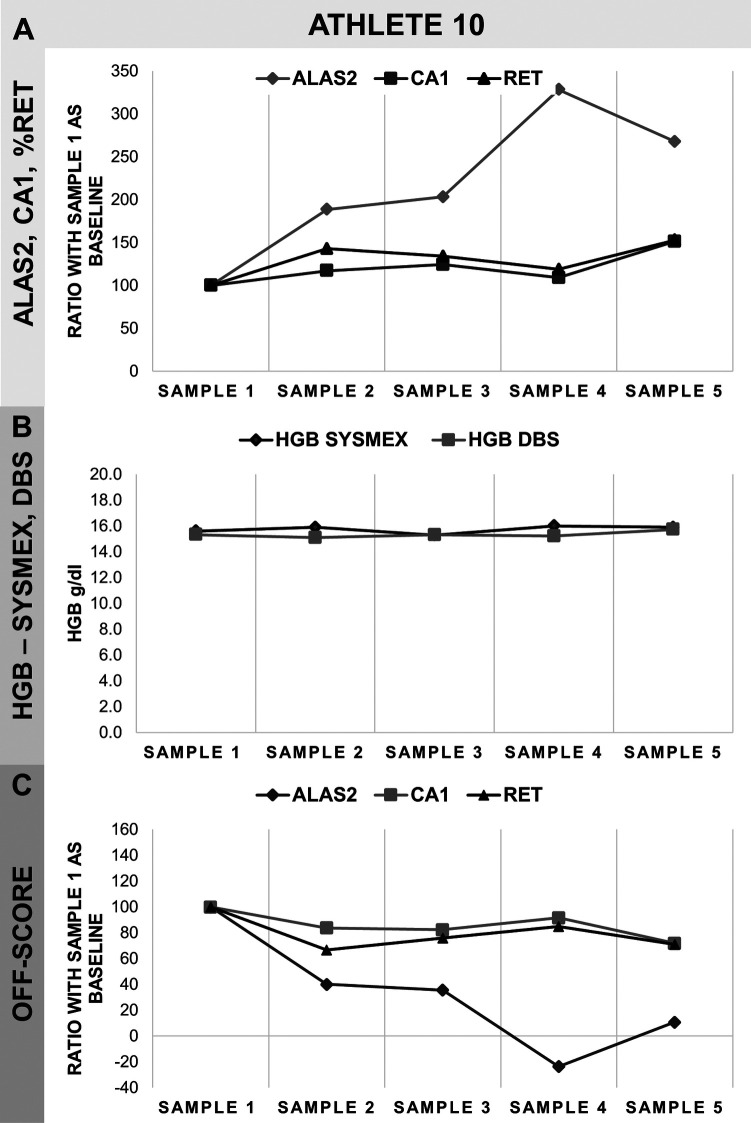
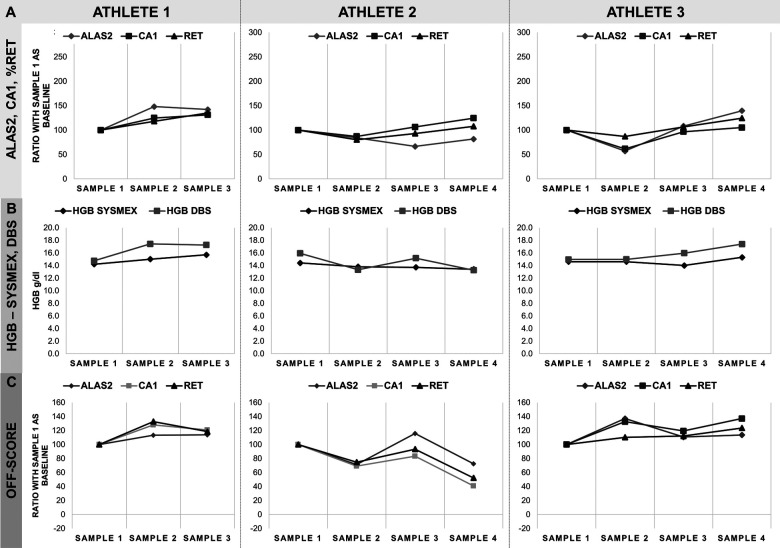
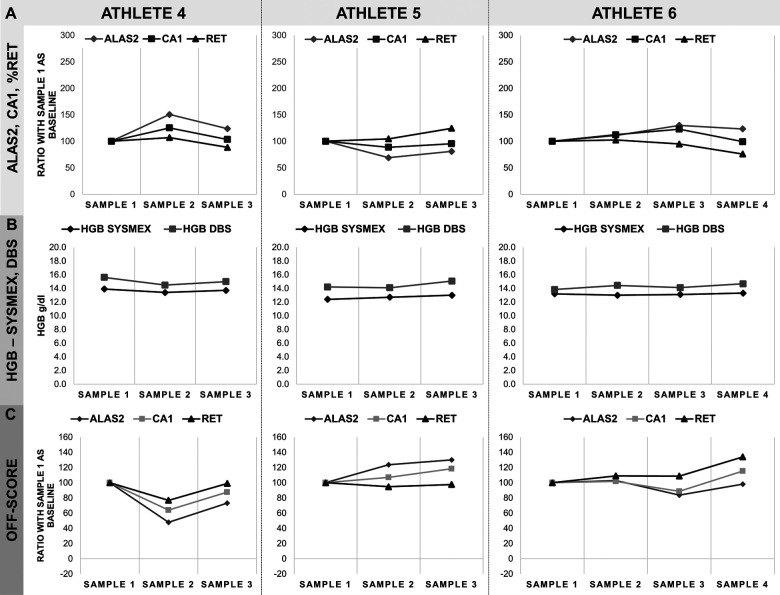
Most athletes exhibited stable biomarker levels, except for one individual involved in ski mountaineering, who demonstrated a sustained increase in ALAS2 compared to the individual baseline. This elevation could be due to blood withdrawal or other factors, such as doping with substances outside the targeted test menu.
In this study, RNA-biomarkers were successfully analyzed in routine blood samples, and the project demonstrated promising results for the implementation of ALAS2 and CA1 in routine analysis to complement the ABP.
该研究证明了纳入RNA生物标志物,特别是5-氨基酮戊酸合酶(ALAS2)和碳酸酐酶1(CA1),在常规反兴奋剂背景下改善运动员生物护照(ABP)血液学模块的可行性。
旨在研究使用定量逆转录聚合酶链反应(RT-qPCR)对精英运动员干血斑(DBS)进行网织红细胞(RET)相关生物标志物,特别是ALAS2和CA1的检测。同时也测量了DBS样本中血红蛋白随时间的变化。结合血红蛋白和信使核糖核酸(mRNA)分析能够监测既定标志物“DBS脱靶评分”的变化。
瑞士国家反兴奋剂组织瑞士体育诚信机构(SSI)挑选了10名运动员进行采样。按照世界反兴奋剂机构(WADA)的程序收集、运输和分析样本以用于ABP检测,并将样本点在Protein Saver DBS卡上。
除一名参加滑雪登山的运动员外,大多数运动员的生物标志物水平稳定。与个体基线相比,该运动员的ALAS2持续升高。这种升高可能是由于采血或其他因素,如使用目标检测清单之外的物质进行 doping。
在本研究中,RNA生物标志物在常规血液样本中得到成功分析,该项目在将ALAS2和CA1用于常规分析以补充ABP方面显示出了有前景的结果。