Department of Cell and Molecular Biology, University of Rhode Island, 379 Center for Biotechnology and Life Sciences, 120 Flagg Road, Kingston, RI, USA.
Department of Chemical and Systems Biology, Stanford University School of Medicine, Stanford, CA, 94305, USA.
Funct Integr Genomics. 2024 Oct 4;24(5):180. doi: 10.1007/s10142-024-01453-5.
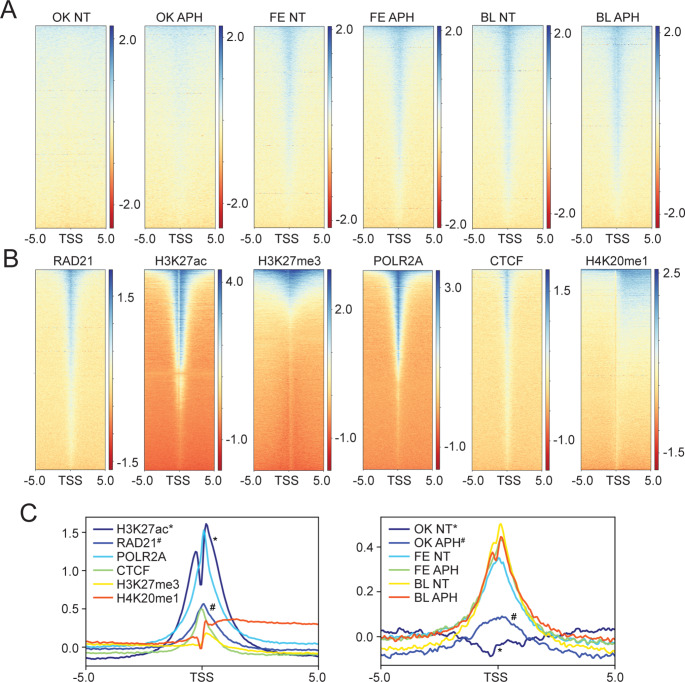
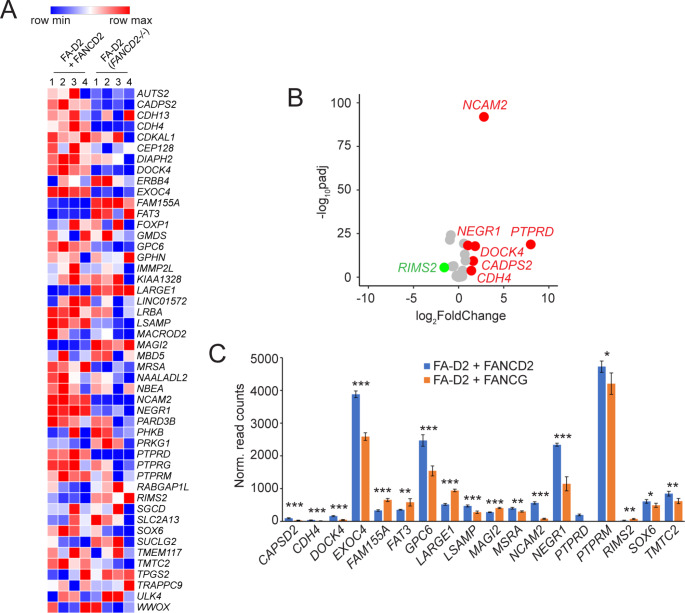
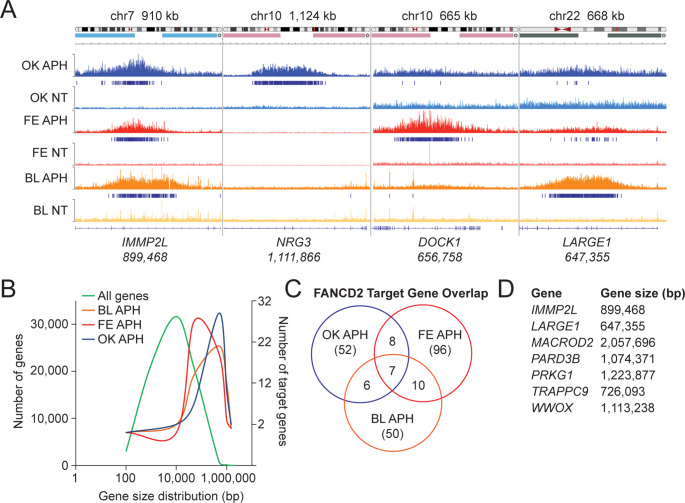
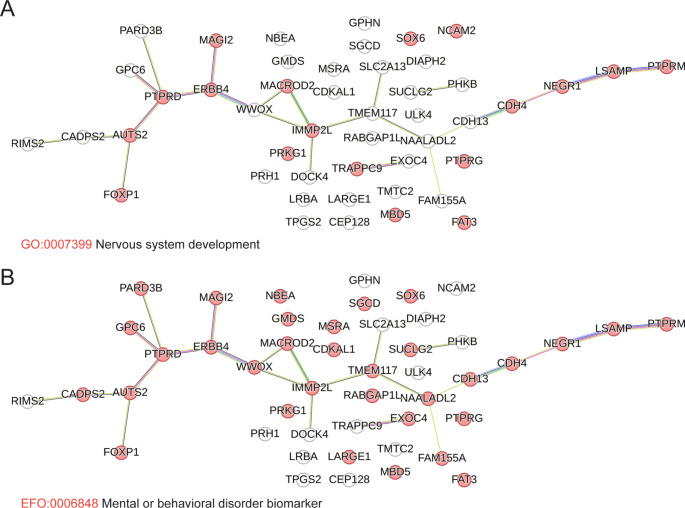
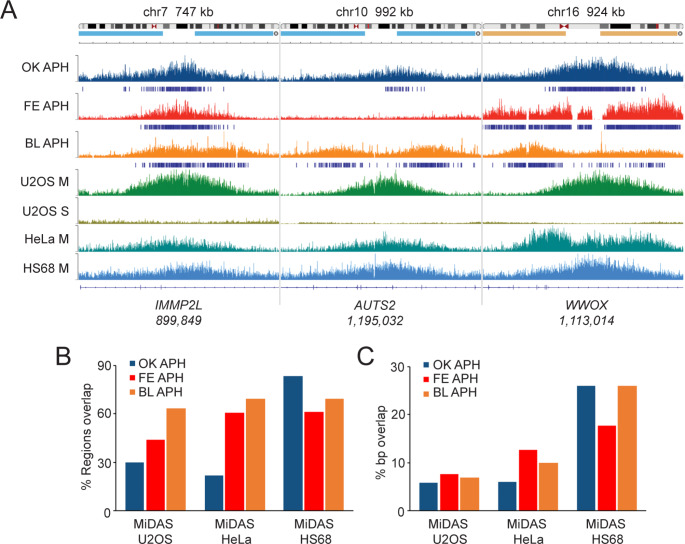
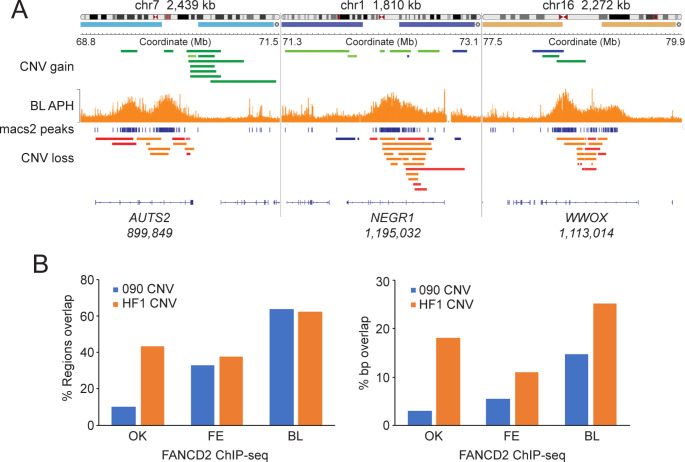
Fanconi anemia (FA) is a rare genetic disease characterized by congenital abnormalities and increased risk for bone marrow failure and cancer. Central nervous system defects, including acute and irreversible loss of neurological function and white matter lesions with calcifications, have become increasingly recognized among FA patients, and are collectively referred to as Fanconi Anemia Neurological Syndrome or FANS. The molecular etiology of FANS is poorly understood. In this study, we have used a functional integrative genomics approach to further define the function of the FANCD2 protein and FA pathway. Combined analysis of new and existing FANCD2 ChIP-seq datasets demonstrates that FANCD2 binds nonrandomly throughout the genome with binding enriched at transcription start sites and in broad regions spanning protein-coding gene bodies. FANCD2 demonstrates a strong preference for large neural genes involved in neuronal differentiation, synapse function, and cell adhesion, with many of these genes implicated in neurodevelopmental and neuropsychiatric disorders. Furthermore, FANCD2 binds to regions of the genome that replicate late, undergo mitotic DNA synthesis (MiDAS) under conditions of replication stress, and are hotspots for copy number variation. Our analysis describes an important targeted role for FANCD2 and the FA pathway in the maintenance of large neural gene stability.
范可尼贫血症(FA)是一种罕见的遗传性疾病,其特征为先天性异常以及骨髓衰竭和癌症风险增加。中枢神经系统缺陷,包括急性和不可逆的神经功能丧失以及伴有钙化的脑白质病变,在 FA 患者中越来越受到关注,并被统称为范可尼贫血神经综合征(Fanconi Anemia Neurological Syndrome 或 FANS)。FANS 的分子病因尚不清楚。在这项研究中,我们使用了一种功能整合基因组学方法,进一步定义了 FANCD2 蛋白和 FA 途径的功能。对新的和现有的 FANCD2 ChIP-seq 数据集的综合分析表明,FANCD2 在整个基因组中非随机结合,结合部位在转录起始位点富集,并在跨越蛋白编码基因体的广泛区域富集。FANCD2 强烈倾向于涉及神经元分化、突触功能和细胞黏附的大型神经基因,其中许多基因与神经发育和神经精神疾病有关。此外,FANCD2 结合到基因组中复制较晚、在复制应激条件下进行有丝分裂 DNA 合成(MiDAS)以及拷贝数变异热点的区域。我们的分析描述了 FANCD2 和 FA 途径在维持大型神经基因稳定性方面的重要靶向作用。