• 文献检索
  • 文档翻译
  • 深度研究
  • 学术资讯
  • Suppr Zotero 插件Zotero 插件
  • 邀请有礼
  • 套餐&价格
  • 历史记录
应用&插件
Suppr Zotero 插件Zotero 插件浏览器插件Mac 客户端Windows 客户端微信小程序
定价
高级版会员购买积分包购买API积分包
服务
文献检索文档翻译深度研究API 文档MCP 服务
关于我们
关于 Suppr公司介绍联系我们用户协议隐私条款
关注我们

Suppr 超能文献

核心技术专利:CN118964589B侵权必究
粤ICP备2023148730 号-1Suppr @ 2026

文献检索

告别复杂PubMed语法,用中文像聊天一样搜索,搜遍4000万医学文献。AI智能推荐,让科研检索更轻松。

立即免费搜索

文件翻译

保留排版,准确专业,支持PDF/Word/PPT等文件格式,支持 12+语言互译。

免费翻译文档

深度研究

AI帮你快速写综述,25分钟生成高质量综述,智能提取关键信息,辅助科研写作。

立即免费体验

一次性公共物品的收益增加并不会促进合作。

Increasing benefits in one-time public goods does not promote cooperation.

机构信息

Department of Public Finance, University of Innsbruck, Innsbruck 6020, Austria.

The Ostrom Workshop, Indiana University, Bloomington, IN 47408.

出版信息

Proc Natl Acad Sci U S A. 2024 Oct 8;121(41):e2410326121. doi: 10.1073/pnas.2410326121. Epub 2024 Oct 4.

DOI:10.1073/pnas.2410326121
PMID:39365819
原文链接:https://pmc.ncbi.nlm.nih.gov/articles/PMC11474087/
Abstract

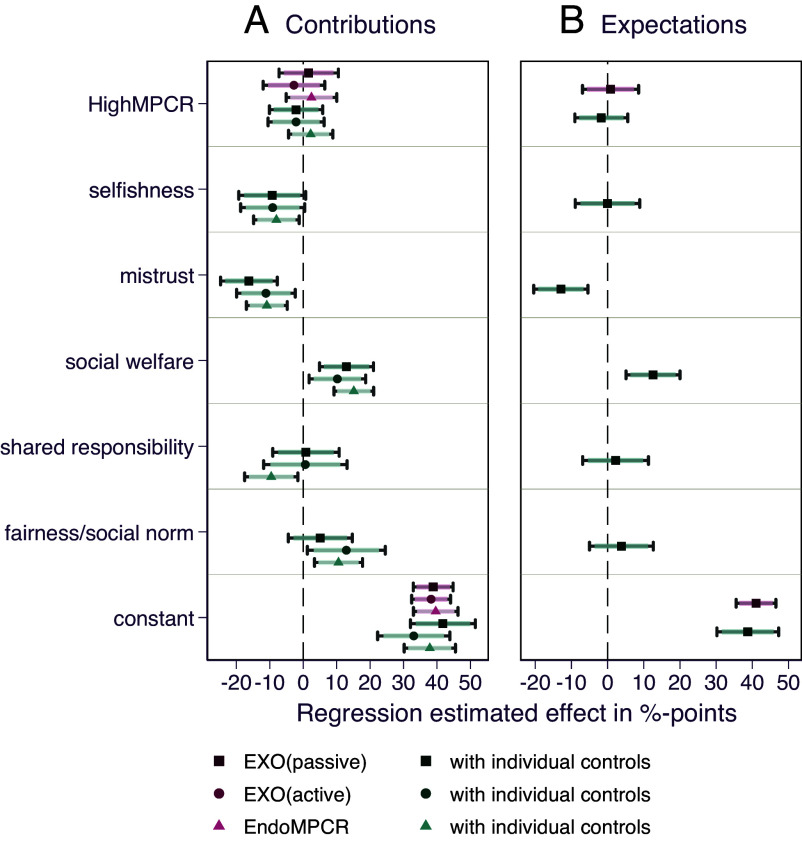
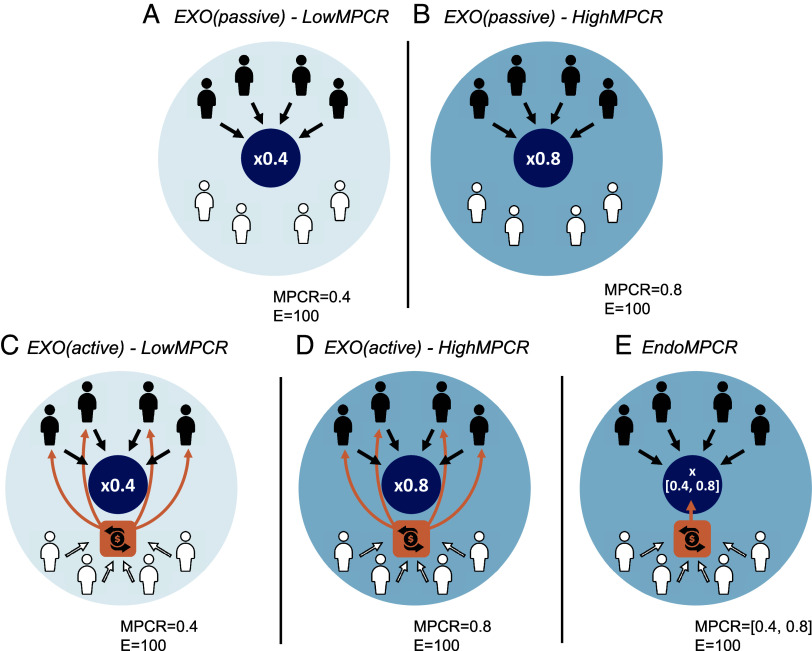
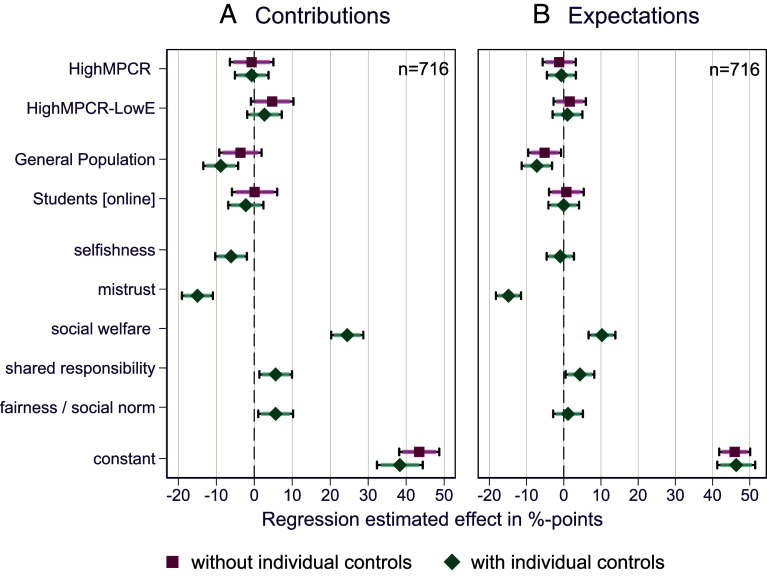
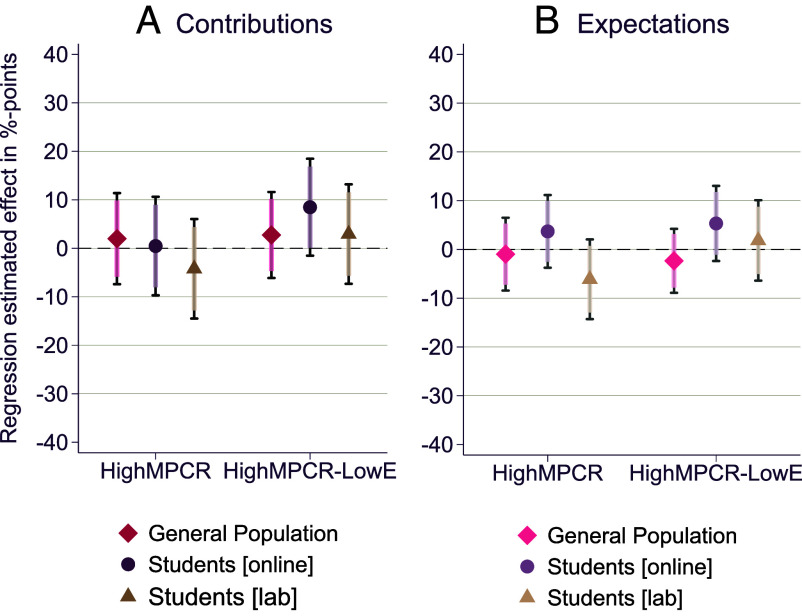
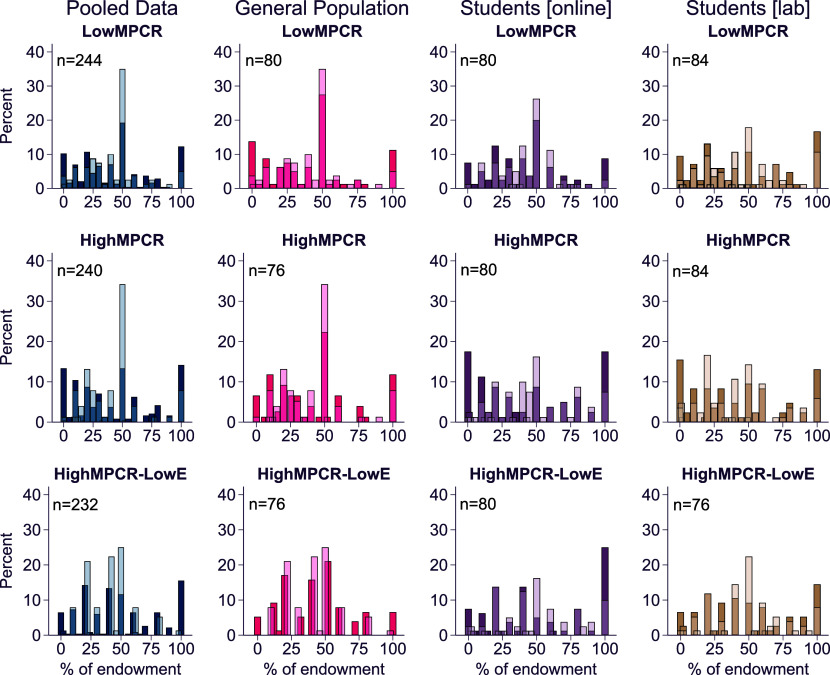
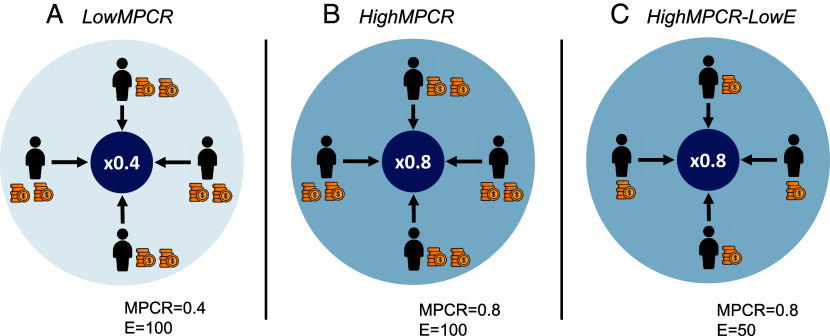
The long tradition of research on cooperation includes a well-established finding that individuals respond to the degree of conflict between self- and collective interests (that is, the relative benefits from cooperation) in providing public goods. Existing empirical evidence builds upon settings where participants make multiple decisions or strategically consider alternative scenarios. Here, we consider a decision setting where participants face a one-time (single-decision) setting. One-time cooperative encounters often occur in volunteering or donating to immediate needs for crisis relief. For these distinct and highly relevant settings, we report a lack of responsiveness to increases in cooperation benefits, thereby highlighting limits to our understanding of the determinants of one-time cooperation encounters. Across two studies, n = 2,232 individuals participate in treatments where we vary across participants the relative benefit from contributing to a public good (that is, the marginal per capita return, the MPCR). We examine decisions from alternative participant pools (UK general population vs. students), implementations varying the physical distance between participants (online vs. in the laboratory), and more complex decision settings considering group-to-group interactions including not only providers but also donors to public goods. Throughout, neither average contribution levels, nor the distribution of contributions are significantly affected by the increases in cooperation benefits. The mechanism behind these results can be explained by the close correlation between expectations of other's cooperation and own cooperation, and the fact that these expectations do not increase with higher benefits from cooperation.

摘要

合作研究的悠久传统包括一个既定的发现,即个体对自利和集体利益之间的冲突程度(即合作的相对收益)做出反应,以提供公共物品。现有实证证据基于参与者做出多次决策或策略性地考虑替代方案的情境。在这里,我们考虑一个决策情境,其中参与者面临一次性(单次决策)情境。一次性合作遭遇通常发生在志愿服务或为危机救援的即时需求捐款中。对于这些独特且高度相关的情境,我们报告缺乏对合作收益增加的响应,从而凸显了我们对一次性合作遭遇决定因素的理解的局限性。在两项研究中,n = 2232 名个体参与了不同的处理方式,我们在其中改变了参与者对公共物品的贡献的相对收益(即人均边际回报,MPCR)。我们从不同的参与者群体(英国普通人群与学生)中考察决策,实施了考虑参与者之间物理距离的变化(在线与实验室),以及更复杂的决策情境,包括不仅考虑提供者,还考虑公共物品的捐赠者的群体间相互作用。在所有情况下,合作收益的增加都不会显著影响平均贡献水平或贡献的分布。这些结果背后的机制可以通过以下事实来解释:即对他人合作的期望与自身合作之间的密切相关性,以及这些期望不会随着合作收益的增加而增加。
https://cdn.ncbi.nlm.nih.gov/pmc/blobs/64ea/11474087/c162e0d7c62a/pnas.2410326121fig06.jpg
https://cdn.ncbi.nlm.nih.gov/pmc/blobs/64ea/11474087/a8957e197335/pnas.2410326121fig01.jpg
https://cdn.ncbi.nlm.nih.gov/pmc/blobs/64ea/11474087/0ba448a2a35f/pnas.2410326121fig02.jpg
https://cdn.ncbi.nlm.nih.gov/pmc/blobs/64ea/11474087/9e3a33787d54/pnas.2410326121fig03.jpg
https://cdn.ncbi.nlm.nih.gov/pmc/blobs/64ea/11474087/36e6337ef088/pnas.2410326121fig04.jpg
https://cdn.ncbi.nlm.nih.gov/pmc/blobs/64ea/11474087/9e692b7799fe/pnas.2410326121fig05.jpg
https://cdn.ncbi.nlm.nih.gov/pmc/blobs/64ea/11474087/c162e0d7c62a/pnas.2410326121fig06.jpg
https://cdn.ncbi.nlm.nih.gov/pmc/blobs/64ea/11474087/a8957e197335/pnas.2410326121fig01.jpg
https://cdn.ncbi.nlm.nih.gov/pmc/blobs/64ea/11474087/0ba448a2a35f/pnas.2410326121fig02.jpg
https://cdn.ncbi.nlm.nih.gov/pmc/blobs/64ea/11474087/9e3a33787d54/pnas.2410326121fig03.jpg
https://cdn.ncbi.nlm.nih.gov/pmc/blobs/64ea/11474087/36e6337ef088/pnas.2410326121fig04.jpg
https://cdn.ncbi.nlm.nih.gov/pmc/blobs/64ea/11474087/9e692b7799fe/pnas.2410326121fig05.jpg
https://cdn.ncbi.nlm.nih.gov/pmc/blobs/64ea/11474087/c162e0d7c62a/pnas.2410326121fig06.jpg

相似文献

1
Increasing benefits in one-time public goods does not promote cooperation.一次性公共物品的收益增加并不会促进合作。
Proc Natl Acad Sci U S A. 2024 Oct 8;121(41):e2410326121. doi: 10.1073/pnas.2410326121. Epub 2024 Oct 4.
2
Cooperation, Trust, and Antagonism: How Public Goods Are Promoted.合作、信任与对抗:公共物品如何得到促进。
Psychol Sci Public Interest. 2013 Dec;14(3):119-65. doi: 10.1177/1529100612474436.
3
Dilemma of dilemmas: how collective and individual perspectives can clarify the size dilemma in voluntary linear public goods dilemmas.两难困境中的两难:集体视角与个体视角如何阐明自愿线性公共物品两难中的规模困境
PLoS One. 2015 Mar 23;10(3):e0120379. doi: 10.1371/journal.pone.0120379. eCollection 2015.
4
Intuitive cooperators: Time pressure increases children's cooperative decisions in a modified public goods game.直觉合作者:时间压力会增加儿童在改良公共物品博弈中的合作决策。
Dev Sci. 2023 Jul;26(4):e13344. doi: 10.1111/desc.13344. Epub 2022 Nov 28.
5
Equality and efficiency shape cooperation in multiple-public-goods provision problems.平等和效率塑造了多公共物品提供问题中的合作。
J Exp Psychol Gen. 2024 May;153(5):1236-1256. doi: 10.1037/xge0001574.
6
Third-Party Cooperation: How Reducing Material Involvement Enhances Contributions to the Public Good.第三方合作:减少物质参与如何增强对公共利益的贡献。
Pers Soc Psychol Bull. 2016 Mar;42(3):337-49. doi: 10.1177/0146167216629123.
7
Dynamic influences on cooperation in a social dilemma: How type of experience and communication affect behavioral spillovers.动态因素对社会困境中合作的影响:经验类型和沟通如何影响行为溢出。
PLoS One. 2019 Mar 12;14(3):e0213038. doi: 10.1371/journal.pone.0213038. eCollection 2019.
8
Asymmetric effects of social and economic incentives on cooperation in real effort based public goods games.社会和经济激励对基于实际努力的公共物品博弈中合作的非对称影响。
PLoS One. 2021 Apr 14;16(4):e0249217. doi: 10.1371/journal.pone.0249217. eCollection 2021.
9
How the incentive to contribute affects contributions in the one-shot public goods game.激励对单次公共物品博弈中贡献的影响。
Sci Rep. 2020 Oct 30;10(1):18732. doi: 10.1038/s41598-020-75729-8.
10
The inter-group comparison-intra-group cooperation hypothesis: comparisons between groups increase efficiency in public goods provision.组间比较-组内合作假说:组间比较提高公共物品供给效率。
PLoS One. 2013;8(2):e56152. doi: 10.1371/journal.pone.0056152. Epub 2013 Feb 6.

本文引用的文献

1
Confusion cannot explain cooperative behavior in public goods games.困惑无法解释公共物品博弈中的合作行为。
Proc Natl Acad Sci U S A. 2024 Mar 5;121(10):e2310109121. doi: 10.1073/pnas.2310109121. Epub 2024 Feb 27.
2
How the incentive to contribute affects contributions in the one-shot public goods game.激励对单次公共物品博弈中贡献的影响。
Sci Rep. 2020 Oct 30;10(1):18732. doi: 10.1038/s41598-020-75729-8.
3
Group size effect on cooperation in one-shot social dilemmas.单次社会困境中群体规模对合作的影响。
Sci Rep. 2015 Jan 21;5:7937. doi: 10.1038/srep07937.