Department of Infectious Disease, Respiratory Medicine and Critical Care, Charité - Universitätsmedizin Berlin, corporate member of Freie Universität Berlin, Humboldt- Universität zu Berlin, Hindenburgdamm 30, 12203, Berlin, Germany.
German Center for Lung Research (DZL), Berlin, Germany.
Sci Rep. 2024 Oct 4;14(1):23078. doi: 10.1038/s41598-024-73950-3.
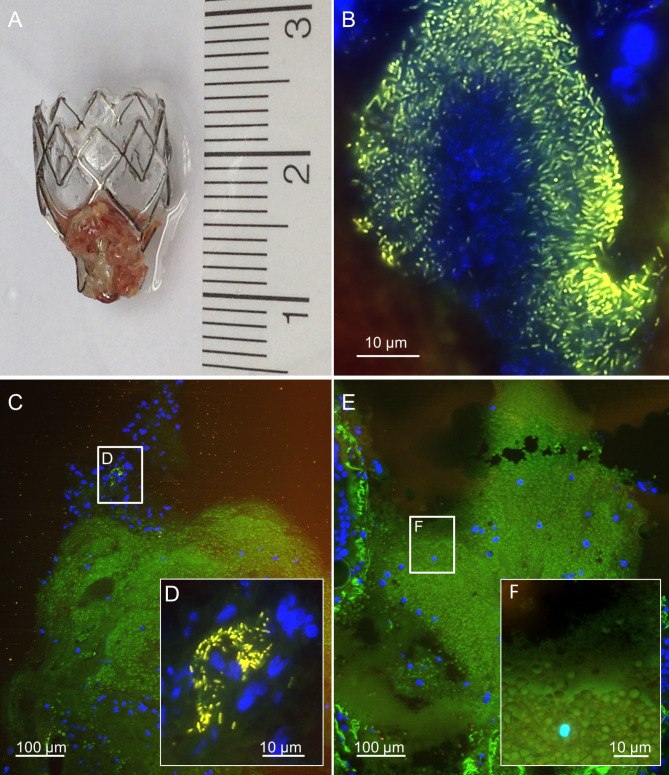
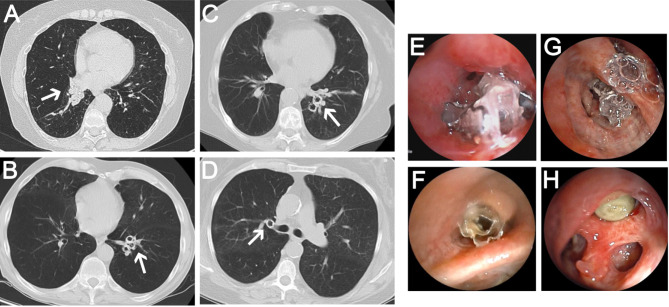
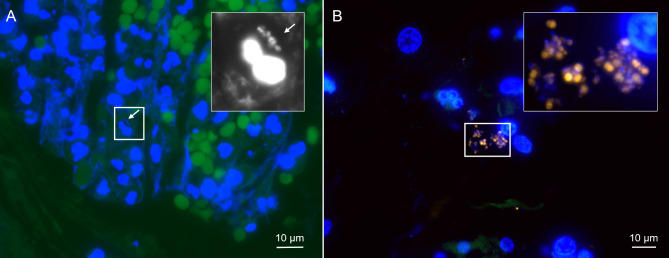
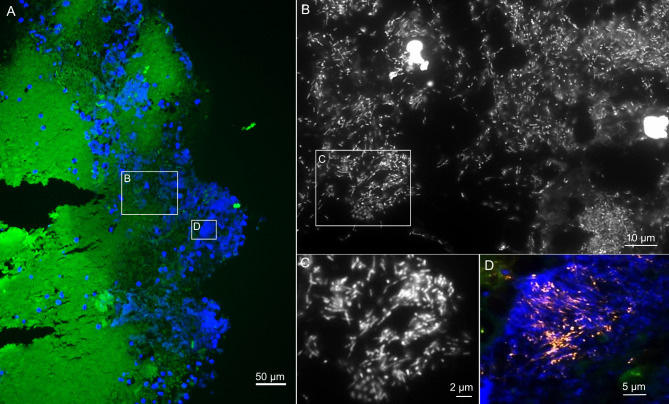
Endoscopic lung volume reduction (ELVR) using endobronchial valves (EBV) is a treatment option for a subset of patients with severe chronic obstructive pulmonary disease (COPD), suffering from emphysema and hyperinflation. In this pilot study, we aimed to determine the presence of bacterial biofilm infections on EBV and investigate their involvement in lack of clinical benefits, worsening symptomatology, and increased exacerbations that lead to the decision to remove EBVs. We analyzed ten COPD patients with ELVR who underwent EBV removal. Clinical data were compared to the microbiological findings from conventional EBV culture. In addition, EBV were analyzed by FISHseq, a combination of Fluorescence in situ hybridization (FISH) with PCR and sequencing, for visualization and identification of microorganisms and biofilms. All ten patients presented with clinical symptoms, including pneumonia and recurrent exacerbations. Microbiological cultures from EBV detected several microorganisms in all ten patients. FISHseq showed either mixed or monospecies colonization on the EBV, including oropharyngeal bacterial flora, Staphylococcus aureus, Pseudomonas aeruginosa, Streptococcus spp., and Fusobacterium sp. On 5/10 EBV, FISHseq visualized biofilms, on 1/10 microbial microcolonies, on 3/10 single microorganisms, and on 1/10 no microorganisms. The results of the study demonstrate the presence of biofilms on EBV for the first time and its potential involvement in increased exacerbations and clinical worsening in patients with ELVR. However, further prospective studies are needed to evaluate the clinical relevance of biofilm formation on EBV and appropriate treatment options to avoid infections in patients with ELVR.
经支气管镜肺减容术 (ELVR) 使用支气管内活瓣 (EBV) 是一组患有严重慢性阻塞性肺疾病 (COPD)、肺气肿和过度充气的患者的治疗选择。在这项初步研究中,我们旨在确定 EBV 上是否存在细菌生物膜感染,并研究其是否与缺乏临床获益、症状恶化以及导致决定移除 EBV 的加重事件增加有关。我们分析了 10 名接受 EBV 移除的接受 ELVR 的 COPD 患者。临床数据与 EBV 常规培养的微生物学发现进行了比较。此外,通过 Fluorescence in situ hybridization (FISH) 与 PCR 和测序相结合的 FISHseq 分析 EBV,以可视化和鉴定微生物和生物膜。所有 10 名患者均出现临床症状,包括肺炎和反复加重。从 EBV 中提取的微生物培养物在所有 10 名患者中均检测到多种微生物。FISHseq 显示 EBV 上存在混合或单种定植,包括口咽部细菌菌群、金黄色葡萄球菌、铜绿假单胞菌、链球菌属和梭杆菌属。在 5/10 的 EBV 上,FISHseq 可视化了生物膜,在 1/10 的微生物微菌落上,在 3/10 的单个微生物上,在 1/10 的没有微生物上。研究结果首次证明了 EBV 上存在生物膜,并且其可能与 ELVR 患者加重事件增加和临床恶化有关。然而,需要进一步的前瞻性研究来评估 EBV 上生物膜形成的临床相关性和适当的治疗选择,以避免 ELVR 患者的感染。