Centre for Health Informatics, Australian Institute of Health Innovation, Macquarie University, Sydney, NSW, 2109, Australia.
Department of Anaesthesia and Perioperative Medicine, Westmead Hospital, Sydney, NSW, Australia.
BMC Health Serv Res. 2024 Oct 4;24(1):1181. doi: 10.1186/s12913-024-11672-y.
Health systems underwent substantial changes to respond to COVID-19. Learning from the successes and failures of health system COVID-19 responses may help us understand how future health service responses can be designed to be both effective and sustainable. This study aims to identify the role that innovation played in crafting health service responses during the COVID-19 pandemic.
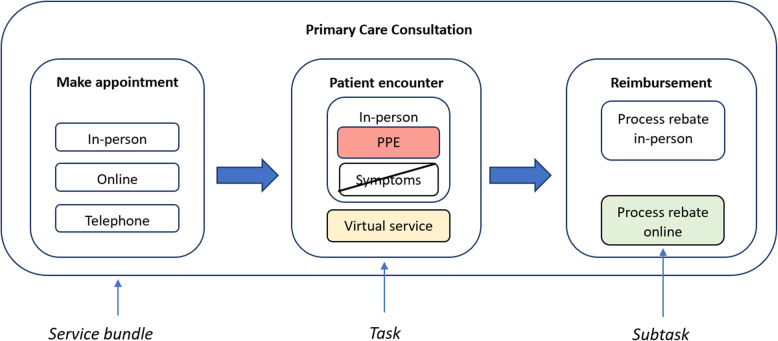
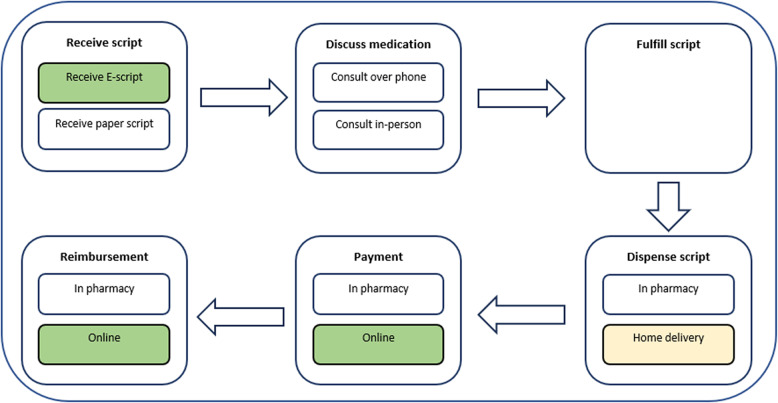
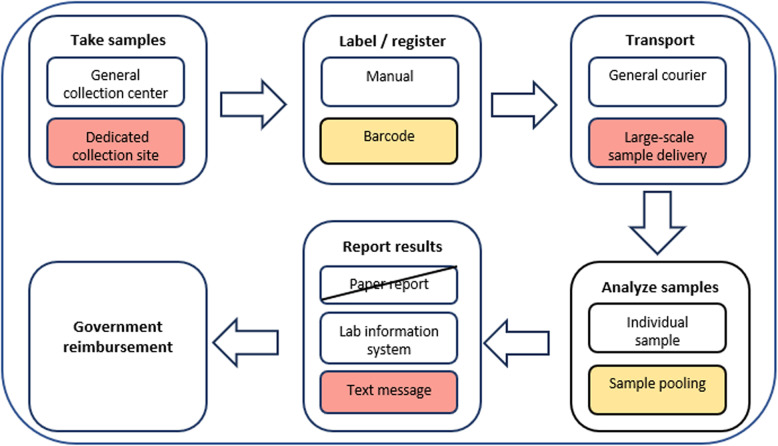
Semi-structured interviews were conducted online, exploring 19 health professionals' experiences in responding to COVID-19 in a large State health system in Australia. The data were collected from April to September 2022 and analysed utilising constant comparative analysis. The degree of innovation in health service responses was assessed by comparing them to pre-pandemic services using 5 categories adopted from the IMPISCO (Investigators, Methods, Population, Intervention, Setting, Comparators and Outcomes) framework, which classifies interventional fidelity as: 1/ Identical: No differences are found between health services; 2/ Substitution with alternatives that perform the same function, 3/ In-class replacement with elements that delivers roughly the same functionality, 4/ Augmentation with new functions, 5/ Creation of new elements. Services were decomposed into bundles and fidelity labels were assigned to individual bundle elements.
New services were typically created by reconfiguring existing ones rather than being created de novo. The presence of pre-existing infrastructure (foundational technologies) was seen as critical in mounting fast health service responses. Absence of infrastructure was associated with delays and impaired system responses.
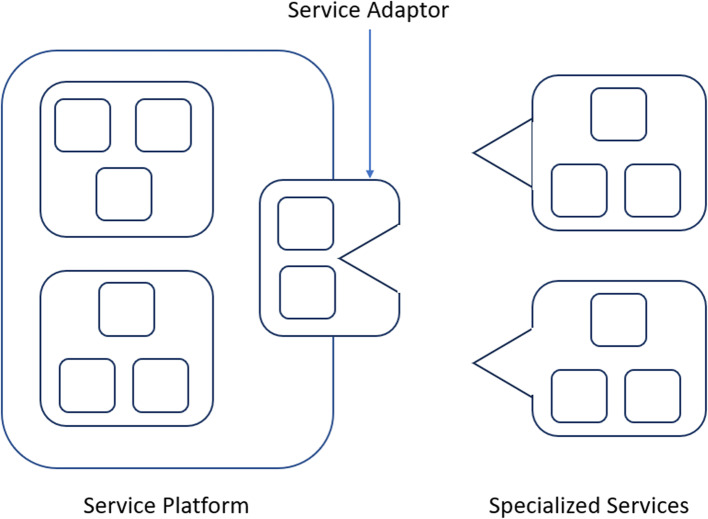
The need to reconfigure rapidly and use infrastructure to support this suggests we reconceive health services as a platform (a general-purpose service upon which other elements can be added for specific functions), where a common core service (such as a primary care practice) can be extended by adding specialised functions using mediators which facilitate the connection (such as virtual service capabilities). Innovation can be costly and time consuming in crises, and during the COVID-19 pandemic, innovations were typically patched together from pre-existing services. The notion of platforms seems a promising way to prepare the health system for future shocks.
医疗系统为应对 COVID-19 发生了重大变化。从医疗系统应对 COVID-19 的成败中吸取经验教训,可能有助于我们理解如何设计未来的卫生服务应对措施,使其既有效又可持续。本研究旨在确定创新在应对 COVID-19 大流行期间制定卫生服务应对措施方面所起的作用。
对澳大利亚一个大型州立卫生系统中 19 名卫生专业人员应对 COVID-19 的经验进行了在线半结构式访谈。数据于 2022 年 4 月至 9 月收集,并利用恒比分析进行分析。通过使用从 IMPISCO(Investigators, Methods, Population, Intervention, Setting, Comparators and Outcomes)框架中采用的 5 个类别(将干预的保真度分类为:1/相同:在卫生服务之间未发现差异;2/用具有相同功能的替代品替代;3/在同一类中用提供大致相同功能的元素替代;4/用新功能增强;5/创建新元素),将卫生服务响应的创新性与大流行前的服务进行比较,评估卫生服务响应的创新性。将服务分解成捆绑包,并为单个捆绑包元素分配保真度标签。
新服务通常是通过重新配置现有服务来创建的,而不是从头创建。存在预先存在的基础设施(基础技术)被认为是快速提供卫生服务响应的关键。基础设施的缺乏与延迟和系统响应受损有关。
需要快速重新配置并利用基础设施来支持这一点,这表明我们将卫生服务重新构想为一个平台(一种通用服务,其他元素可以添加到特定功能中),其中核心服务(如初级保健实践)可以通过添加使用中介来促进连接(如虚拟服务功能)的专门功能来扩展。在危机中,创新既昂贵又耗时,在 COVID-19 大流行期间,创新通常是从现有服务中拼凑而来的。平台的概念似乎是为未来的冲击做好卫生系统准备的一种有前途的方法。