The First Affiliated Hospital of Jinan University, Jinan University, Guangzhou, China.
Department of Gastroenterology, Guangzhou Women and Children's Medical Center, Guangzhou Medical University, Guangzhou, 510623, China.
Cell Commun Signal. 2024 Oct 4;22(1):474. doi: 10.1186/s12964-024-01836-y.
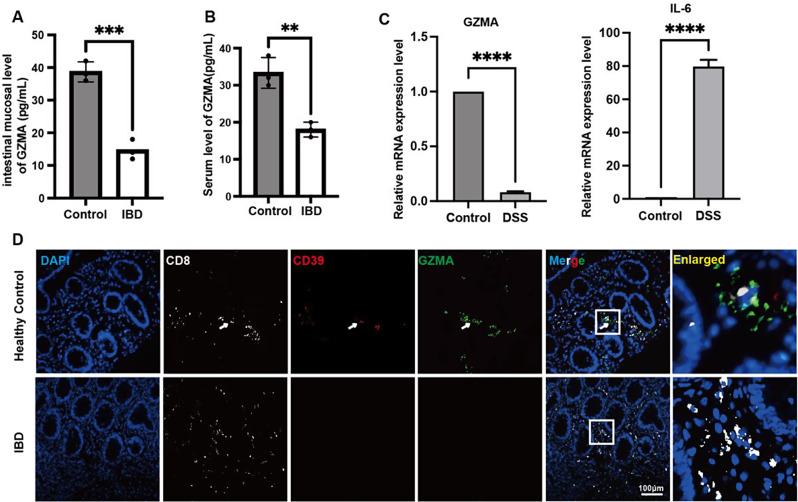
Our previous study has demonstrated a decreased colonic CD8CD39 T cells, enrichment of granzyme A (GZMA), was found in pediatric-onset colitis and inflammatory bowel disease (IBD) characterized by impaired intestinal barrier function. However, the influence of GZMA on intestinal barrier function remains unknown.
Western blotting(WB), real-time PCR (qPCR), immunofluorescence (IF) and in vitro permeability assay combined with intestinal organoid culture were used to detect the effect of GZMA on intestinal epithelial barrier function in vivo and in vitro. Luciferase, immunoprecipitation (IP) and subcellular fractionation isolation were performed to identify the mechanism through which GZMA modulated intestinal epithelial barrier function.
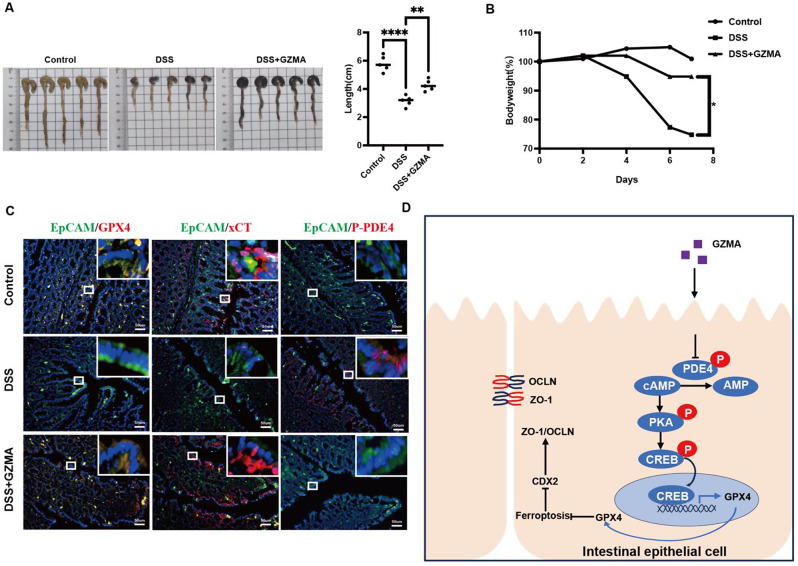
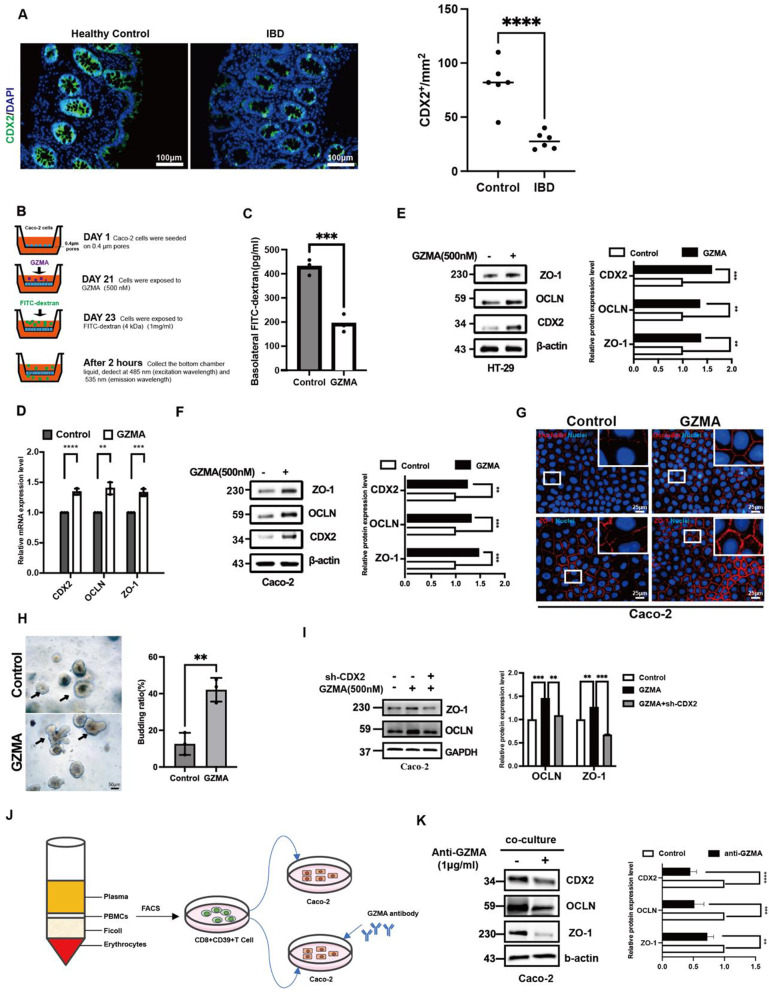
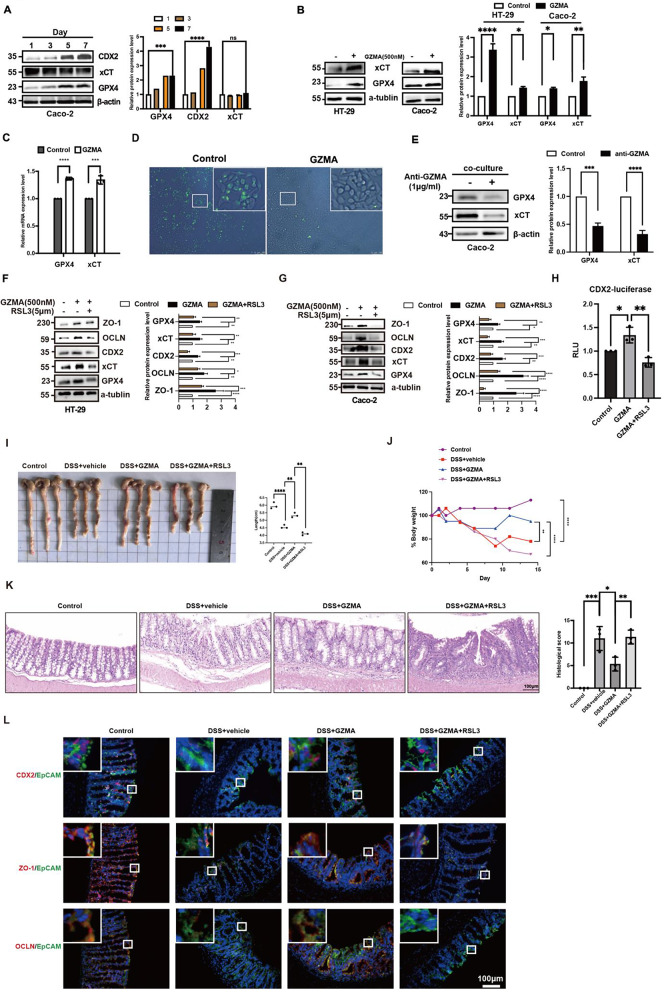
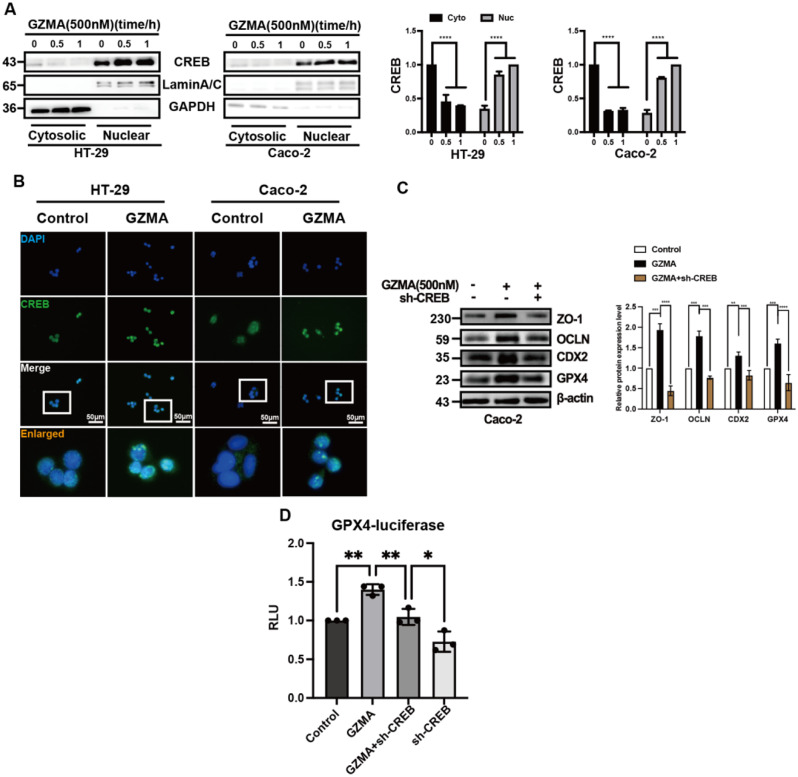
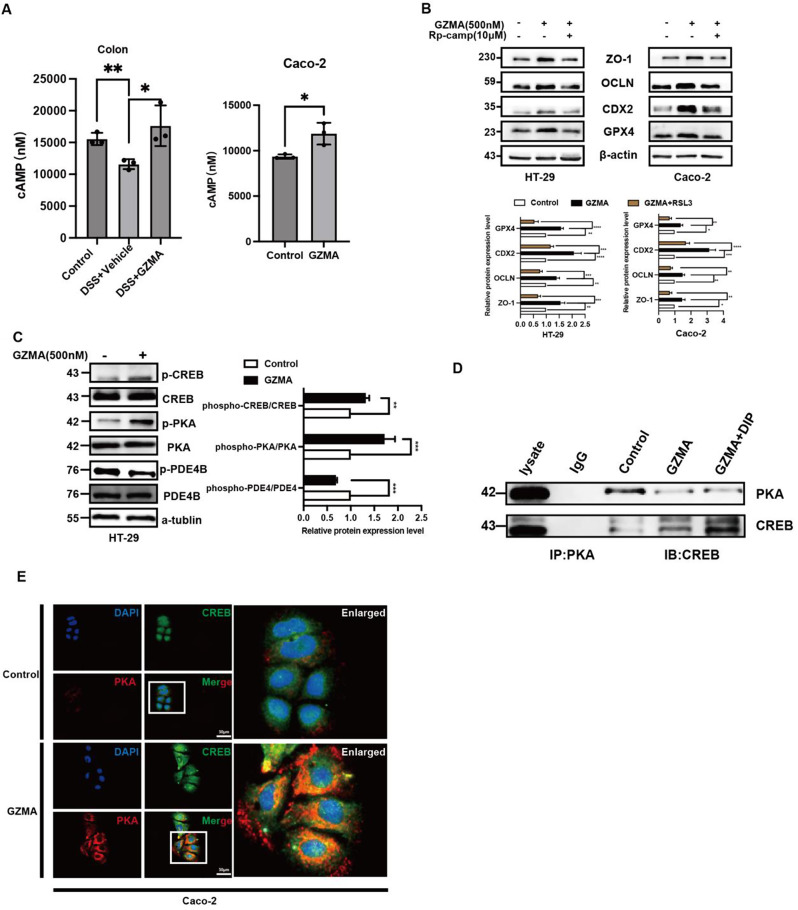
Herein, we, for the first time, demonstrated that CD8CD39 T cells promoted intestinal epithelial barrier function through GZMA, leading to induce Occludin(OCLN) and Zonula Occludens-1(ZO-1) expression, which was attributed to enhanced CDX2-mediated cell differentiation caused by increased glutathione peroxidase 4(GPX4)-induced ferroptosis inhibition in vivo and in vitro. Mechanically, GZMA inhibited intestinal epithelial cellular PDE4B activation to trigger cAMP/PKA/CREB cascade signaling to increase CREB nuclear translocation, initiating GPX4 transactivity. In addition, endogenous PKA interacted with CREB, and this interaction was enhanced in response to GZMA. Most importantly, administration of GZMA could alleviate DSS-induced colitis in vivo.
These findings extended the novel insight of GZMA contributed to intestinal epithelial cell differentiation to improve barrier function, and enhacement of GZMA could be a promising strategy to patients with IBD.
我们之前的研究表明,在儿童发病的结肠炎和炎症性肠病(IBD)中,结肠 CD8CD39 T 细胞减少,颗粒酶 A(GZMA)富集,其特征是肠道屏障功能受损。然而,GZMA 对肠道屏障功能的影响尚不清楚。
采用 Western blot(WB)、实时 PCR(qPCR)、免疫荧光(IF)和体外通透性测定联合肠类器官培养,检测 GZMA 对体内和体外肠上皮屏障功能的影响。采用荧光素酶、免疫沉淀(IP)和亚细胞分离分离鉴定 GZMA 调节肠上皮屏障功能的机制。
本文首次证明 CD8CD39 T 细胞通过 GZMA 促进肠上皮屏障功能,导致 Occludin(OCLN)和 Zonula Occludens-1(ZO-1)表达增加,这归因于增强的 CDX2 介导的细胞分化,因为体内和体外的谷胱甘肽过氧化物酶 4(GPX4)诱导的铁死亡抑制增强。在机制上,GZMA 抑制肠上皮细胞 PDE4B 的激活,触发 cAMP/PKA/CREB 级联信号转导,增加 CREB 核易位,启动 GPX4 反式活性。此外,内源性 PKA 与 CREB 相互作用,而这种相互作用在响应 GZMA 时增强。最重要的是,GZMA 的给药可以在体内缓解 DSS 诱导的结肠炎。
这些发现扩展了 GZMA 有助于肠上皮细胞分化以改善屏障功能的新见解,增强 GZMA 可能是 IBD 患者的一种有前途的策略。