Institute of Urology and Nephrology, The First Affiliated Hospital of Guangxi Medical University, Nanning, Guangxi, China.
Department of Clinical Laboratory, The First Affiliated Hospital of Guangxi Medical University, Nanning, Guangxi, China.
J Transl Med. 2024 Oct 4;22(1):900. doi: 10.1186/s12967-024-05685-8.
Muscle invasive bladder cancer (MIBC) is a life-threatening malignant tumor characterized by high metastasis rates, poor prognosis, and limited treatment options. Immune checkpoint inhibitors (ICIs) targeting PD-1 and PD-L1 represent an emerging treatment for MIBC immunotherapy. However, the characteristics of patients likely to benefit from immunotherapy remain unclear.
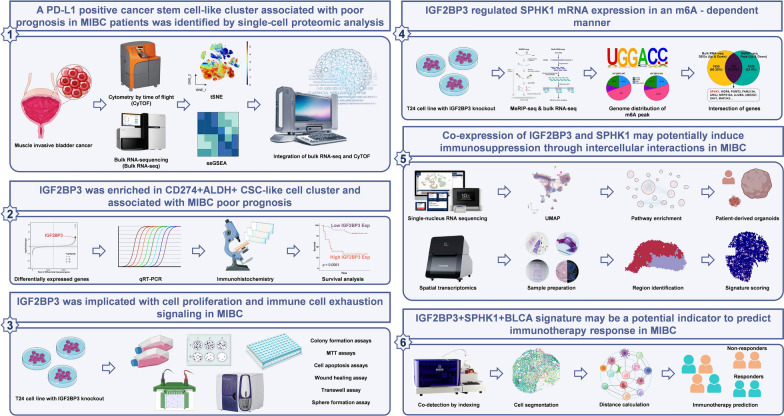
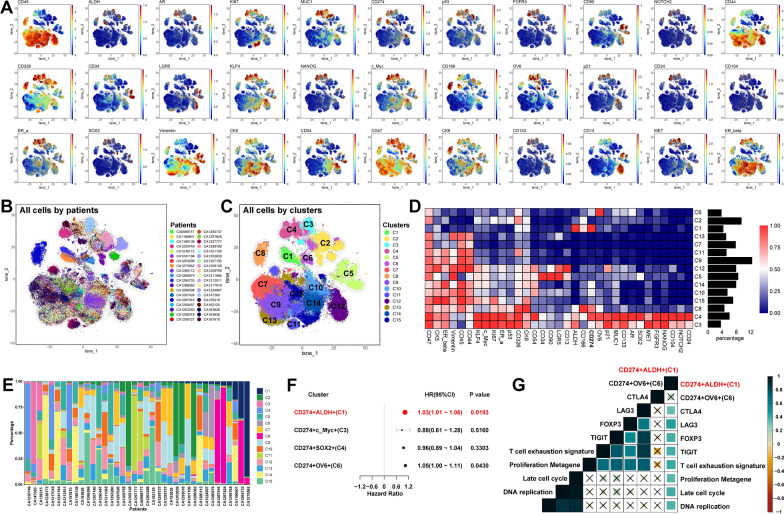
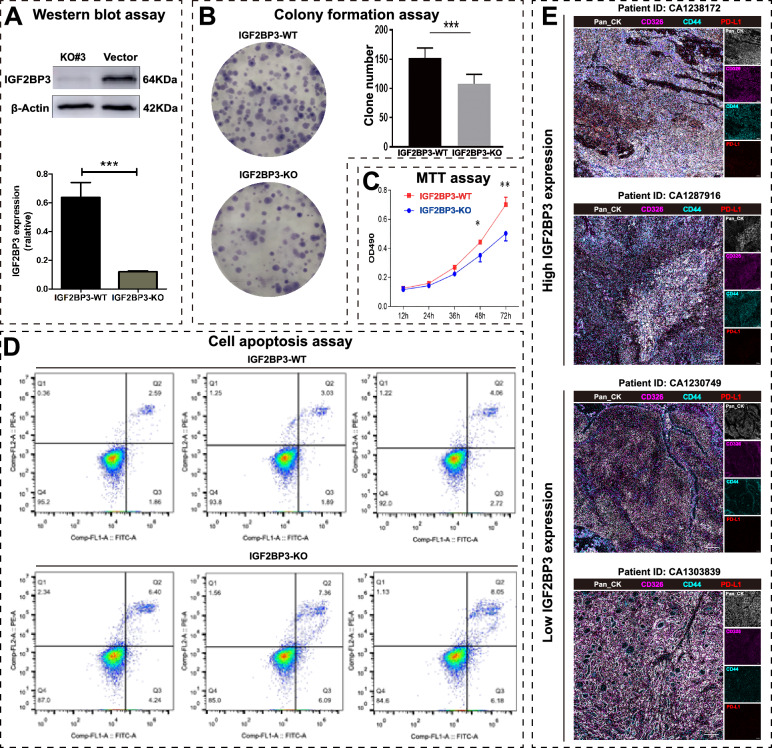
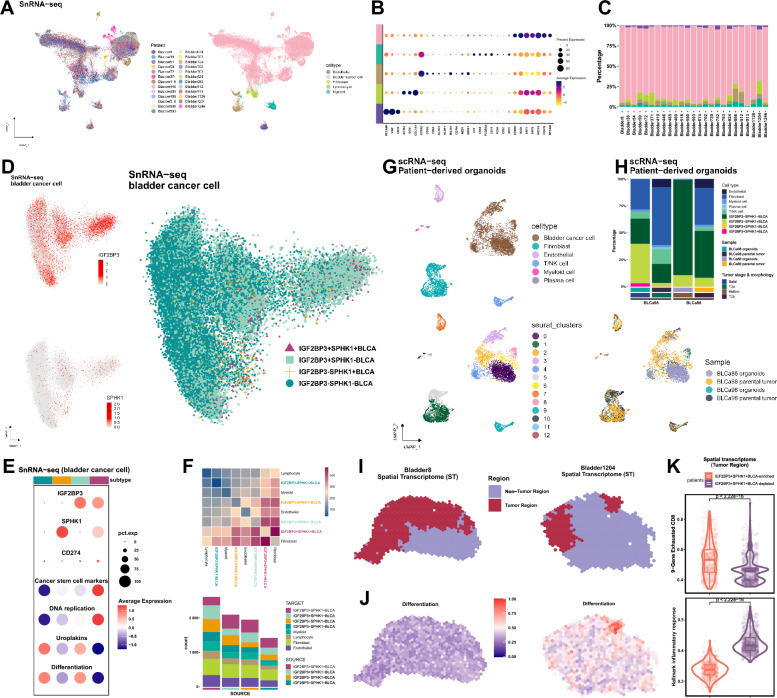
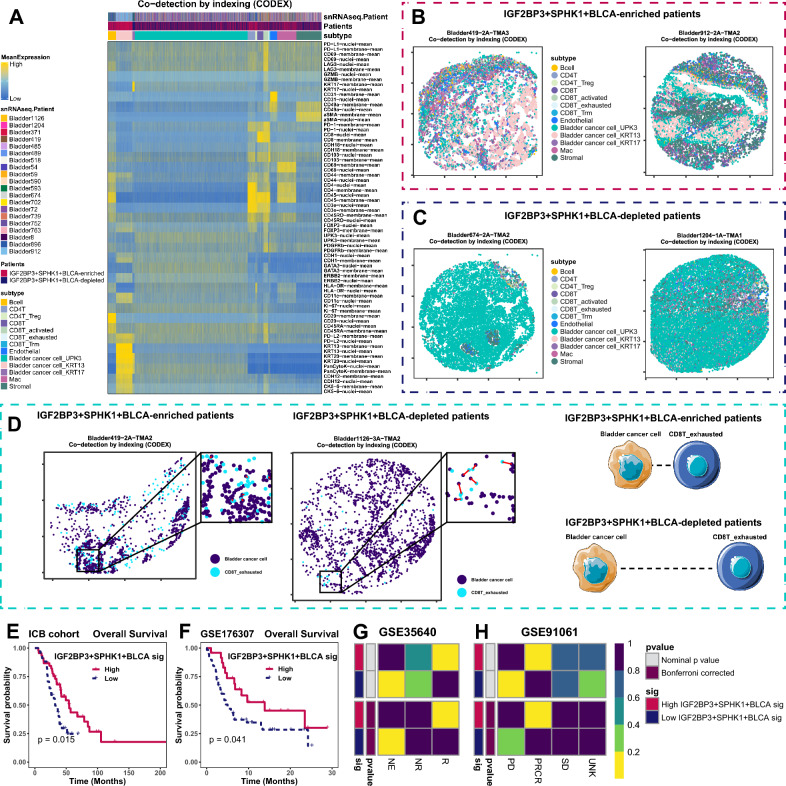
We performed single-cell mass cytometry (CyTOF) analysis of 179,483 single cells to characterize potential immunotherapy-related cancer stem cells (CSCs)-like populations in the tumor microenvironment of 38 MIBC tissues. The upregulated expression of IGF2BP3 in CD274 + ALDH + CSC-like cells, which was associated with poor clinical prognosis, was analyzed by bulk RNA-sequencing data from an in-house cohort. The functional role of IGF2BP3 was determined through cell proliferation, colony formation, cell apoptosis and sphere formation assays. The regulation of SPHK1 expression by IGF2BP3 was investigated using methylated RNA immunoprecipitation sequencing (MeRIP-seq) and bulk RNA-sequencing (bulk RNA-seq). We further utilized single-nucleus RNA sequencing (snRNA-seq) data from 67,988 cells of 25 MIBC tissues and single-cell RNA sequencing (scRNA-seq) data from MIBC patient-derived organoids to characterize the molecular features of bladder cancer cells co-expressing IGF2BP3 and SPHK1. Spatial transcriptomics (ST) and co-detection by indexing (CODEX) analysis were used to describe the spatial distribution and interactions of IGF2BP3 + SPHK1 + bladder cancer cells and immune cells.
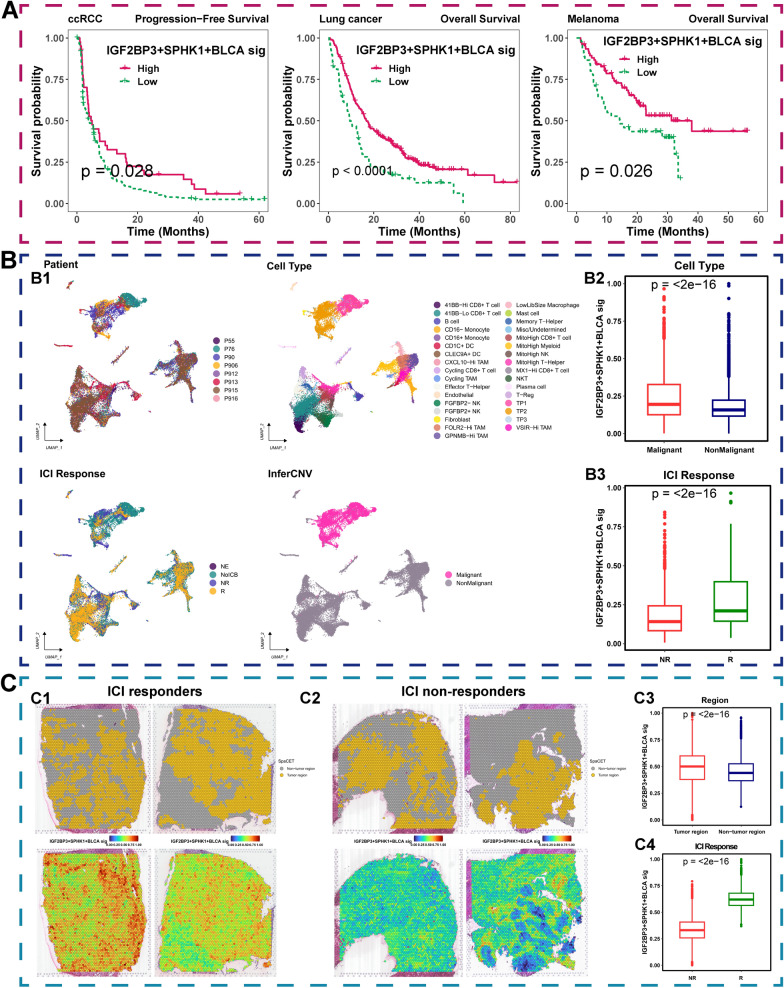
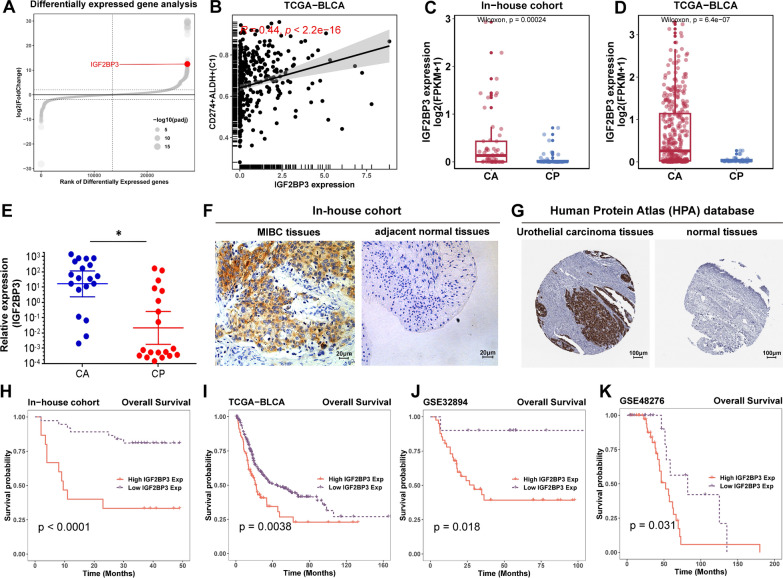
A subset of CD274 + ALDH + CSC-like cells was identified, associating with immunosuppression and low survival rates in MIBC patients. IGF2BP3, an m6A reader gene, was found to be upregulated in the CD274 + ALDH + CSC-like cell population and linked to poor clinical prognosis in MIBC. Knockout of IGF2BP3 dramatically promoted cell apoptosis and reduced cell proliferation in T24 cells. By integrating MeRIP-seq and bulk RNA-seq analyses, we identified SPHK1 served as a substrate for IGF2BP3 in an m6A-dependent manner. Further snRNA-seq, scRNA-seq, ST, and CODEX analysis revealed a closer topographical distance between IGF2BP3 + SPHK1 + bladder cancer cells and exhausted CD8 + T cells, providing one explanation for the superior response to immunotherapy in IGF2BP3 + SPHK1 + bladder cancer cells-enriched patients. Finally, an ICI-associated signature was developed based on the enriched genes of IGF2BP3 + SPHK1 + bladder cancer cells, and its potential ability to predict the response to immunotherapy was validated in two independent immunotherapy cohort.
Our study highlighted the critical involvement of the IGF2BP3/SPHK1 signaling in maintaining the stemness of CSCs and promoting MIBC progression. Additionally, these findings suggested that the IGF2BP3/SPHK1 signaling might serve as a biomarker for prognosis and immunotherapy response in MIBC.
肌层浸润性膀胱癌(MIBC)是一种危及生命的恶性肿瘤,其特点是转移率高、预后差、治疗选择有限。针对 PD-1 和 PD-L1 的免疫检查点抑制剂(ICIs)代表了 MIBC 免疫治疗的一种新兴治疗方法。然而,受益于免疫治疗的患者特征仍不清楚。
我们对 38 例 MIBC 组织中的 179483 个单细胞进行了单细胞质谱流式细胞术(CyTOF)分析,以描述肿瘤微环境中潜在的免疫治疗相关癌症干细胞(CSC)样群。通过对内部队列的批量 RNA-seq 数据分析,分析了 CD274+ALDH+CSC 样细胞中 IGF2BP3 的上调表达,该表达与不良临床预后相关。通过细胞增殖、集落形成、细胞凋亡和球体形成实验确定 IGF2BP3 的功能作用。通过甲基化 RNA 免疫沉淀测序(MeRIP-seq)和批量 RNA-seq(bulk RNA-seq)研究 SPHK1 表达受 IGF2BP3 的调控。我们进一步利用来自 25 例 MIBC 组织的 67988 个细胞的单细胞 RNA 测序(snRNA-seq)数据和 MIBC 患者来源类器官的单细胞 RNA 测序(scRNA-seq)数据,以描述共表达 IGF2BP3 和 SPHK1 的膀胱癌细胞的分子特征。利用空间转录组学(ST)和索引共检测(CODEX)分析来描述 IGF2BP3+SPHK1+膀胱癌细胞和免疫细胞的空间分布和相互作用。
鉴定出一组 CD274+ALDH+CSC 样细胞,与 MIBC 患者的免疫抑制和低生存率相关。IGF2BP3 是一种 m6A 读码基因,在 CD274+ALDH+CSC 样细胞群中上调,并与 MIBC 的不良临床预后相关。IGF2BP3 的敲除显著促进了 T24 细胞的细胞凋亡并减少了细胞增殖。通过整合 MeRIP-seq 和批量 RNA-seq 分析,我们发现 SPHK1 作为 IGF2BP3 的底物,以 m6A 依赖的方式发挥作用。进一步的 snRNA-seq、scRNA-seq、ST 和 CODEX 分析显示,IGF2BP3+SPHK1+膀胱癌细胞与耗竭的 CD8+T 细胞之间存在更接近的拓扑距离,为 IGF2BP3+SPHK1+膀胱癌细胞富集的患者对免疫治疗有更好的反应提供了一种解释。最后,基于 IGF2BP3+SPHK1+膀胱癌细胞的富集基因,开发了一个与 ICI 相关的特征,并在两个独立的免疫治疗队列中验证了其预测免疫治疗反应的潜在能力。
我们的研究强调了 IGF2BP3/SPHK1 信号在维持 CSCs 干性和促进 MIBC 进展中的关键作用。此外,这些发现表明,IGF2BP3/SPHK1 信号可能作为 MIBC 预后和免疫治疗反应的生物标志物。