University of Ljubljana, Faculty of Pharmacy, Aškerčeva cesta 7, 1000 Ljubljana, Slovenia.
University Medical Centre Ljubljana, Department of Gastroenterology, Japljeva ulica 2, 1000 Ljubljana, Slovenia; University of Ljubljana, Faculty of Medicine, Vrazov trg 2, 1000 Ljubljana, Slovenia.
Redox Biol. 2024 Nov;77:103380. doi: 10.1016/j.redox.2024.103380. Epub 2024 Oct 1.
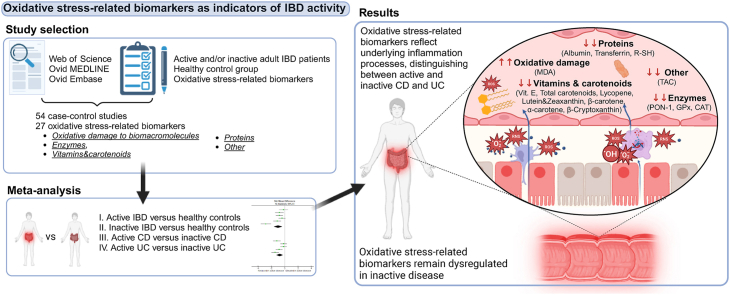
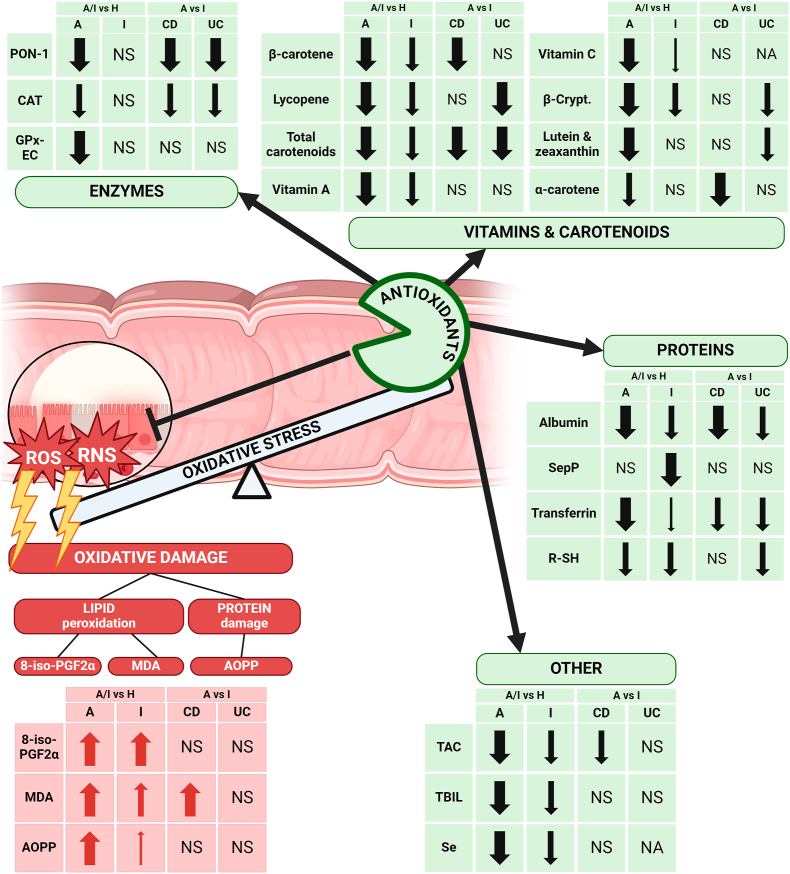
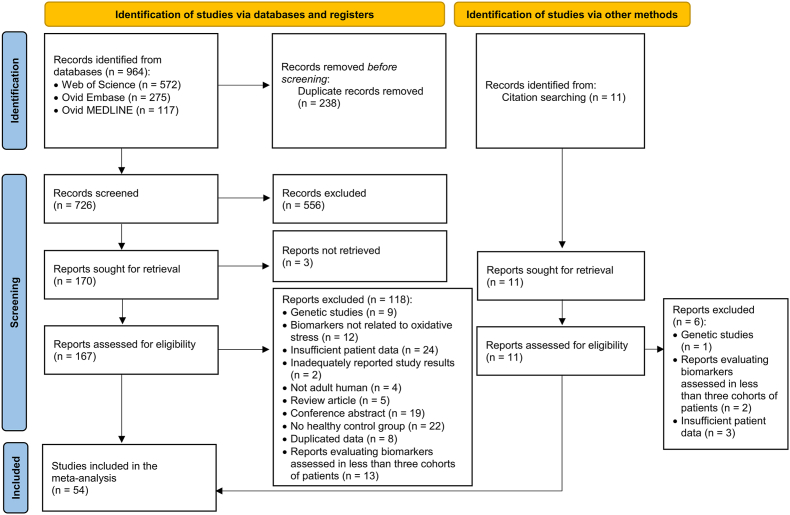
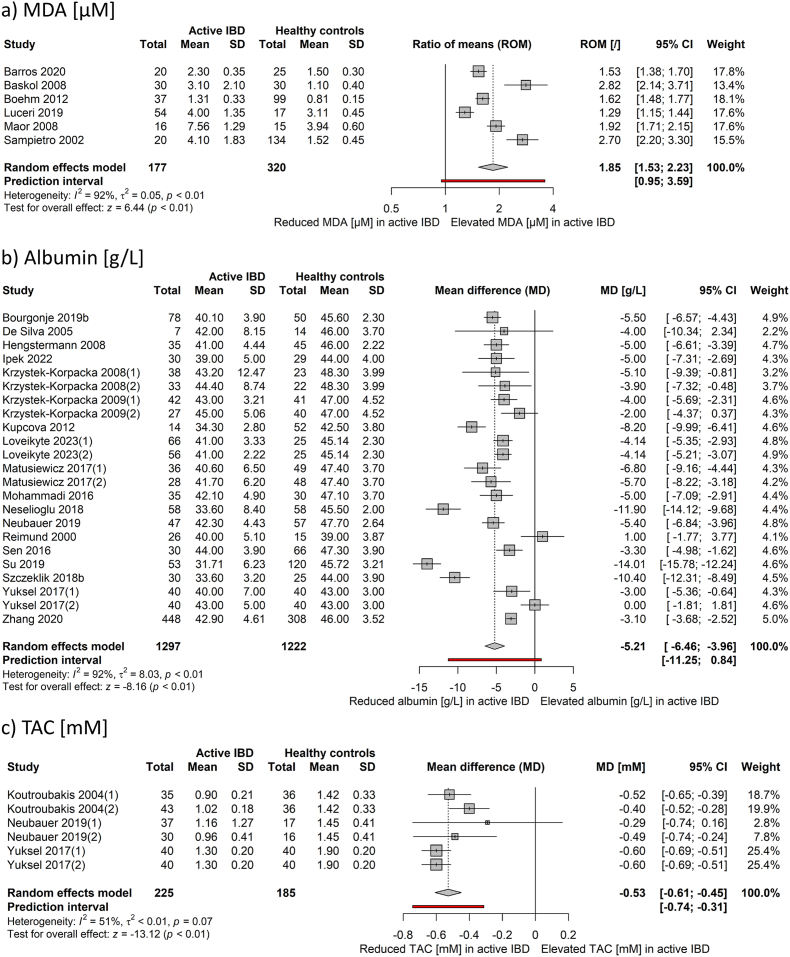
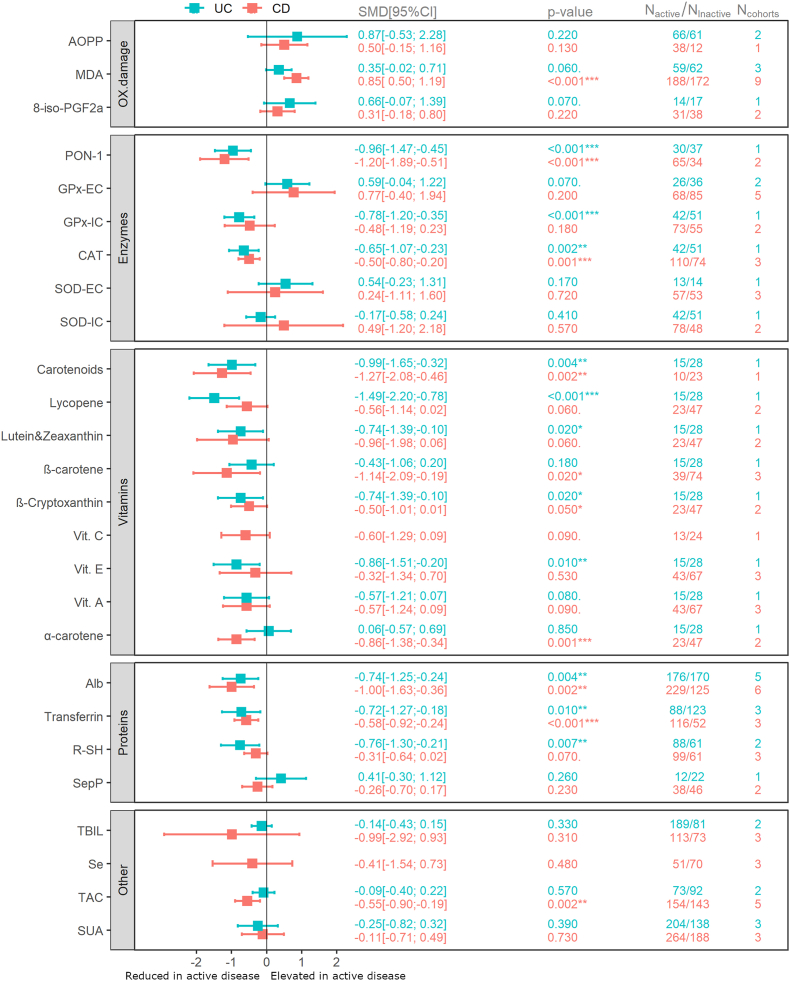
Oxidative stress is believed to play an important role in the pathogenesis of inflammatory bowel disease (IBD), specifically Crohn's disease (CD) and ulcerative colitis (UC). This meta-analysis aimed to identify and quantify the oxidative stress-related biomarkers in IBD and their associations with disease activity. We systematically searched Ovid MEDLINE, Ovid Embase, and Web of Science databases, identifying 54 studies for inclusion. Comparisons included: (i) active IBD versus healthy controls; (ii) inactive IBD versus healthy controls; (iii) active CD versus inactive CD; and (iv) active UC versus inactive UC. Our analysis revealed a significant accumulation of biomarkers of oxidative damage to biomacromolecules, coupled with reductions in various antioxidants, in both patients with active and inactive IBD compared to healthy controls. Additionally, we identified biomarkers that differentiate between active and inactive CD, including malondialdehyde, Paraoxonase 1, catalase, albumin, transferrin, and total antioxidant capacity. Similarly, levels of Paraoxonase 1, erythrocyte glutathione peroxidase, catalase, albumin, transferrin, and free thiols differed between active and inactive UC. Vitamins and carotenoids also emerged as potential disease activity biomarkers for CD and UC, but their intake should be monitored to obtain meaningful results. These findings emphasize the involvement of oxidative stress in the pathogenesis of IBD and highlight the potential of oxidative stress-related biomarkers as a minimally invasive and additional tool for monitoring the activity of IBD.
氧化应激被认为在炎症性肠病(IBD)的发病机制中起重要作用,特别是克罗恩病(CD)和溃疡性结肠炎(UC)。本荟萃分析旨在确定和量化 IBD 中的氧化应激相关生物标志物及其与疾病活动的相关性。我们系统地检索了 Ovid MEDLINE、Ovid Embase 和 Web of Science 数据库,确定了 54 项研究进行纳入。比较包括:(i)活动期 IBD 与健康对照组;(ii)缓解期 IBD 与健康对照组;(iii)活动期 CD 与缓解期 CD;(iv)活动期 UC 与缓解期 UC。我们的分析显示,与健康对照组相比,活动期和缓解期 IBD 患者的生物大分子氧化损伤生物标志物明显积聚,同时各种抗氧化剂减少。此外,我们还确定了区分活动期和缓解期 CD 的生物标志物,包括丙二醛、对氧磷酶 1、过氧化氢酶、白蛋白、转铁蛋白和总抗氧化能力。同样,对氧磷酶 1、红细胞谷胱甘肽过氧化物酶、过氧化氢酶、白蛋白、转铁蛋白和游离巯基在活动期和缓解期 UC 之间也存在差异。维生素和类胡萝卜素也被认为是 CD 和 UC 的潜在疾病活动生物标志物,但为了获得有意义的结果,应监测其摄入量。这些发现强调了氧化应激在 IBD 发病机制中的作用,并突出了氧化应激相关生物标志物作为一种微创和额外的监测 IBD 活动的工具的潜力。