Department of Pharmaceutics, College of Pharmacy, Mustansiriyah University, Baghdad, Iraq.
Sci Rep. 2024 Oct 5;14(1):23168. doi: 10.1038/s41598-024-74021-3.
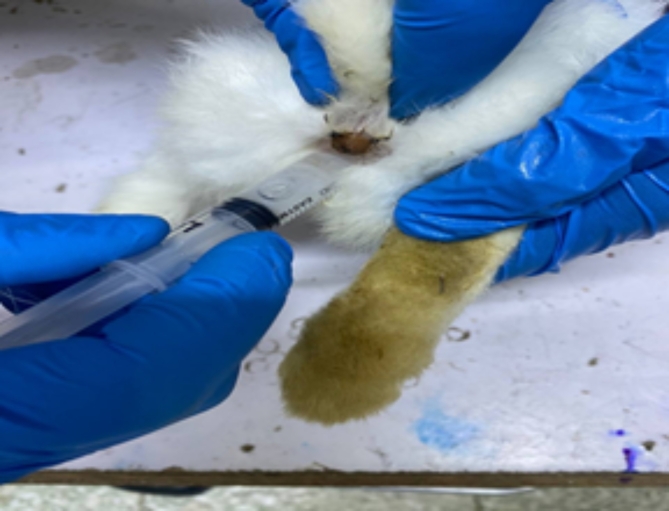
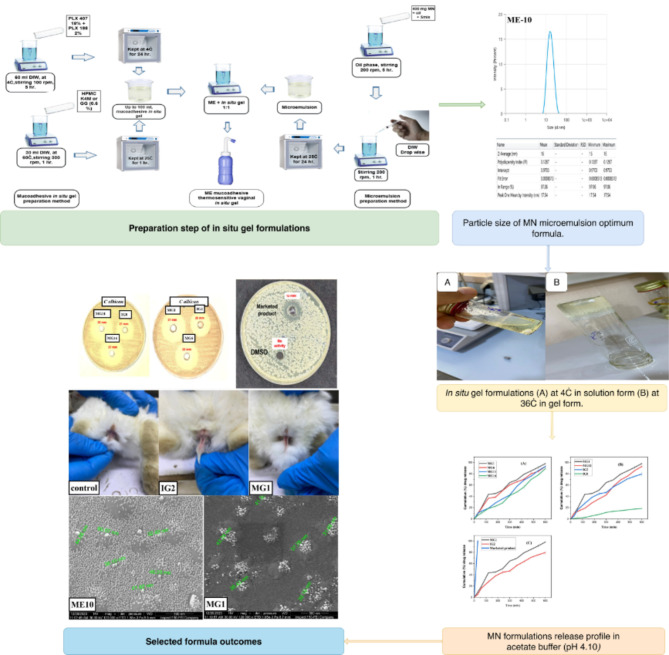
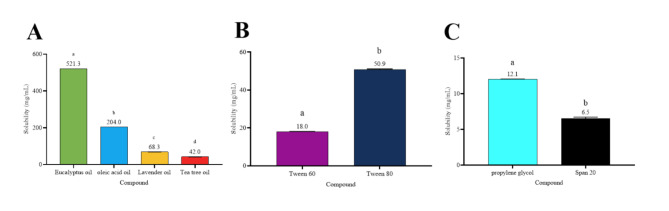
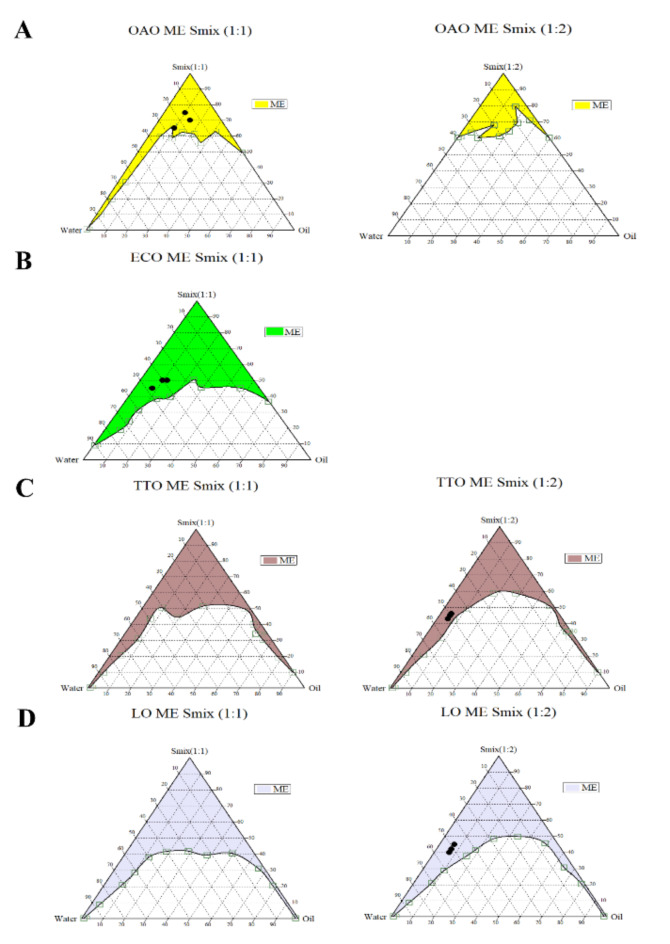
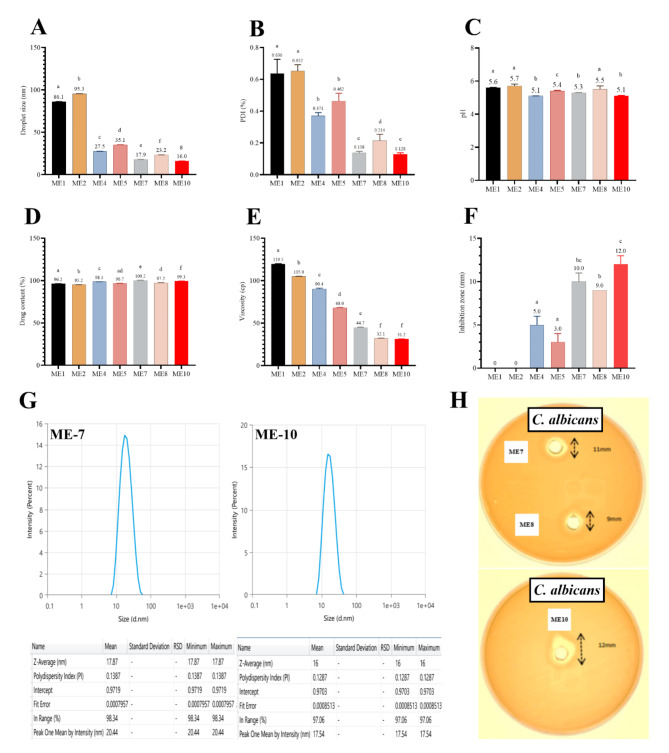
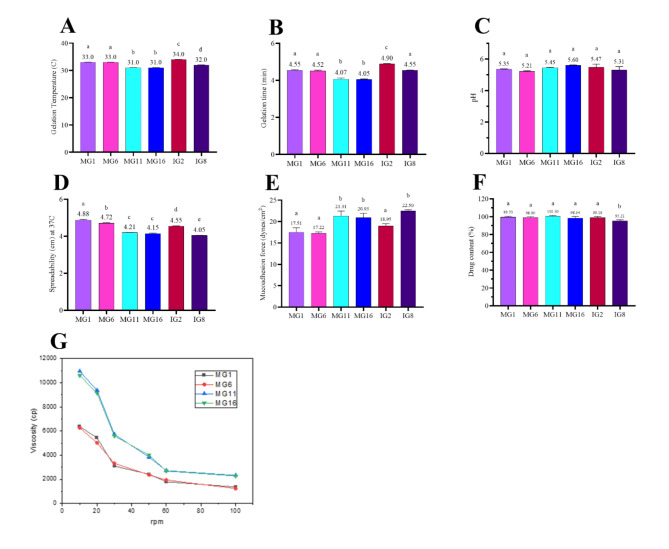
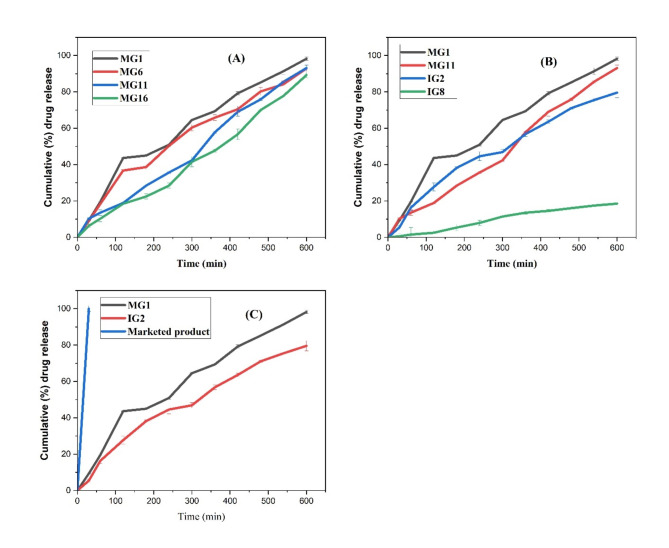
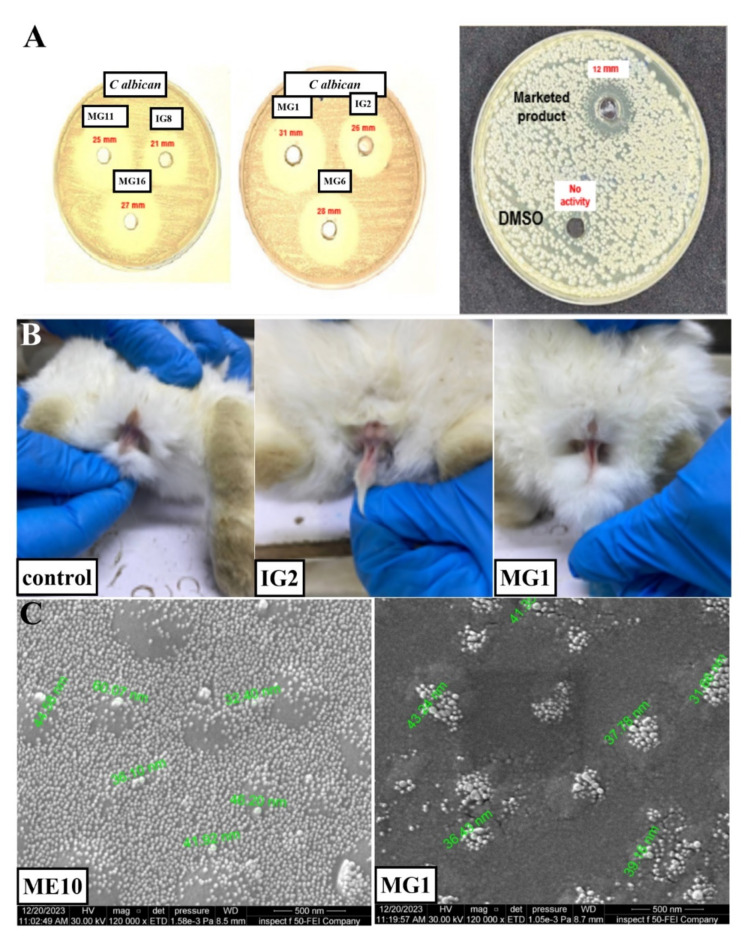
Limited solubility is the main cause of the low local availability of anti-candidiasis drug, miconazole nitrate (MN). The study's objective was to develop and characterize microemulsion (ME) based temperature-triggered in situ gel of MN for intravaginal administration to enhance local availability and antifungal activity. The solubility of MN was initially studied in different oils, surfactants, and co-surfactants. Then, pseudo-ternary phase diagrams were constructed to select the best ratio of various components. The ME formulations were characterized by thermodynamic study, droplet size, polydispersity index (PDI), viscosity, and in-vitro antifungal mean inhibition zone (MIZ). Selected MEs were incorporated into different in situ gel bases using a combination of two thermosensitive polymers (poloxamer (PLX) 407 and 188), with 0.6% of hydroxypropyl methylcellulose (HPMC K4M) and gellan gum (GG) as mucoadhesive polymer. ME-based gels (MG) were investigated for gelation temperature, gelation time, viscosity, spreadability, mucoadhesive strength, in vitro release profile, and MIZ test. Furthermore, the optimum MG was assessed for in vivo animal irritation test and FESEM investigation. Tea tree oil, lavender oil, tween 80, and propylene glycol (PG) were chosen for ME preparation for the optimal formulation; formulation ME7 and ME10 were chosen. After incorporation of the selected formulation into a mixture of P407 and P188 (18:2% w/w) with 0.6% mucoadhesive polymer, the resultant MG formulation (MG1) revealed optimum gelation temperature (33 ± 0.01℃) and appropriate viscosity with enhanced sustained release (98%) and retention through sheep vaginal mucosa, MG1 exhibited a better MIZ compared to the 2% MN gel formulation and the marketed MN product, and no rabbit vagina irritation. In conclusion, the miconazole nitrate-loaded MG-based formula sustained the duration of action and better antifungal activity than the marketed miconazole nitrate formulation.
局部抗真菌药物米康唑硝酸盐(MN)的低生物利用度主要是由于其溶解度有限。本研究的目的是开发并表征基于微乳液(ME)的 MN 温度触发原位凝胶,用于阴道内给药,以提高局部生物利用度和抗真菌活性。首先研究了 MN 在不同油、表面活性剂和助表面活性剂中的溶解度。然后,构建伪三元相图以选择各种成分的最佳比例。通过热力学研究、粒径、多分散指数(PDI)、粘度和体外抗真菌平均抑制区(MIZ)对 ME 配方进行了表征。选择的 ME 用两种热敏聚合物(泊洛沙姆(PLX)407 和 188)的混合物、0.6%羟丙基甲基纤维素(HPMC K4M)和结冷胶(GG)作为粘膜粘附聚合物,掺入不同的原位凝胶基质中。对基于 ME 的凝胶(MG)进行了胶凝温度、胶凝时间、粘度、铺展性、粘膜粘附强度、体外释放曲线和 MIZ 测试的研究。此外,对最佳 MG 进行了体内动物刺激性试验和 FESEM 研究。茶树油、薰衣草油、吐温 80 和丙二醇(PG)被选为 ME 制备的最优配方;选择了配方 ME7 和 ME10。将选定的配方掺入 P407 和 P188(18:2%w/w)与 0.6%粘膜粘附聚合物的混合物中后,所得 MG 配方(MG1)表现出最佳胶凝温度(33±0.01℃)和适当的粘度,具有增强的持续释放(98%)和通过绵羊阴道粘膜的保留,MG1 显示出比 2% MN 凝胶配方和市售 MN 产品更好的 MIZ,并且对兔子阴道没有刺激。总之,载米康唑硝酸盐的 MG 基配方比市售米康唑硝酸盐配方具有更长的作用持续时间和更好的抗真菌活性。