Division of Meat Animal and Poultry Research, Institute of Livestock and Grassland Science, National Agriculture and Food Research Organization (NILGS), Tsukuba, Japan.
Sci Rep. 2024 Oct 5;14(1):23213. doi: 10.1038/s41598-024-75066-0.
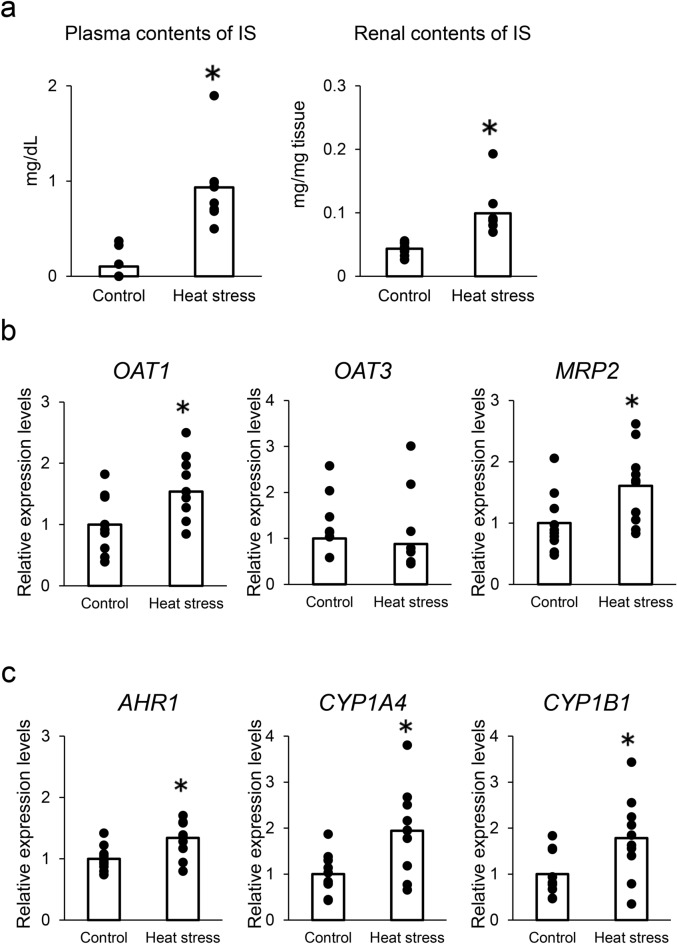
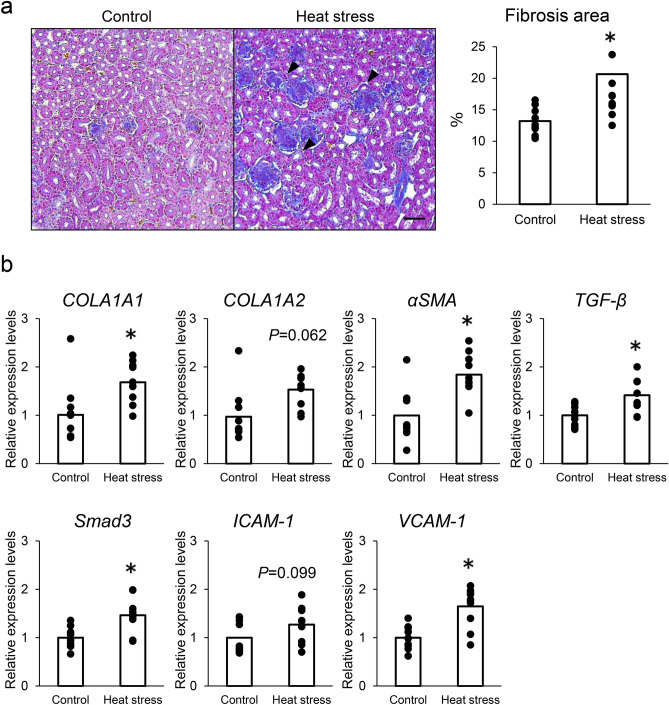
Indoxyl sulfate (IS), a uremic toxin, is a harmful factor that damages kidneys. Chronic heat stress in laying hens causes renal injury; however, whether IS accumulation is involved in this injury remains unknown. We selected 20 Boris brown laying hens (27 weeks old) and randomly assigned them to two groups (n = 10), one group was exposed to chronic heat stress (32 °C for 4 weeks), whereas the other was maintained at 24 °C. Chronic heat exposure significantly increased plasma and renal IS concentrations (P < 0.05). Exposure to heat also increased renal expression of the aryl hydrocarbon receptor (AhR) and its target genes (CYP1A4 and CYP1B1). Furthermore, chronic heat exposure tended to increase the 2-thiobarbituric acid reactive substances content (P = 0.08) and significantly decreased the antioxidant capacity in the kidney, while increasing the transcription levels of nuclear factor κB and fibrosis-related genes (COLA1A1, αSMA, TGF-β, Smad3, and VCAM-1) and the area of renal fibrosis. Our results indicate that chronic heat exposure induces systemic and renal IS accumulation in laying hens. This accumulated IS may activate the AhR pathway and chronically disrupt the oxidative stress status and antioxidant activity, thus promoting renal fibrosis and dysfunction in laying hens.
硫酸吲哚酚(IS)是一种尿毒症毒素,是损害肾脏的有害因子。产蛋母鸡的慢性热应激会导致肾脏损伤;然而,IS 蓄积是否参与这种损伤尚不清楚。我们选择了 20 只 Boris brown 产蛋母鸡(27 周龄),并将它们随机分为两组(n=10),一组暴露于慢性热应激(4 周 32°C),另一组则保持在 24°C。慢性热暴露显著增加了血浆和肾脏 IS 浓度(P<0.05)。暴露于热还增加了肾脏中芳香烃受体(AhR)及其靶基因(CYP1A4 和 CYP1B1)的表达。此外,慢性热暴露有增加 2-硫代巴比妥酸反应物质含量的趋势(P=0.08),并显著降低了肾脏的抗氧化能力,同时增加了核因子 κB 和纤维化相关基因(COLA1A1、αSMA、TGF-β、Smad3 和 VCAM-1)的转录水平和肾脏纤维化的面积。我们的结果表明,慢性热暴露会导致产蛋母鸡全身和肾脏 IS 蓄积。这种蓄积的 IS 可能会激活 AhR 途径,并慢性破坏氧化应激状态和抗氧化活性,从而促进产蛋母鸡的肾脏纤维化和功能障碍。