Haruna Kabiru, Al Hamouz Othman Charles S, Saleh Tawfik A
Interdisciplinary Research Center for Advanced Materials, King Fahd University of Petroleum & Minerals, Dhahran, 31261, Saudi Arabia.
Department of Chemistry, King Fahd University of Petroleum & Minerals, Dhahran, 31261, Saudi Arabia.
Heliyon. 2024 Sep 19;10(19):e38116. doi: 10.1016/j.heliyon.2024.e38116. eCollection 2024 Oct 15.
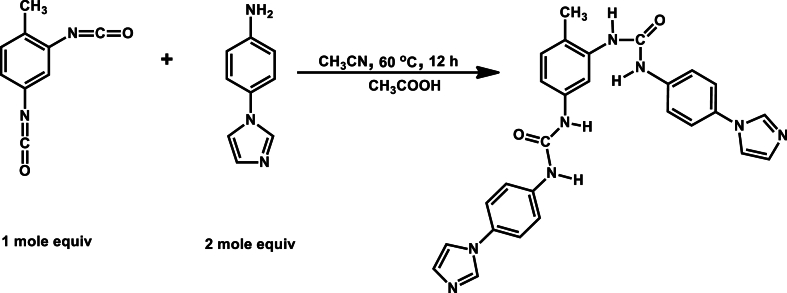
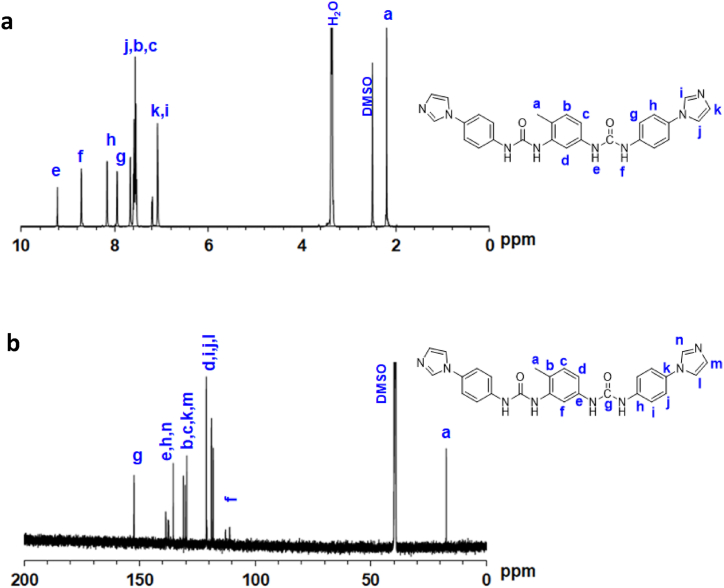
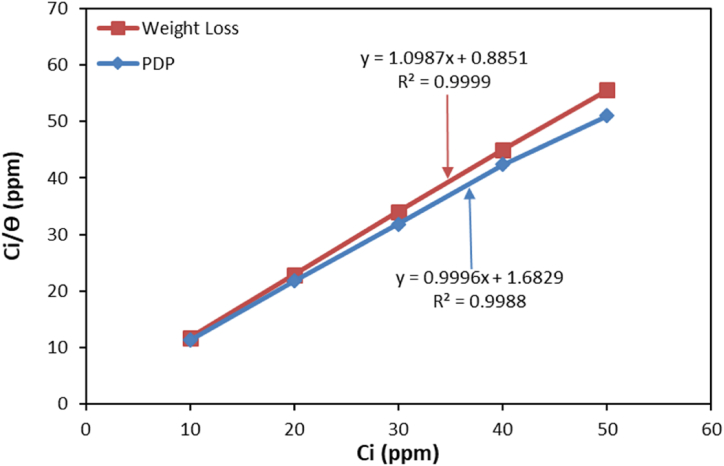
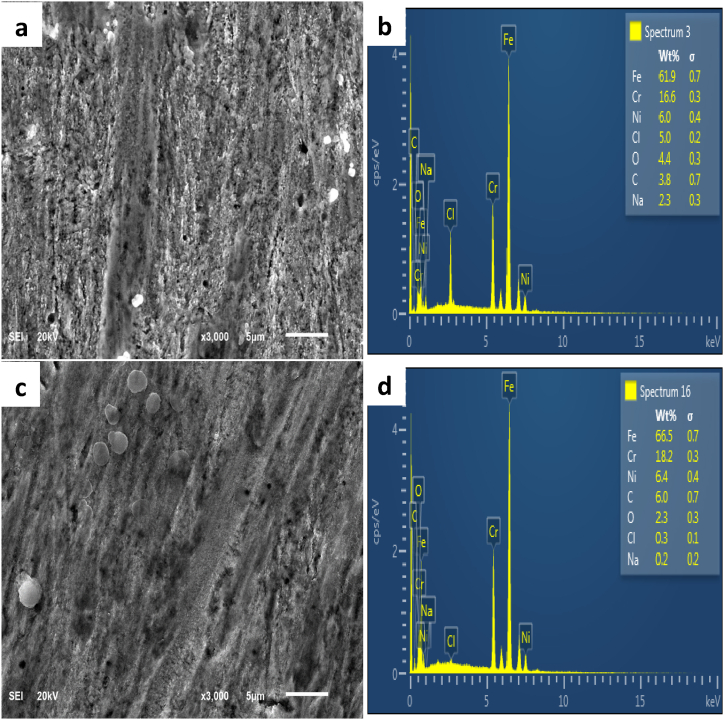
Inorganic scale formation is a common issue in multi-stage flash (MSF) desalination plants, significantly impacting operational efficiency. To address this, acid cleaning is frequently employed, but it can lead to severe corrosion of alloy components if not properly controlled with corrosion inhibitors. This study investigates the effectiveness of toluene-2,4-diisocyanate-4-(1H-imidazole-ly) aniline (TDIA) as a corrosion inhibitor for 304L stainless steel in a simulated acid cleaning solution (1M HCl and 3.5 % NaCl). A range of tests, including electrochemical analysis, weight loss measurements, and surface characterization techniques such as AFM, EDS, and SEM, were used to assess the inhibitor's performance at temperatures of 25, 45, 65, and 90 °C. At a concentration of 50 ppm, TDIA achieved inhibition efficiencies of around 90% at 25 °C and above 80% at 90 °C, demonstrating effective protection across all temperatures studied. The adsorption behavior of TDIA followed the Langmuir adsorption model, and it acted as a mixed-type inhibitor by forming a protective layer on the metal surface, which prevents corrosive agents from accessing the steel. The dual-environment testing method, simulating conditions in desalination plants, offers valuable insights into the inhibitor's practical performance, enhancing the applicability of these findings to real-world industrial scenarios.
无机垢的形成是多级闪蒸(MSF)海水淡化厂中常见的问题,对运行效率有重大影响。为了解决这一问题,经常采用酸洗,但如果不使用缓蚀剂进行适当控制,酸洗会导致合金部件严重腐蚀。本研究调查了甲苯-2,4-二异氰酸酯-4-(1H-咪唑-1-基)苯胺(TDIA)在模拟酸洗溶液(1M HCl和3.5% NaCl)中作为304L不锈钢缓蚀剂的有效性。采用了一系列测试,包括电化学分析、失重测量以及原子力显微镜(AFM)、能谱仪(EDS)和扫描电子显微镜(SEM)等表面表征技术,以评估缓蚀剂在25、45、65和90℃温度下的性能。在浓度为50 ppm时,TDIA在25℃时的缓蚀效率约为90%,在90℃时高于80%,表明在所有研究温度下均能提供有效保护。TDIA的吸附行为遵循朗缪尔吸附模型,它通过在金属表面形成保护层作为混合型缓蚀剂,防止腐蚀剂接触钢材。模拟海水淡化厂条件的双环境测试方法为缓蚀剂实际性能提供了有价值的见解,提高了这些研究结果在实际工业场景中的适用性。