Mayerhöfer Timo, Lehner Georg F, Joannidis Michael
Gemeinsame Einrichtung für Intensiv- und Notfallmedizin, Department für Innere Medizin, Medizinische Universität Innsbruck, Anichstraße 35, 6020, Innsbruck, Österreich.
Med Klin Intensivmed Notfmed. 2024 Nov;119(8):640-649. doi: 10.1007/s00063-024-01194-0. Epub 2024 Oct 9.
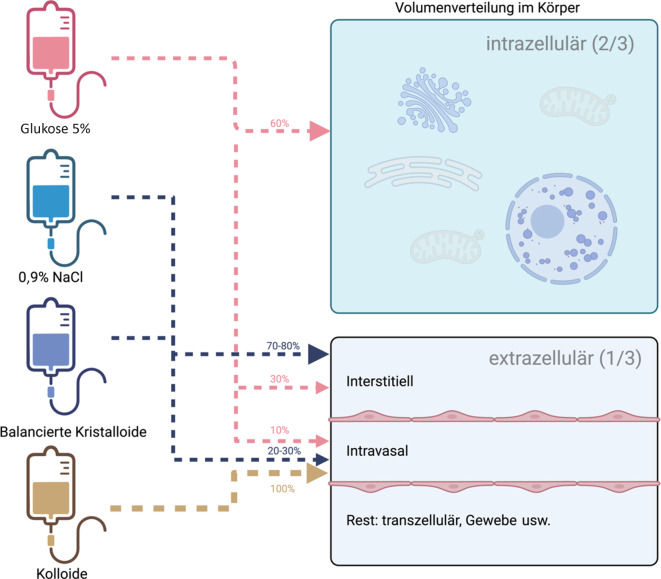
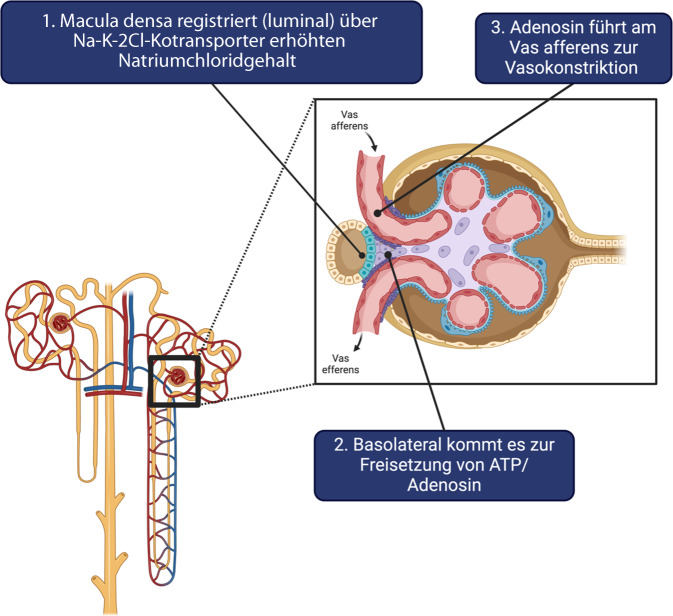
The most commonly used fluids for volume therapy are crystalloids and colloids. Crystalloids comprise 0.9% sodium chloride and balanced crystalloids (BC). Colloids can be divided into artificial colloids and human albumin (a natural colloid). Large studies show advantages for BC over 0.9% NaCl with respect to renal endpoints, probably due to the unphysiologically high chloride content of 0.9% NaCl. However, other studies, such as the BaSICS and PLUS trials, showed no significant differences in mortality in a heterogeneous population. Despite this, meta-analyses suggest advantages for BC. Therefore, BC should be preferred, especially in patients at increased risk of acute kidney injury, with acidemia and/or hyperchloremia. Except for specific indications (e.g., in patients with cirrhosis, sepsis resuscitation after initial volume therapy with BC), albumin should not be used. There is clear evidence of harm from hydroxyethyl starch in intensive care patients.
容量治疗最常用的液体是晶体液和胶体液。晶体液包括0.9%氯化钠和平衡晶体液(BC)。胶体液可分为人工胶体和人白蛋白(天然胶体)。大型研究表明,在肾脏终点方面,平衡晶体液优于0.9%氯化钠,这可能是由于0.9%氯化钠中氯化物含量过高不符合生理情况。然而,其他研究,如BaSICS和PLUS试验,在异质性人群中未显示死亡率有显著差异。尽管如此,荟萃分析表明平衡晶体液具有优势。因此,应优先选择平衡晶体液,尤其是在急性肾损伤风险增加、伴有酸血症和/或高氯血症的患者中。除特定适应证外(如肝硬化患者、初始用平衡晶体液进行容量治疗后的脓毒症复苏患者),不应使用白蛋白。有明确证据表明羟乙基淀粉对重症监护患者有害。