Medical Imaging Center, Guangdong Province, The First Affiliated Hospital of Jinan University, Tianhe District, No. 613, Huangpu Road West, Guangzhou, 510630, China.
Department of Oncology, Guangdong Sanjiu Brain Hospital, Guangzhou, 510510, China.
Neurosurg Rev. 2024 Oct 9;47(1):763. doi: 10.1007/s10143-024-02957-1.
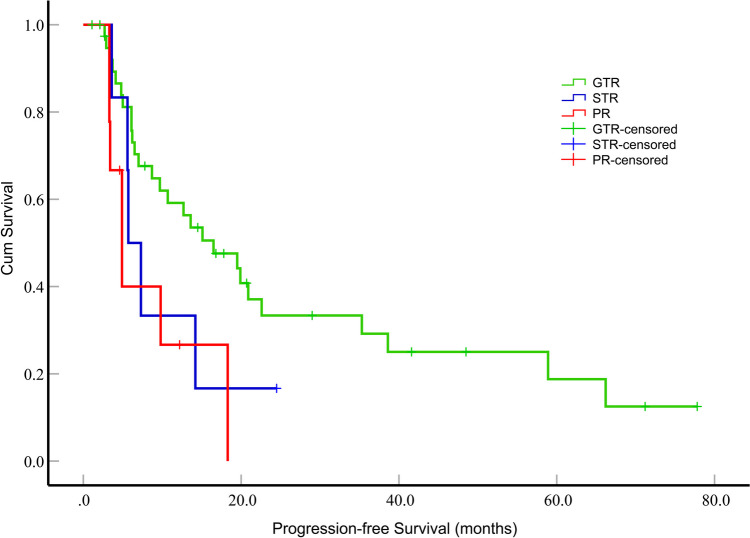
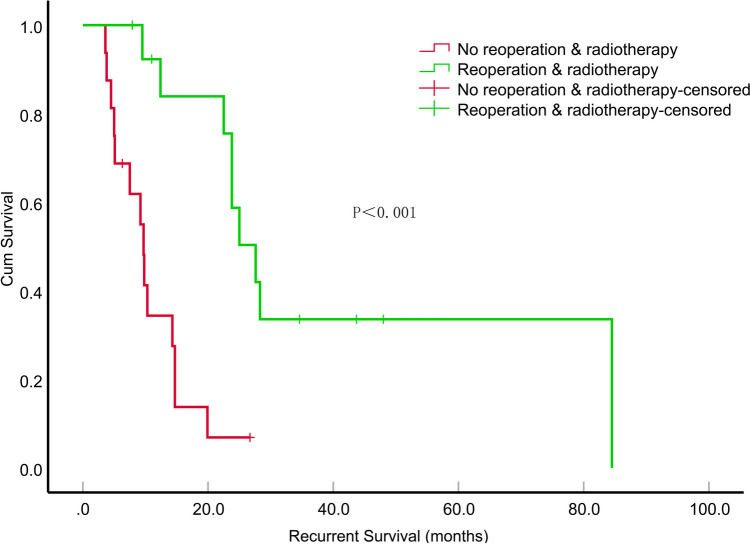
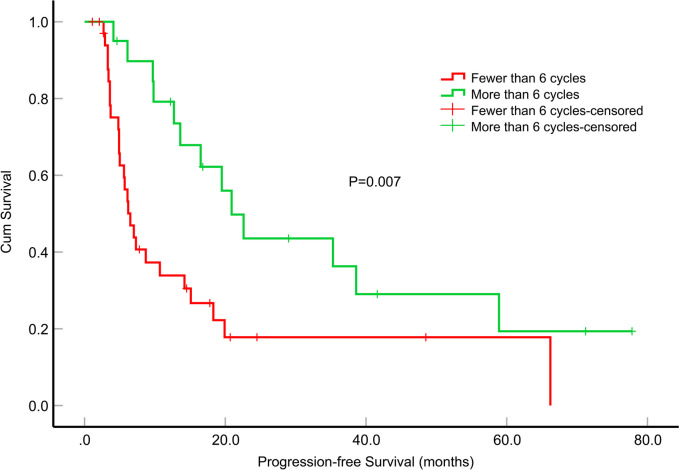
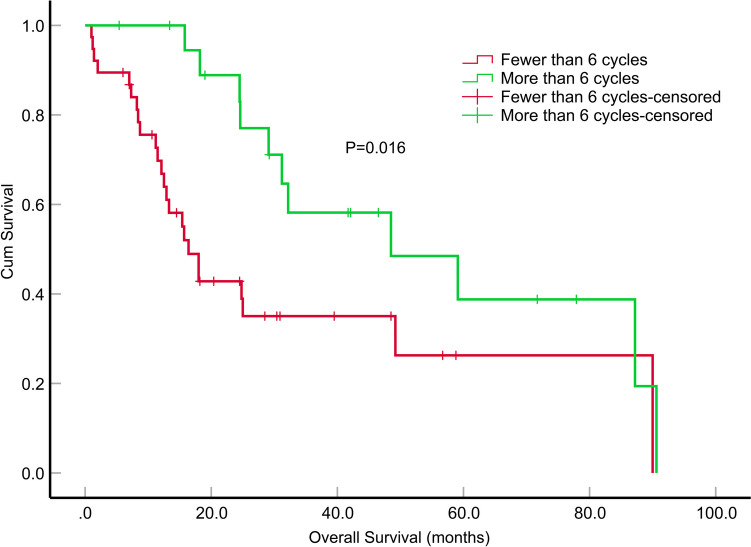
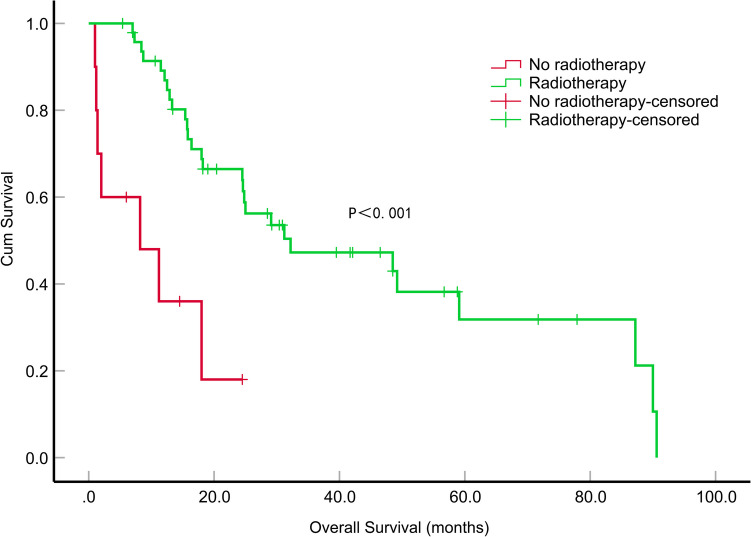
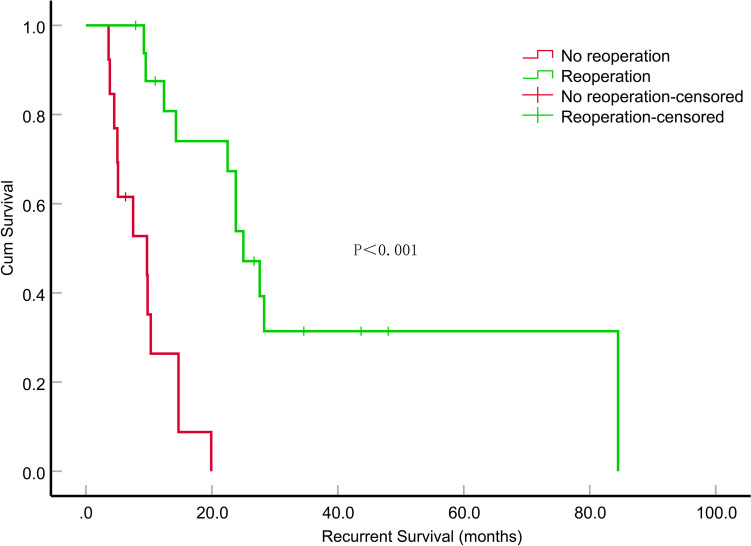
Epithelioid glioblastoma (Ep-GBM) is a rare variant of glioblastoma characterized by a high recurrence rate and poor prognosis. Currently, there is no established standard treatment for Ep-GBM. Therefore, we identified 58 Ep-GBM cases to investigate these characteristics and identify the possible prognostic factors of survival. There were 30 male and 28 female patients with a median age of 39 years. Headaches and dizziness were the most common clinical symptom. The tumor is most frequently located in the temporal lobe (36.2%). The positivity rate for BRAF-V600E is 56.9% (33/58), for MGMT is 56.9% (33/58), and for INI-1 is 75% (30/40). Tumor recurrence was observed in 39 patients. The median progression-free survival (PFS) of all patients was 12.7 months, while the median overall survival (OS) was 29.1 months. Additionally, the median survival time after recurrence was 14.3 months. Both univariate and multivariate COX regression analyses revealed that individuals who received more than six cycles of adjuvant oral temozolomide experienced a longer median PFS compared to those who received fewer cycles. Characteristics associated with poorer PFS included tumor dissemination prior to initial surgery. Additionally, both analyses identified tumor dissemination, radiotherapy and adjuvant oral temozolomide as predictors of OS. Notably, for patients with recurrent Ep-GBM, reoperation was shown to significantly increase survival time after recurrence. In conclusion, the standard Stupp regimen is also applicable to patients with Ep-GBM, extending adjuvant oral temozolomide could further improve survival for Ep-GBM patients, reoperation may also prolong survival for recurrent Ep-GBM.
上皮样胶质母细胞瘤(Ep-GBM)是胶质母细胞瘤的一种罕见变体,具有高复发率和预后不良的特点。目前,尚无针对 Ep-GBM 的既定标准治疗方法。因此,我们鉴定了 58 例 Ep-GBM 病例,以研究这些特征并确定可能的生存预后因素。患者中男性 30 例,女性 28 例,中位年龄 39 岁。头痛和头晕是最常见的临床症状。肿瘤最常位于颞叶(36.2%)。BRAF-V600E 的阳性率为 56.9%(33/58),MGMT 的阳性率为 56.9%(33/58),INI-1 的阳性率为 75%(30/40)。39 例患者出现肿瘤复发。所有患者的中位无进展生存期(PFS)为 12.7 个月,中位总生存期(OS)为 29.1 个月。此外,复发后的中位生存时间为 14.3 个月。单因素和多因素 COX 回归分析均显示,接受超过 6 个周期辅助口服替莫唑胺治疗的患者中位 PFS 长于接受较少周期治疗的患者。与 PFS 较差相关的特征包括初始手术前肿瘤播散。此外,两项分析均将肿瘤播散、放疗和辅助口服替莫唑胺确定为 OS 的预测因子。值得注意的是,对于复发性 Ep-GBM 患者,再次手术可显著延长复发后的生存时间。总之,Stupp 标准方案也适用于 Ep-GBM 患者,延长辅助口服替莫唑胺的治疗可能进一步改善 Ep-GBM 患者的生存,再次手术也可能延长复发性 Ep-GBM 的生存。