Department of Biomedical Sciences, Humanitas University, Milan, Italy
IRCCS Humanitas Research Hospital, Respiratory Unit, Milan, Italy.
Eur Respir Rev. 2024 Oct 9;33(174). doi: 10.1183/16000617.0091-2024. Print 2024 Oct.
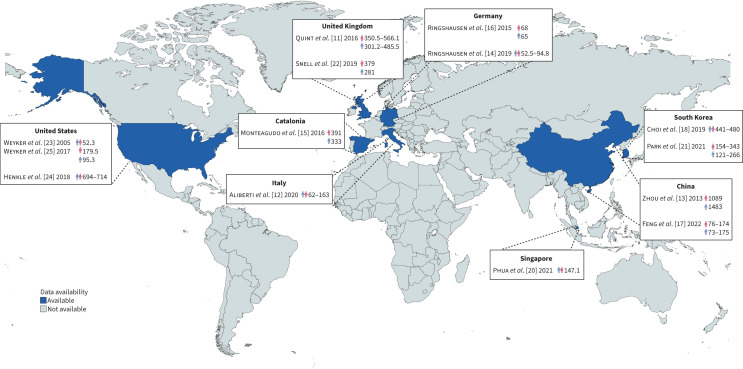
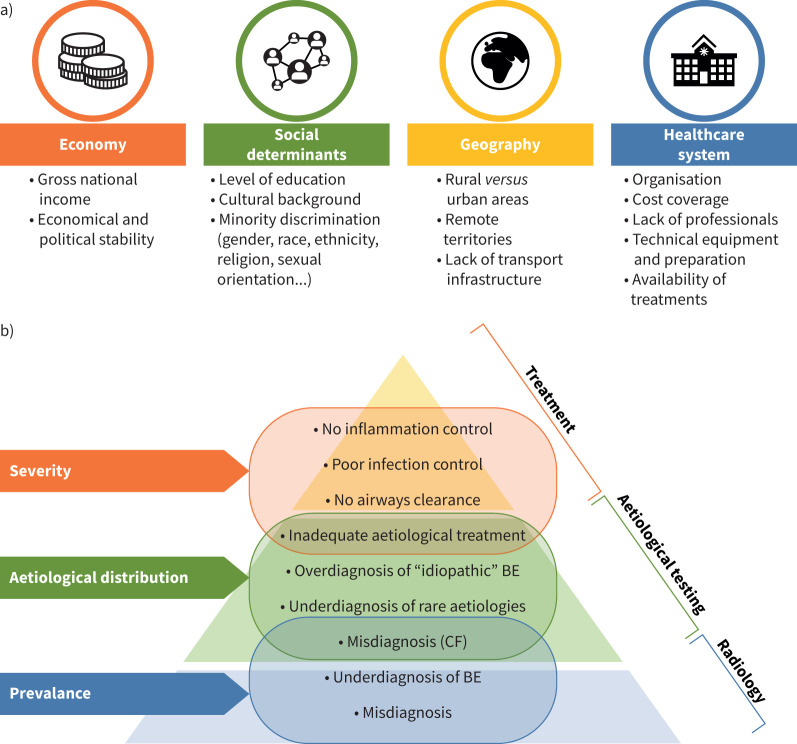
Bronchiectasis is a chronic respiratory disease characterised by permanent enlargement of the airways associated with cough, sputum production and a history of pulmonary exacerbations. In the past few years, incidence and prevalence of bronchiectasis have increased worldwide, possibly due to advances in imaging techniques and disease awareness, leading to increased socioeconomic burden and healthcare costs. Consistently, a mortality increase in bronchiectasis patient cohorts has been demonstrated in certain areas of the globe, with mortality rates of 16-24.8% over 4-5 years of follow-up. However, heterogeneity in epidemiological data is consistent, as reported prevalence in the general population ranges from 52.3 to more than 1000 per 100 000. Methodological flaws in the designs of available studies are likely to underestimate the proportion of people suffering from this condition worldwide and comparisons between different areas of the globe might be unreliable due to different assessment methods or local implementation of the same method in different contexts. Differences in disease severity associated with diverse geographical distribution of aetiologies, comorbidities and microbiology might explain an additional quota of heterogeneity. Finally, limited access to care in certain geographical areas is associated with both underestimation of the disease and increased severity and mortality. The aim of this review is to provide a snapshot of available real-world epidemiological data describing incidence and prevalence of bronchiectasis in the general population. Furthermore, data on mortality, healthcare burden and high-risk populations are provided. Finally, an analysis of the geographical distribution of determinants contributing to differences in bronchiectasis epidemiology is offered.
支气管扩张症是一种慢性呼吸系统疾病,其特征为气道永久性扩张,伴有咳嗽、咳痰和肺部恶化病史。在过去几年中,支气管扩张症的发病率和患病率在全球范围内有所增加,这可能是由于影像学技术和疾病认识的进步,导致社会经济负担和医疗保健费用增加。同样,在全球某些地区,支气管扩张症患者队列的死亡率有所增加,在 4-5 年的随访中死亡率为 16-24.8%。然而,流行病学数据的异质性是一致的,因为一般人群中的患病率报告范围为每 100000 人中 52.3 至 1000 人以上。由于不同的评估方法或在不同背景下对同一方法的本地实施,现有研究设计中的方法学缺陷可能低估了全球范围内患有这种疾病的人数,因此不同地区之间的比较可能不可靠。与病因、合并症和微生物学的不同地理分布相关的疾病严重程度的差异可能解释了额外的异质性。最后,在某些地理区域获得护理的机会有限与疾病的低估以及严重程度和死亡率的增加有关。本综述的目的是提供一个描述一般人群中支气管扩张症发病率和患病率的现有真实世界流行病学数据的快照。此外,还提供了关于死亡率、医疗保健负担和高危人群的数据。最后,分析了导致支气管扩张症流行病学差异的决定因素的地理分布。