Department of Experimental Research, State Key Laboratory of Oncology in South China, Guangdong Provincial Clinical Research Center for Cancer, Sun Yat-sen University Cancer Center, Guangzhou, P. R. China.
Shenzhen Key Laboratory of Systems Medicine for inflammatory diseases, School of Medicine, Shenzhen Campus of Sun Yat-Sen University, Sun Yat-sen University, Shenzhen, Guangdong, P. R. China.
Signal Transduct Target Ther. 2024 Oct 9;9(1):281. doi: 10.1038/s41392-024-01978-y.
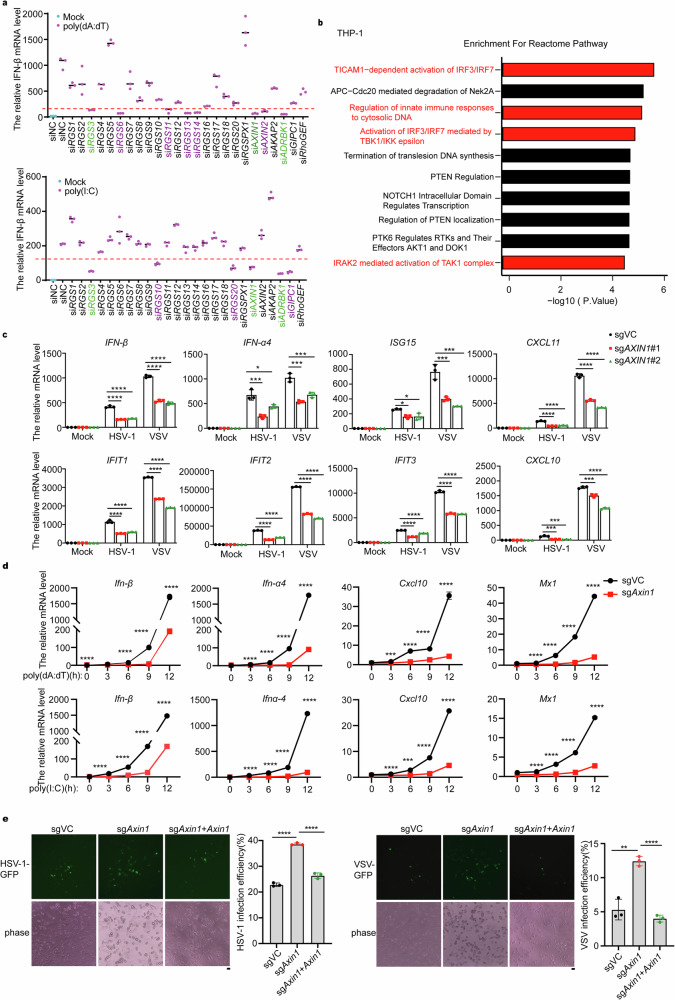
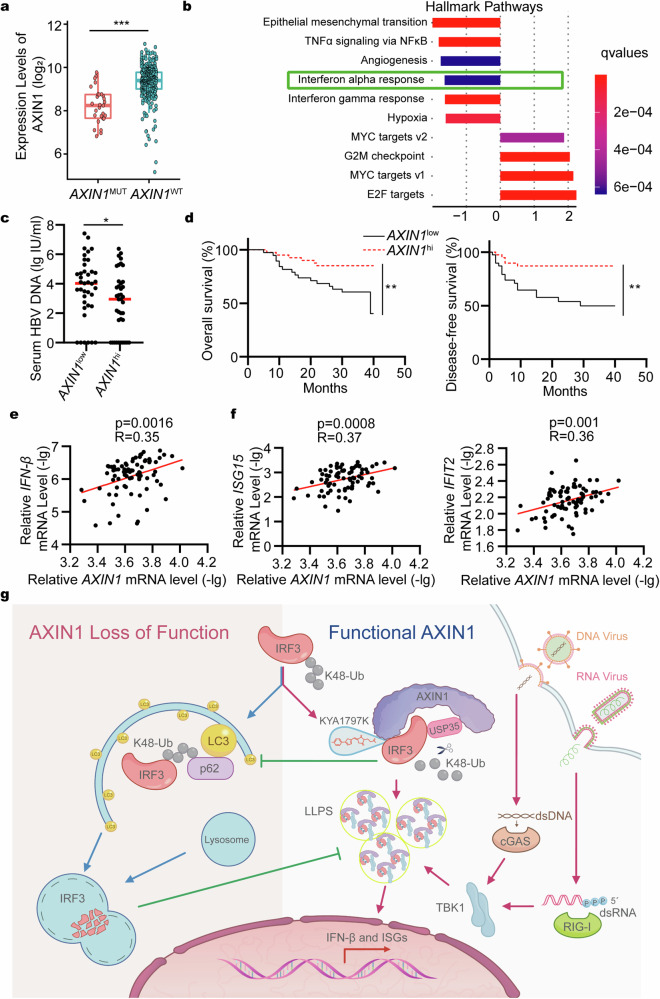
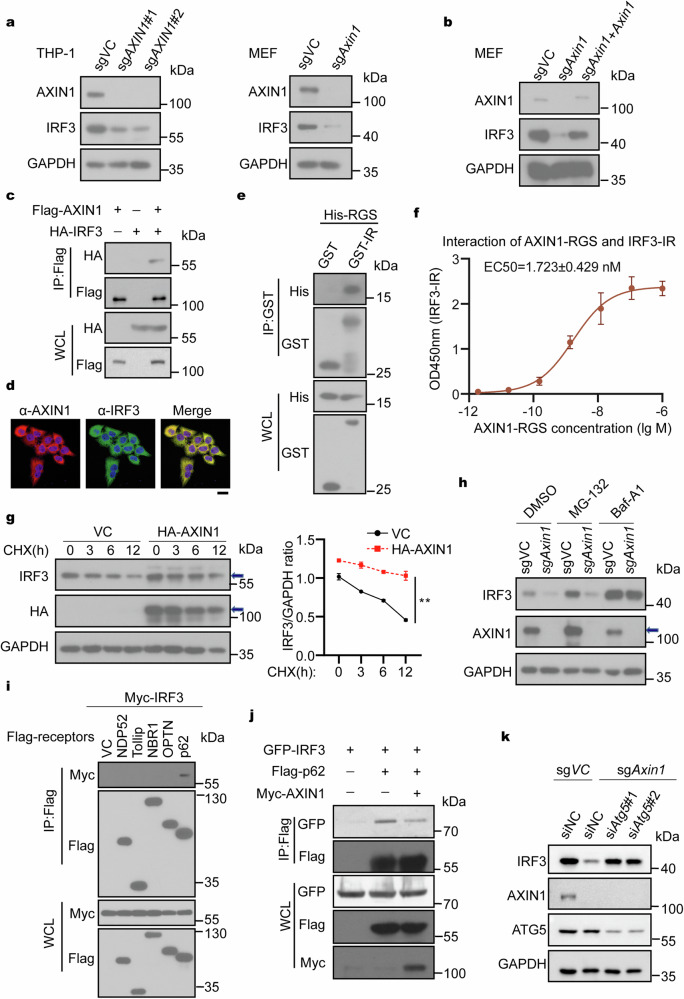
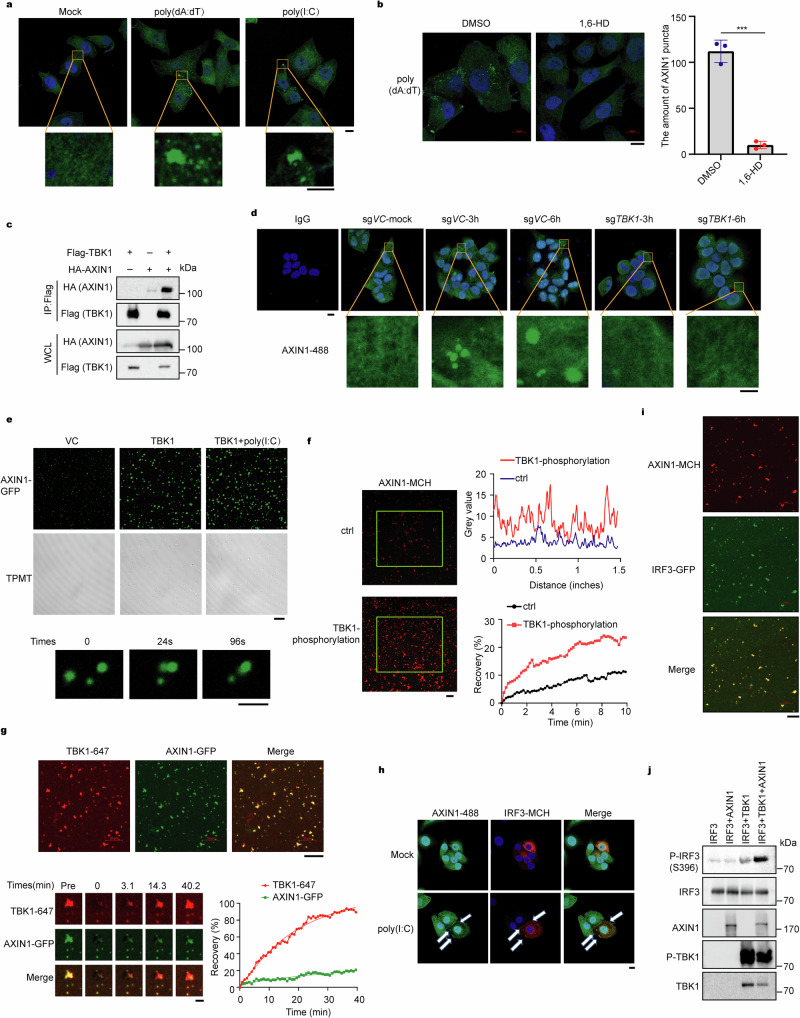
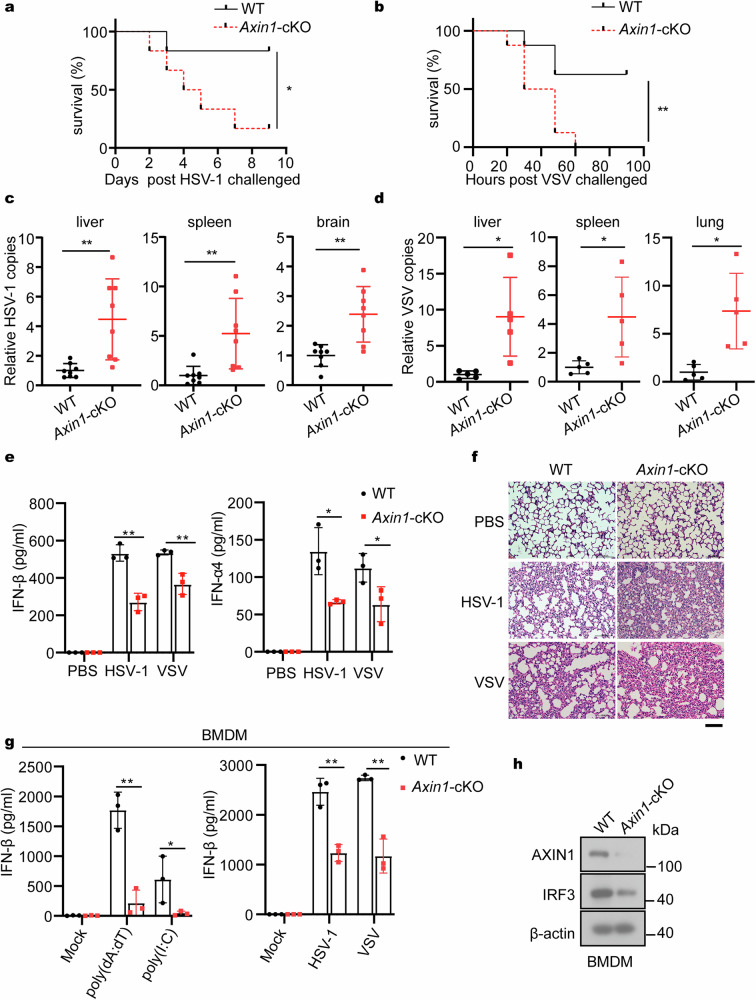
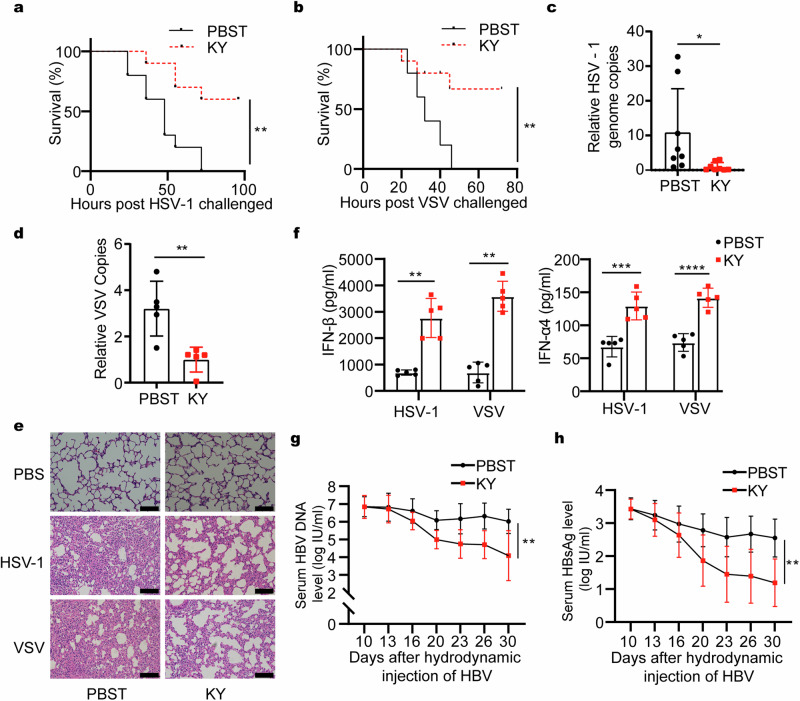
Axis inhibition protein 1 (AXIN1), a scaffold protein interacting with various critical molecules, plays a vital role in determining cell fate. However, its impact on the antiviral innate immune response remains largely unknown. Here, we identify that AXIN1 acts as an effective regulator of antiviral innate immunity against both DNA and RNA virus infections. In the resting state, AXIN1 maintains the stability of the transcription factor interferon regulatory factor 3 (IRF3) by preventing p62-mediated autophagic degradation of IRF3. This is achieved by recruiting ubiquitin-specific peptidase 35 (USP35), which removes lysine (K) 48-linked ubiquitination at IRF3 K366. Upon virus infection, AXIN1 undergoes a phase separation triggered by phosphorylated TANK-binding kinase 1 (TBK1). This leads to increased phosphorylation of IRF3 and a boost in IFN-I production. Moreover, KYA1797K, a small molecule that binds to the AXIN1 RGS domain, enhances the AXIN1-IRF3 interaction and promotes the elimination of various highly pathogenic viruses. Clinically, patients with HBV-associated hepatocellular carcinoma (HCC) who show reduced AXIN1 expression in pericarcinoma tissues have low overall and disease-free survival rates, as well as higher HBV levels in their blood. Overall, our findings reveal how AXIN1 regulates IRF3 signaling and phase separation-mediated antiviral immune responses, underscoring the potential of the AXIN1 agonist KYA1797K as an effective antiviral agent.
轴抑制蛋白 1(AXIN1)是一种与多种关键分子相互作用的支架蛋白,在决定细胞命运方面发挥着重要作用。然而,其对抗病毒先天免疫反应的影响在很大程度上尚不清楚。在这里,我们鉴定出 AXIN1 是一种有效的抗病毒先天免疫调节剂,可针对 DNA 和 RNA 病毒感染发挥作用。在静止状态下,AXIN1 通过防止 p62 介导的 IRF3 自噬降解来维持转录因子干扰素调节因子 3(IRF3)的稳定性。这是通过招募泛素特异性肽酶 35(USP35)来实现的,USP35 可去除 IRF3 K366 上的 K48 连接的泛素化。在病毒感染时,AXIN1 会被磷酸化的 TANK 结合激酶 1(TBK1)触发相分离。这导致 IRF3 的磷酸化增加和 IFN-I 的产生增加。此外,小分子 KYA1797K 可与 AXIN1 的 RGS 结构域结合,增强 AXIN1-IRF3 相互作用并促进多种高致病性病毒的消除。临床上,乙型肝炎病毒相关肝细胞癌(HCC)患者癌旁组织中 AXIN1 表达减少的患者总生存率和无病生存率较低,血液中的乙型肝炎病毒水平较高。总之,我们的研究结果揭示了 AXIN1 如何调节 IRF3 信号转导和相分离介导的抗病毒免疫反应,强调了 AXIN1 激动剂 KYA1797K 作为一种有效的抗病毒药物的潜力。