School of Biological Sciences, University of East Anglia, Norwich Research Park, Norwich, NR4 7TJ, UK.
School of Chemistry, Pharmacy, and Pharmacology, University of East Anglia, Norwich Research Park, Norwich, NR4 7TJ, UK.
Nat Commun. 2024 Oct 9;15(1):8568. doi: 10.1038/s41467-024-51758-z.
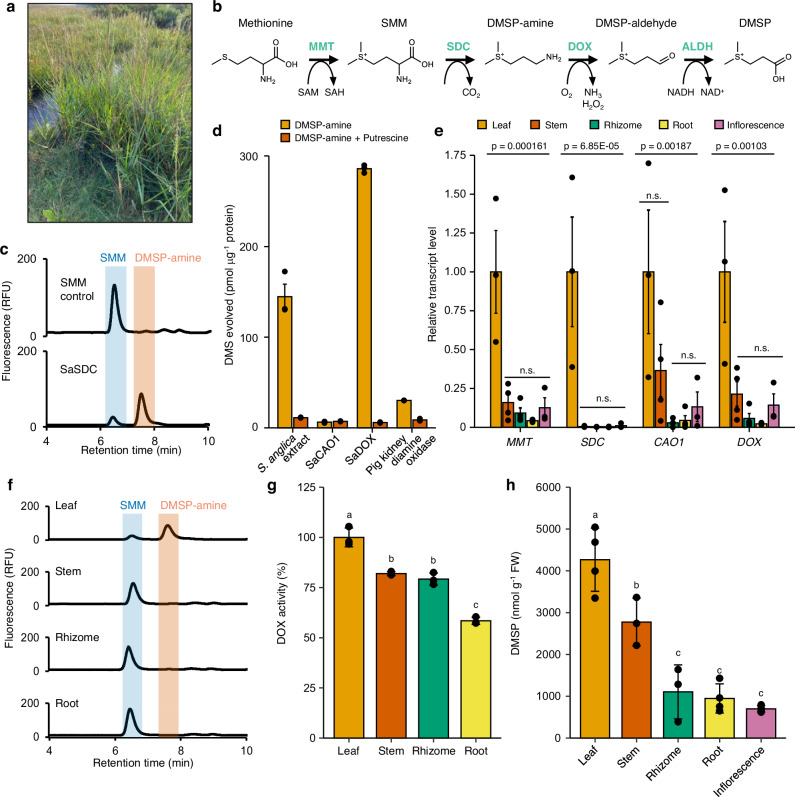
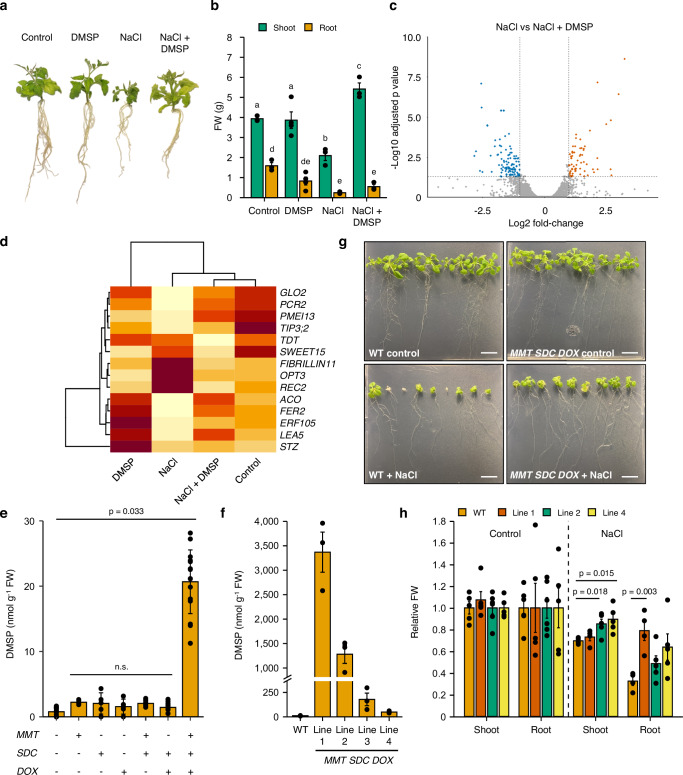
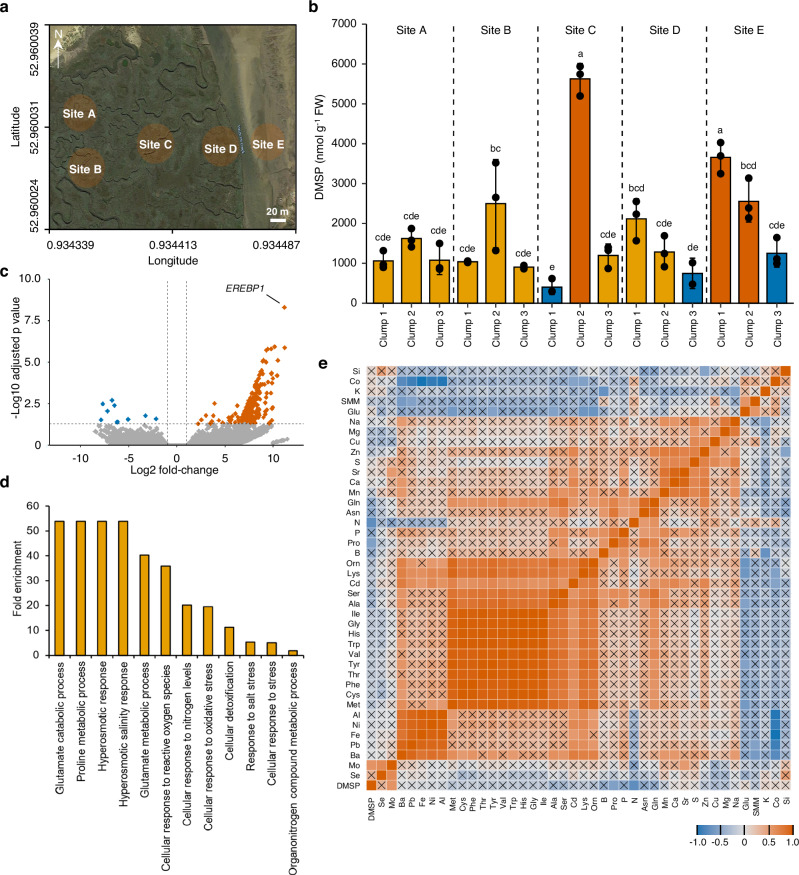
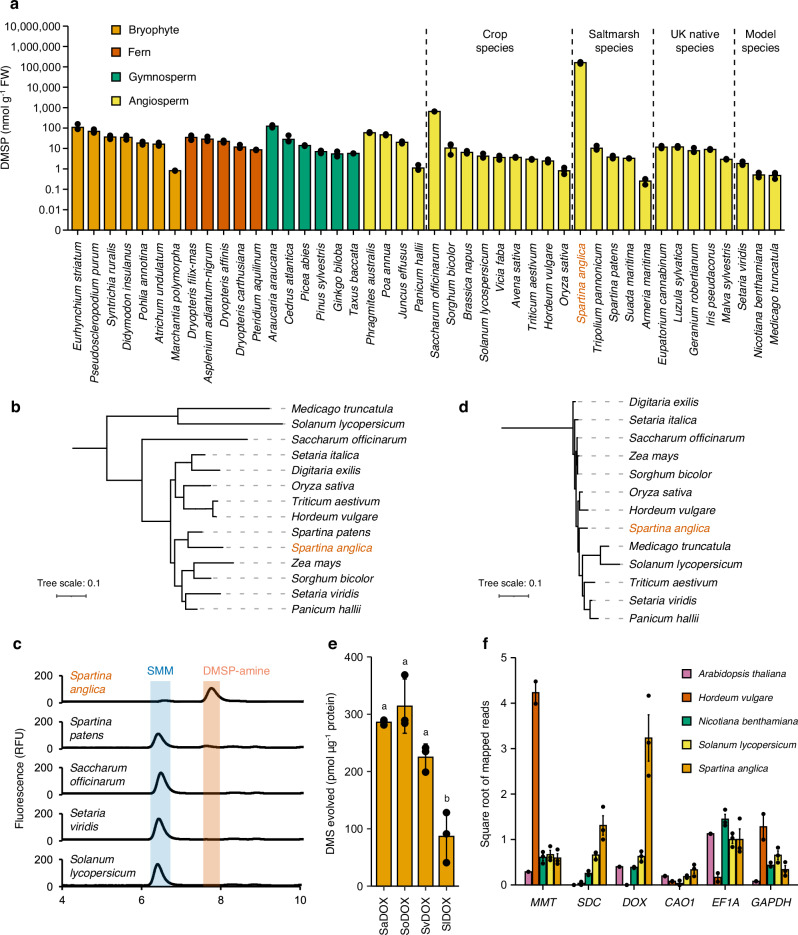
The organosulfur compound dimethylsulfoniopropionate (DMSP) has key roles in stress protection, global carbon and sulfur cycling, chemotaxis, and is a major source of climate-active gases. Saltmarshes are global hotspots for DMSP cycling due to Spartina cordgrasses that produce exceptionally high concentrations of DMSP. Here, in Spartina anglica, we identify the plant genes that underpin high-level DMSP synthesis: methionine S-methyltransferase (MMT), S-methylmethionine decarboxylase (SDC) and DMSP-amine oxidase (DOX). Homologs of these enzymes are common in plants, but differences in expression and catalytic efficiency explain why S. anglica accumulates such high DMSP concentrations and other plants only accumulate low concentrations. Furthermore, DMSP accumulation in S. anglica is consistent with DMSP having a role in oxidative and osmotic stress protection. Importantly, administration of DMSP by root uptake or over-expression of Spartina DMSP synthesis genes confers plant tolerance to salinity and drought offering a route for future bioengineering for sustainable crop production.
有机硫化合物二甲亚砜丙酯(DMSP)在应激保护、全球碳和硫循环、趋化作用中具有关键作用,是气候活性气体的主要来源。盐沼是 DMSP 循环的全球热点,因为米草属植物会产生异常高浓度的 DMSP。在这里,在大米草中,我们确定了支持高水平 DMSP 合成的植物基因:蛋氨酸 S-甲基转移酶(MMT)、S-甲基蛋氨酸脱羧酶(SDC)和 DMSP-胺氧化酶(DOX)。这些酶的同源物在植物中很常见,但表达和催化效率的差异解释了为什么大米草积累如此高浓度的 DMSP,而其他植物只积累低浓度的 DMSP。此外,大米草中 DMSP 的积累与 DMSP 在氧化和渗透胁迫保护中的作用一致。重要的是,通过根部吸收 DMSP 或过表达大米草 DMSP 合成基因来施用 DMSP,可赋予植物对盐度和干旱的耐受性,为可持续作物生产的未来生物工程提供了一种途径。