Leeds Beckett University, PD402, Portland Building, Leeds Beckett University, City Campus, Leeds, LS1 3HE, UK.
School of Healthcare, University of Leeds, Leeds, LS2 9JT, UK.
BMC Health Serv Res. 2024 Oct 9;24(1):1207. doi: 10.1186/s12913-024-11626-4.
The considered shift from individual blame and sanctions towards a commitment to system-wide learning from incidents in healthcare has led to increased understanding of both the moral and epistemic importance of involving those affected. It is important to understand whether and how local policy describes and prompts involvement with a view to understanding the policy landscape for serious incident investigations in healthcare. This study aimed to explore the way in which involvement of those affected by serious incidents is represented in incident investigation policy documents across acute and mental health services in the English NHS, and to identify guidance for more effective construction of policy for meaningful involvement.
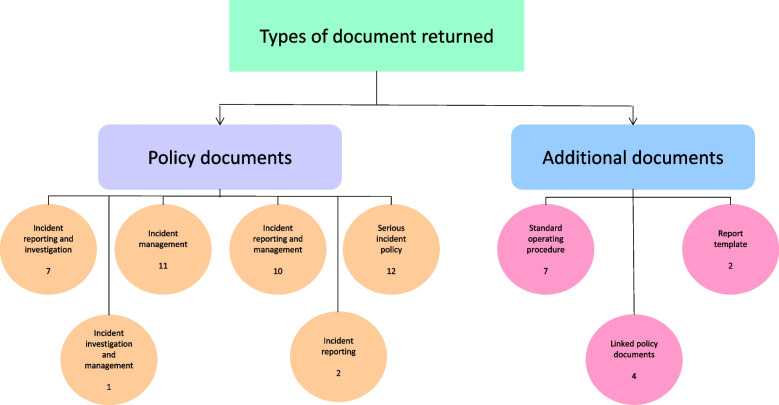
We conducted a documentary analysis of 43 local serious incident investigation policies to explore the way in which involvement in serious incident investigations is represented in policy documents across acute and mental health services in the NHS in England.
Three headline findings were generated. First, we identified involvement as a concept was conspicuous by its absence in policy documents. Direct reference to support or involvement of those affected by serious incidents was lacking. Even where involvement and support were recognised as important, this was described as a passive process rather than there being moral or epistemic justification for more active contribution to learning. Second, learning from serious incidents was typically described as a high priority but the language used was unclear and 'learning' was more often positioned as construction of an arbitrary set of recommendations rather than a participatory process of deconstruction and reconstruction of specific systems and processes. Third, there was an emphasis placed on a just and open culture but paradoxically this was reinforced by expected compliance, positioning investigations as a tool through which action is governed rather than an opportunity to learn from and with the experiences and expertise of those affected.
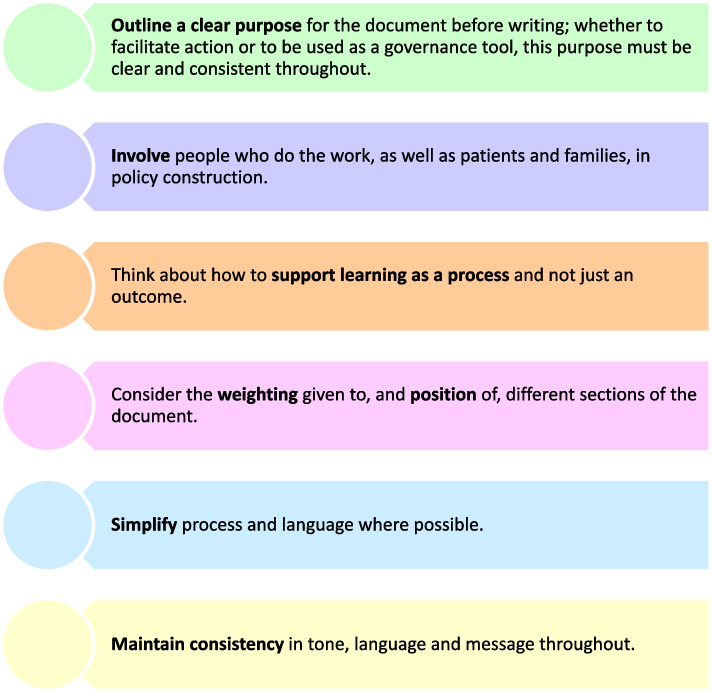
More effective representation in policy of the moral and epistemic reasons for stakeholder involvement in serious incident investigations may lead to better understanding of its importance, thus increasing potential for organisational learning and reducing the potential for compounded harm. Moreover, understanding how structural elements of policy documents were central to the way in which the document is framed and received is significant for both local and national policy makers to enable more effective construction of healthcare policy documents to prompt meaningful action.
从对医疗事故中个人责任和制裁的关注,转变为承诺从系统层面学习,这使人们越来越认识到让受影响的人参与其中的道德和认识论意义。了解当地政策是否以及如何描述和提示参与,以便了解医疗保健中严重事件调查的政策环境,这一点很重要。本研究旨在探讨在英格兰国民保健制度的急性和精神卫生服务中,严重事件调查政策文件中对受严重事件影响者的参与的描述方式,并确定更有效地制定有意义的参与政策的指导方针。
我们对 43 份地方严重事件调查政策进行了文件分析,以探讨在英格兰国民保健制度的急性和精神卫生服务中,政策文件中对严重事件调查参与的描述方式。
产生了三个主要发现。首先,我们发现政策文件中明显没有涉及参与这一概念。严重事件受影响者的支持或参与没有直接提及。即使承认参与和支持很重要,但这被描述为一个被动的过程,而不是为更积极地为学习做出贡献提供道德或认识论上的理由。其次,从严重事件中学习通常被描述为优先事项,但使用的语言不清楚,“学习”更多地被定位为构建一套任意的建议,而不是一个参与式的解构和重建特定系统和流程的过程。第三,强调公正和开放的文化,但具有讽刺意味的是,这通过预期的合规性得到了加强,将调查定位为一种通过它来管理行动的工具,而不是从受影响者的经验和专业知识中学习和合作的机会。
在政策中更有效地代表利益相关者参与严重事件调查的道德和认识论原因,可能会导致对其重要性的更好理解,从而增加组织学习的潜力,并降低潜在的复合伤害。此外,了解政策文件的结构要素如何成为文件框架和接收方式的核心,对于地方和国家政策制定者都具有重要意义,使他们能够更有效地构建医疗保健政策文件,以推动有意义的行动。